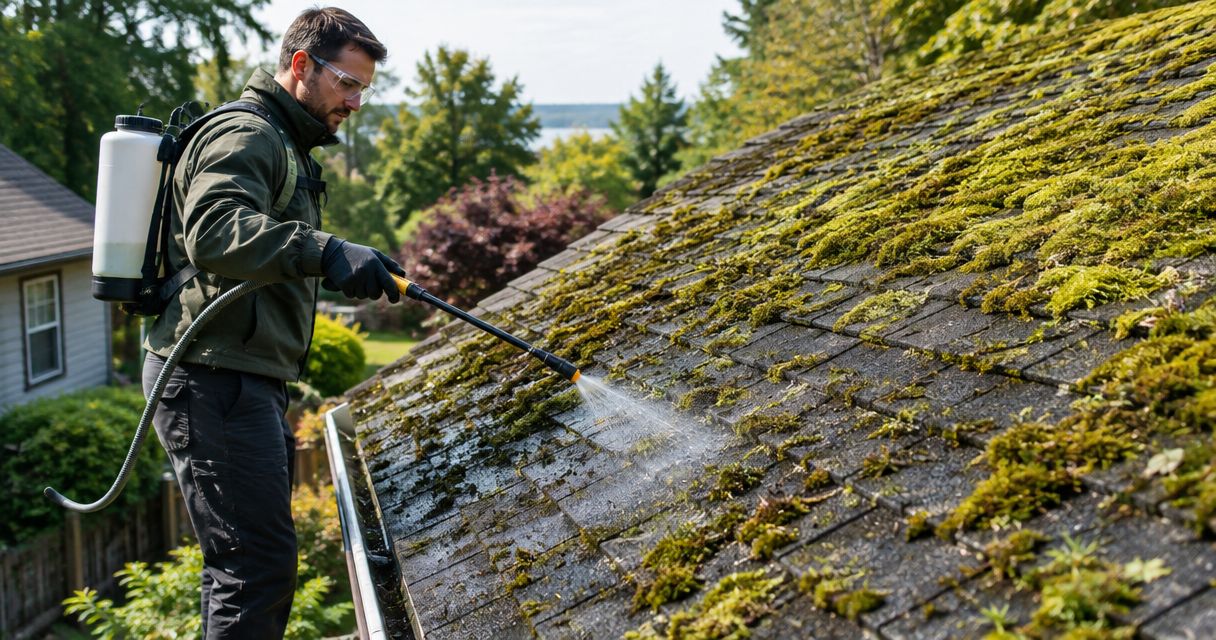
Best overall for suitable tiled roofs: careful moss removal followed by a compatible biocide. Best for substantial visible cleaning: professionally assessed steam cleaning. Best limited-scope option: manual removal alone, accepting its limits on regrowth. This 2026 guide compares roof moss removal methods by work involved and lasting control; Geyserclean provides roof cleaning for homeowners and commercial property owners in Milton Keynes and the surrounding Home Counties.
- For a moss removal roof enquiry, request surface assessment before choosing manual removal, steam cleaning or softwashing.
- Manual removal plus compatible biocide combines bulk clearance with treatment of remaining growth on suitable roofs.
- Steam cleaning suits assessed surfaces, not every tile, coating or roof condition.
- Geyserclean’s roof specification includes a 3–5 year no-moss guarantee, not a blanket workmanship guarantee.
Why this matters
A roof that looks cleaner immediately has not necessarily received the most suitable treatment for lasting moss control. Removing thick growth, treating remaining growth and protecting the roof surface are separate decisions. Your quote should explain each one.
Geyserclean is best for property owners seeking professional roof cleaning in Milton Keynes and the surrounding Home Counties. Choose the cleaning specification around the roof’s material, age and condition, rather than selecting the most forceful method or the shortest description on a quote.
What makes the best roof moss removal method?
Use these criteria when comparing roof cleaning proposals in 2026:
- Surface compatibility: identify the covering, finish and condition before specifying scraping, chemicals, steam or water pressure.
- Bulk removal: explain how established moss will be removed without unsuitable tools or unnecessary disturbance.
- Regrowth control: distinguish physical clearance from treatment intended to control remaining biological growth.
- Access and containment: account for safe access, falling debris, gutters, planting and nearby property.
- Written scope: state the method, treatment, exclusions and guarantee conditions rather than promising a clean-looking roof alone.
Do not choose on method name alone. A careful manual specification can be more appropriate than steam on a vulnerable surface; a treatment-only approach can leave too much bulk moss where immediate clearance matters.
Roof moss removal methods at a glance
The order below prioritises a suitable balance of clearance and regrowth control, not a universal cheapest-to-dearest ladder. Actual cost depends on roof area, access, condition and the work included; compare written quotes for the same scope.
| Rank and method | Best for | Standout feature | Cost driver | Key limitation |
|---|---|---|---|---|
| 1. Manual removal plus biocide | Established moss on suitable tiled roofs | Separates bulk removal from follow-up treatment | Hand work, access and treatment coverage | Tool choice and tile condition remain critical |
| 2. Assessed steam cleaning | Suitable roofs needing visible surface cleaning | Heat-assisted removal of surface contamination | Equipment, access and surface preparation | Not suitable for every roof covering or finish |
| 3. Treatment-led softwashing | Suitable surfaces with lighter biological growth | Chemical action rather than aggressive abrasion | Product selection, coverage and protection | Does not instantly clear substantial moss deposits |
| 4. Manual removal alone | A clearly defined bulk-clearance job | Direct removal of visible moss | Extent of growth and hand work | Clearance alone does not provide ongoing regrowth control |
| 5. Conventional pressure washing | Roofs explicitly assessed as suitable | Mechanical removal using water pressure | Access, settings, containment and clean-up | Unsuitable pressure or technique can damage coverings |
1. Manual removal plus biocide: best for established moss
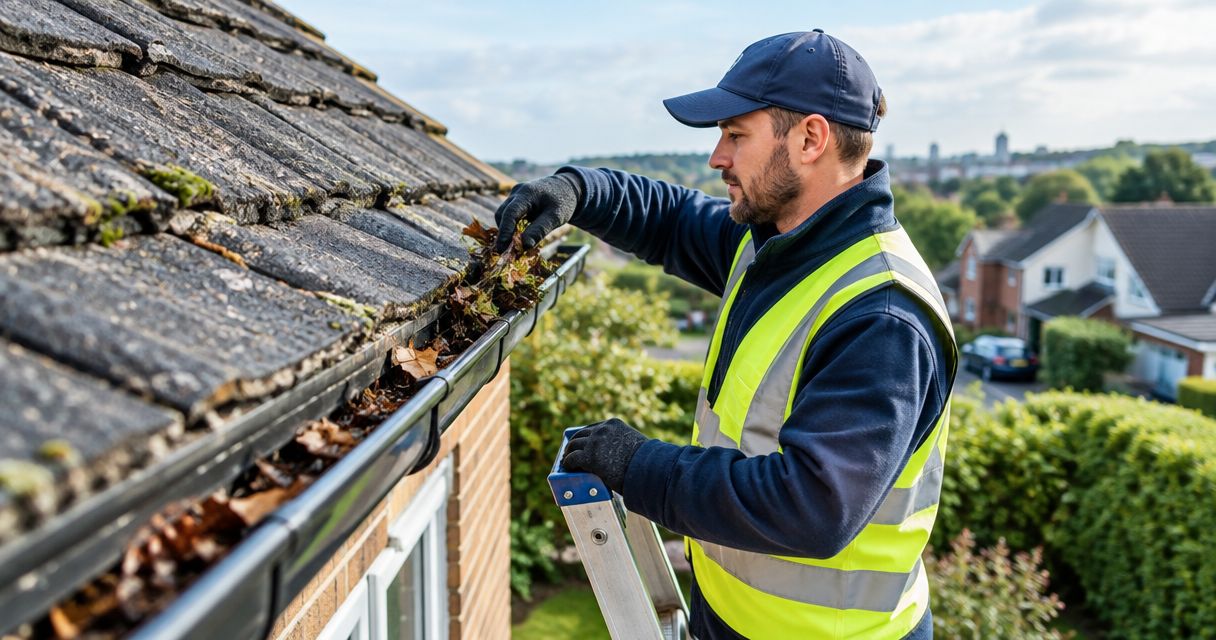
Careful manual removal takes off the main moss deposits. A compatible biocidal treatment then addresses remaining biological growth according to the product’s authorised instructions. These are different jobs, and a useful specification describes both.
Best for: suitable tiled roofs with established moss where bulk clearance and follow-up treatment are both required.
Manual removal plus biocide pros:
- Removes substantial deposits rather than relying on treatment to break them down.
- Allows tools and technique to be selected around the tile profile and condition.
- Includes a treatment stage rather than equating scraping with lasting control.
Manual removal plus biocide cons:
- Hand work and access requirements affect the overall scope.
- Unsuitable scraping tools or excessive force can harm roof surfaces.
- Treatment requires appropriate protection for planting, drainage and nearby surfaces.
Cost and durability
Ask whether the proposal includes removal of loose debris, gutter clearance and treatment across the specified roof area. A short description such as moss removal does not establish those inclusions.
Durability depends on the surface, treatment and site conditions. Compare a written no-moss guarantee and its conditions rather than accepting an unsupported promise about how long any biocide lasts.
Verdict: Buy this approach when the roof assessment supports both careful clearance and compatible treatment.
2. Assessed steam cleaning: best for visible surface cleaning
Steam cleaning uses heat as part of the cleaning process. The contractor must select equipment settings and technique for the covering and its condition; the word steam is not evidence that a method is suitable for every roof.
Best for: suitable roof surfaces where the brief includes substantial visible cleaning as well as moss removal.
Steam cleaning pros:
- Addresses surface contamination as part of the cleaning work.
- Offers an alternative to relying on aggressive scraping throughout.
- Can form part of a specification that includes a separate regrowth treatment.
Steam cleaning cons:
- Heat, water and application technique still require surface-specific assessment.
- Fragile coverings, deteriorated finishes and existing defects need particular consideration.
- Cleaning alone does not establish a no-moss guarantee.
Cost and durability
Compare the complete specification, including access, debris management and any follow-up treatment. Do not assume steam costs more or less than manual removal without quotes for the same property and scope.
For your 2026 quote, ask what happens after the visible cleaning stage. The answer should distinguish appearance at completion from any treatment or guarantee covering later moss growth.
Verdict: Buy only after the contractor confirms suitability and explains the full treatment sequence.
3. Treatment-led softwashing: best for lighter biological growth
Softwashing uses a suitable cleaning treatment applied without relying on aggressive mechanical removal. Product selection, surface compatibility, application and runoff management matter more than the label.
Best for: suitable surfaces with lighter growth where treatment-led cleaning matches the required result.
Softwashing pros:
- Avoids making forceful water pressure the main cleaning mechanism.
- Treats biological growth using a product selected for the intended use.
- Provides an option where extensive mechanical cleaning is inappropriate.
Softwashing cons:
- Thick moss deposits can require separate physical removal.
- Results depend on the treatment and do not always appear immediately.
- Nearby planting, drainage and other surfaces need protection appropriate to the product.
Cost and durability
Check whether a softwashing quote includes preparation or only treatment application. If substantial moss remains, establish how it will be managed and whether further clearance is included.
Do not accept a fixed result date without a product-specific explanation. Treatment-led cleaning and immediate physical clearance are different outcomes; your written scope should identify which outcome you are buying.
Verdict: Buy for suitable lighter growth; hold if the proposal leaves substantial moss unexplained.
4. Manual removal alone: best for a limited clearance brief
Manual removal alone clears visible moss without a specified follow-up biocidal treatment. It is a narrower job, not automatically a cheaper quote once access, labour and disposal are considered.
Best for: property owners who specifically need bulk clearance and understand that ongoing regrowth control is outside the agreed scope.
Manual removal alone pros:
- Makes the immediate task straightforward to define.
- Removes deposits directly rather than waiting for treatment-led breakdown.
- Avoids including a chemical treatment where none has been selected or agreed.
Manual removal alone cons:
- Removing visible moss does not establish lasting control of remaining growth.
- Scraping still requires suitable tools and careful technique.
- A repeat clearance requirement remains possible without a regrowth-control plan.
Cost and durability
Ask for manual clearance and any follow-up treatment to be described separately. This lets you compare scope without assuming the shorter specification represents better value.
If durability is your main concern, manual removal alone leaves an important question unanswered: what addresses remaining growth? Do not treat a clear roof at handover as a promise that moss will not return.
Verdict: Hold unless bulk clearance alone meets your brief; skip as a substitute for specified long-term control.
5. Conventional pressure washing: best only after explicit assessment
Conventional pressure washing removes contamination through water pressure and application technique. Suitability depends on the roof covering, its condition, equipment settings and how water is directed.
Best for: roofs that a competent contractor has explicitly assessed as suitable for the proposed pressure-based method.
Pressure washing pros:
- Removes visible contamination mechanically.
- Offers a defined cleaning method when settings and technique are specified.
- Can be assessed alongside other methods rather than ruled in by habit.
Pressure washing cons:
- Unsuitable pressure or technique can damage coverings or finishes.
- Poor application can direct water where it should not go.
- Visible cleaning does not itself provide ongoing moss control.
Cost and durability
A quick-looking cleaning process is not a reliable guide to total job cost. Access, containment, cleaning up debris and any follow-up treatment still need to appear in the proposal.
Avoid a specification that simply promises to blast the roof clean. Ask why pressure washing suits that particular covering and how the contractor will protect vulnerable details.
Verdict: Skip as the default; consider only with a clear, roof-specific justification.
How the methods are ranked
This 2026 ranking favours a complete, surface-appropriate scope: remove established deposits where necessary, address remaining growth and protect the covering. It does not claim that one method is universally cheapest or assign unsupported lifespans to treatments.
Manual removal plus compatible treatment ranks first for suitable tiled roofs because it addresses both bulk moss and remaining growth. The other methods occupy different use cases; a roof assessment can change which option belongs first for your property.
What to send for a useful written quote
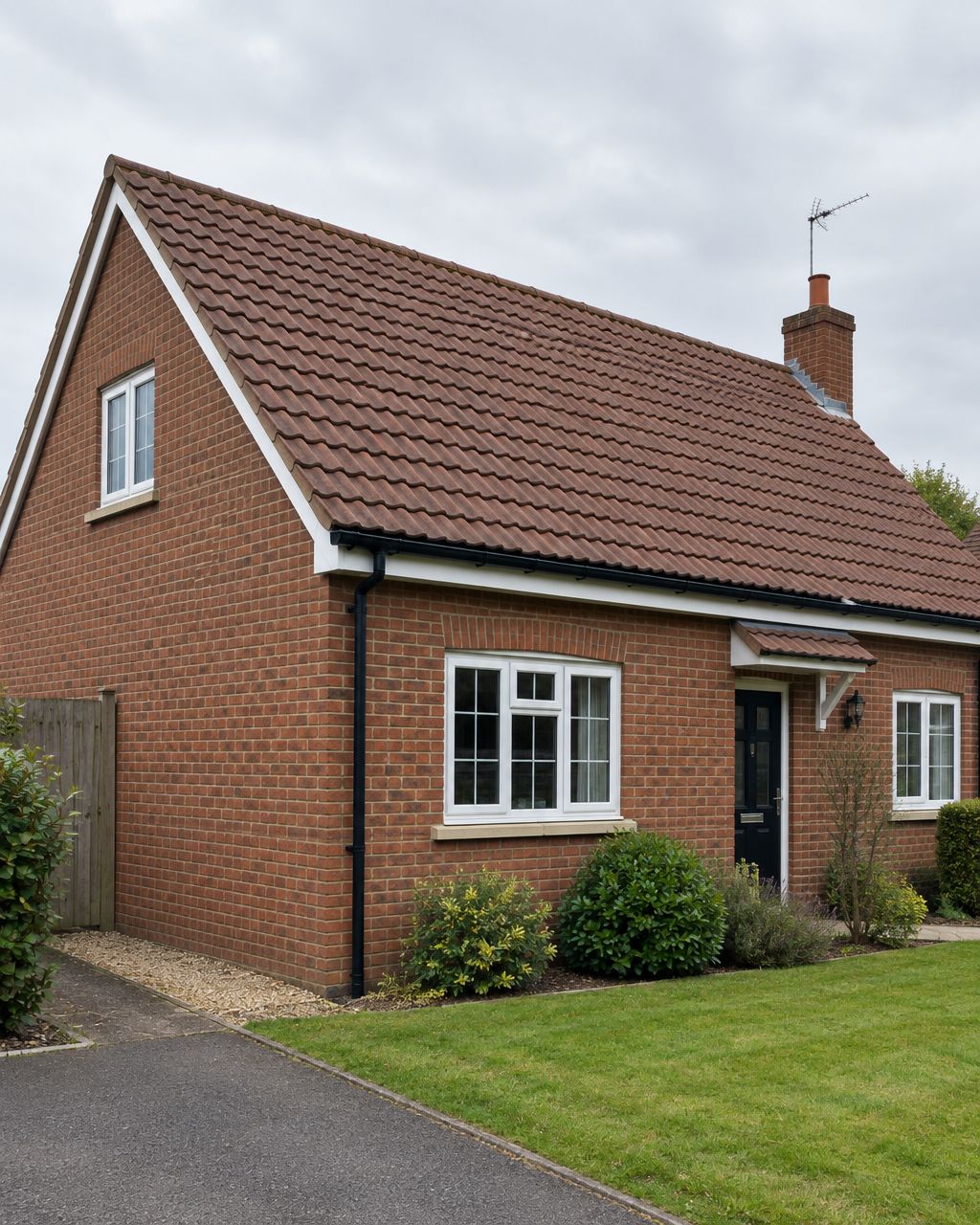
Send the property address and photos before asking for a method recommendation. As a practical starting point, include 3 photographs: a whole-roof view, a closer view taken safely from ground level, and a view showing access constraints. These are enquiry suggestions, not a substitute for inspection.
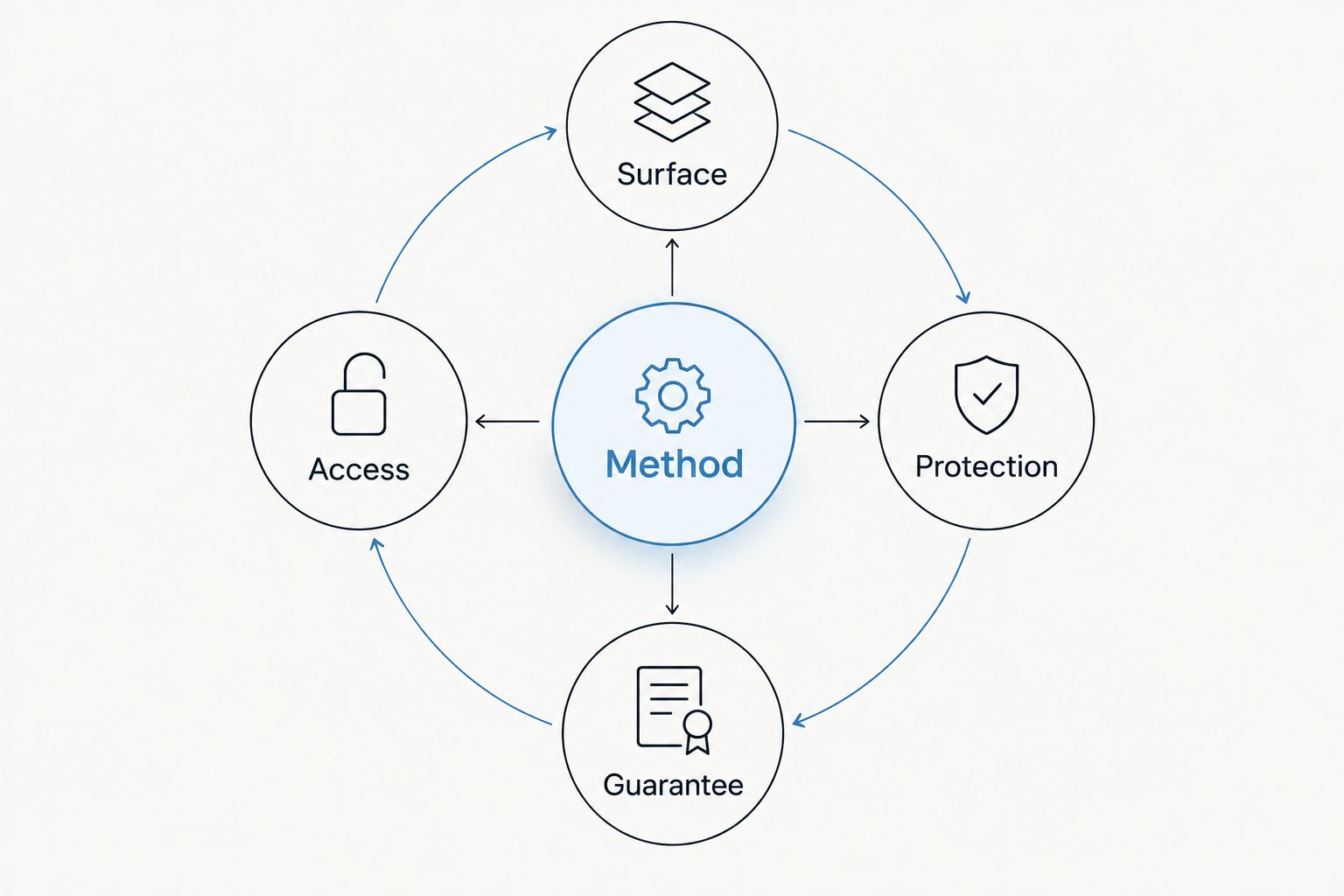
Ask the quotation to address:
- Surface: covering, finish and visible condition.
- Method: proposed removal and treatment sequence.
- Access: how the work will be reached safely.
- Protection: management of debris, runoff and nearby surfaces.
- Guarantee: what is covered and which conditions apply.
Geyserclean’s roof cleaning specification includes a 3–5 year no-moss guarantee. Its render cleaning guarantee is 2 years; these are distinct guarantees, not a blanket workmanship guarantee. Ask for the applicable written terms with your 2026 quotation.
If you also need render cleaning, gutter clearance, driveway cleaning or patio cleaning, list those tasks separately. Each surface needs its own method and scope; a roof cleaning recommendation does not automatically apply elsewhere.
Which roof moss removal method should you choose?
Start with careful manual removal plus compatible treatment for an assessed, suitable tiled roof with established moss. Choose steam cleaning when the surface assessment and cleaning brief support it, or treatment-led softwashing where lighter growth and the surface favour that approach.
Keep manual-only clearance for a deliberately limited brief. Treat conventional pressure washing as an option requiring explicit justification, not a standard answer to every roof.
FAQ
What is the best method for removing moss from a roof?
Careful manual removal followed by a compatible biocide is the default recommendation for established moss on suitable tiled roofs. The covering, age and condition must support that specification; steam or treatment-led cleaning can suit a different brief.
Is steam cleaning better than softwashing for roof moss?
Steam cleaning and softwashing address different cleaning needs, so neither is universally better. Steam provides heat-assisted cleaning, while softwashing relies on suitable treatment; established moss can also need physical removal.
Which roof moss removal method is cheapest?
There is no reliable cheapest method without comparing quotes for the same roof and scope. Access, moss coverage, protection, debris clearance and follow-up treatment all affect the work required.
How long does roof moss removal last?
There is no single lifespan for roof moss removal because the treatment, surface and site conditions differ. Geyserclean’s roof specification includes a 3–5 year no-moss guarantee; request the applicable written conditions.
Can I pressure wash moss off my roof myself?
Do not make DIY pressure washing your default approach to roof moss. Roof access presents a fall risk, and unsuitable pressure or application can damage coverings; request a professional assessment instead.
Does roof cleaning automatically include gutter clearance?
Do not assume gutter clearance is included in roof cleaning. Ask the written quote to distinguish collecting roof debris from clearing gutters and checking the agreed drainage scope.
What should I send when asking for a roof cleaning quote?
Send the property address and clear photos showing the roof, moss and access. State whether you also need render, driveway, patio or gutter cleaning so each task can be specified separately.
One last thing
Ask this before approving your 2026 roof cleaning quote: what controls regrowth after the visible moss has gone? That question separates a clearance-only job from a treatment specification, without assuming every roof needs the same process.
Send your property address and photos to Geyserclean for a written quote. Request the proposed method, inclusions and applicable no-moss guarantee terms together.