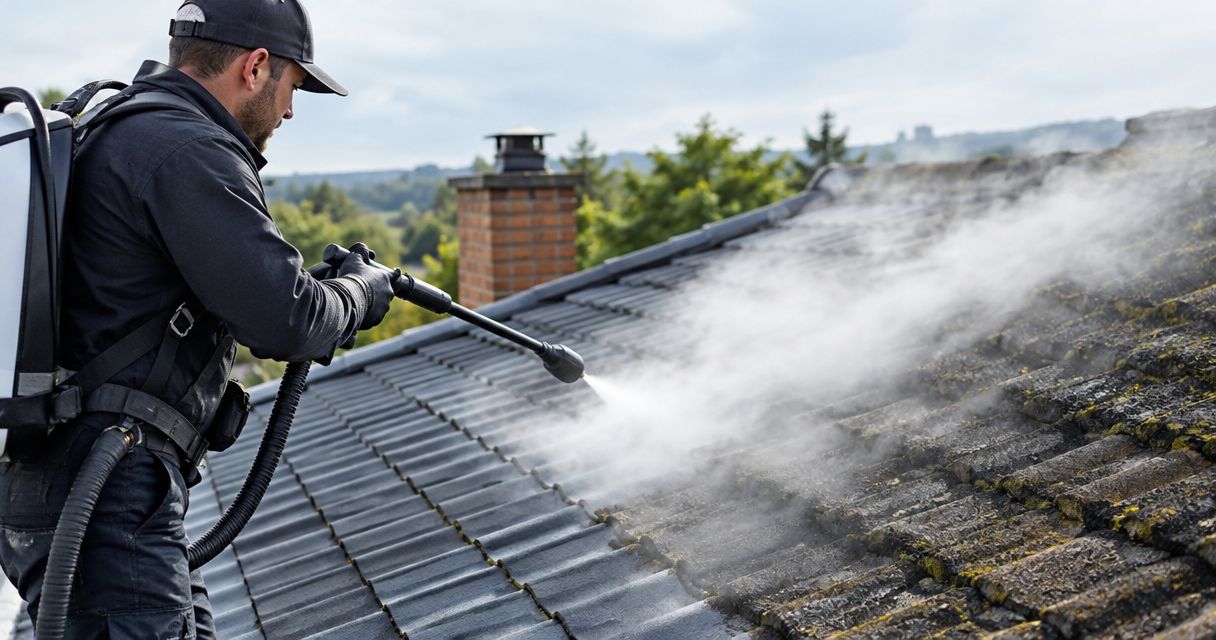
Steam roof cleaning or softwashing is chosen by checking the roof covering, its age and condition, the growth present, and safe access—not by deciding that one method suits every roof. Existing defects, surface finishes and the handling of water or treatment run-off must be assessed before either method is specified.
- Steam roof cleaning needs a surface and condition assessment, not a blanket recommendation.
- Softwashing treats biological growth; it is not a substitute for roof repairs.
- Geyserclean provides roof cleaning for homeowners and commercial property owners in Milton Keynes and the surrounding Home Counties.
- Ask for the cleaning method, preparation, gutter clearance and guarantee terms in writing.
Why this matters
Choose the method after assessing the roof, not before requesting the quote. A description such as steam cleaning or softwashing does not, by itself, explain how a contractor will protect the covering, manage access or deal with existing defects.
Geyserclean provides roof cleaning alongside render cleaning, driveway cleaning, patio cleaning and gutter cleaning. For a homeowner comparing roof-cleaning quotes in 2026, the useful distinction is between a named technique and a written plan for the actual property.
Geyserclean is best suited to homeowners and commercial property owners seeking exterior cleaning in Milton Keynes and the surrounding Home Counties. The guidance below explains what to ask; it does not prescribe a cleaning specification for an unseen roof.
Steam roof cleaning or softwashing: how is the method chosen?
The decision starts with the roof covering and its condition, then considers the work needed and how it can be carried out safely. Steam and softwashing are different processes, and a proposal needs to explain why the selected process fits your roof.
| Approach | Best for | Main benefit | Main limitation |
|---|---|---|---|
| Steam roof cleaning | Roof coverings assessed as suitable for heated-water cleaning | Uses heat and water to loosen and remove surface growth and soiling | Suitability depends on the covering, finish, condition and application |
| Softwashing | Compatible roof surfaces needing treatment of biological growth | Applies a treatment at low pressure | Requires suitable chemistry, controlled application and realistic expectations about appearance |
| Repair before cleaning | Roofs with defects that prevent suitable cleaning | Addresses the condition issue before cleaning begins | Cleaning must wait until the relevant repair work is resolved |
Neither cleaning approach repairs a cracked tile, failed flashing or defective roof detail. If a defect changes whether the work is appropriate, settle that issue before selecting the cleaning method.
The assessment follows 5 checks
- Roof covering: identify the tile, slate or other covering and any coating or finish. Confirm the applicable manufacturer's cleaning guidance where available.
- Existing condition: look for visible cracks, loose coverings, weathered surfaces and previous repairs. Record concerns rather than treating staining as the only issue.
- Growth and soiling: distinguish bulky moss from surface staining and other deposits. Ask what will be removed and what will be treated.
- Safe access: establish how the contractor will reach the work area and protect people below. Do not assume the roof can be walked on.
- Run-off control: consider gutters, downpipes, nearby planting and adjoining property. Ask how debris, water and any treatment will be managed.
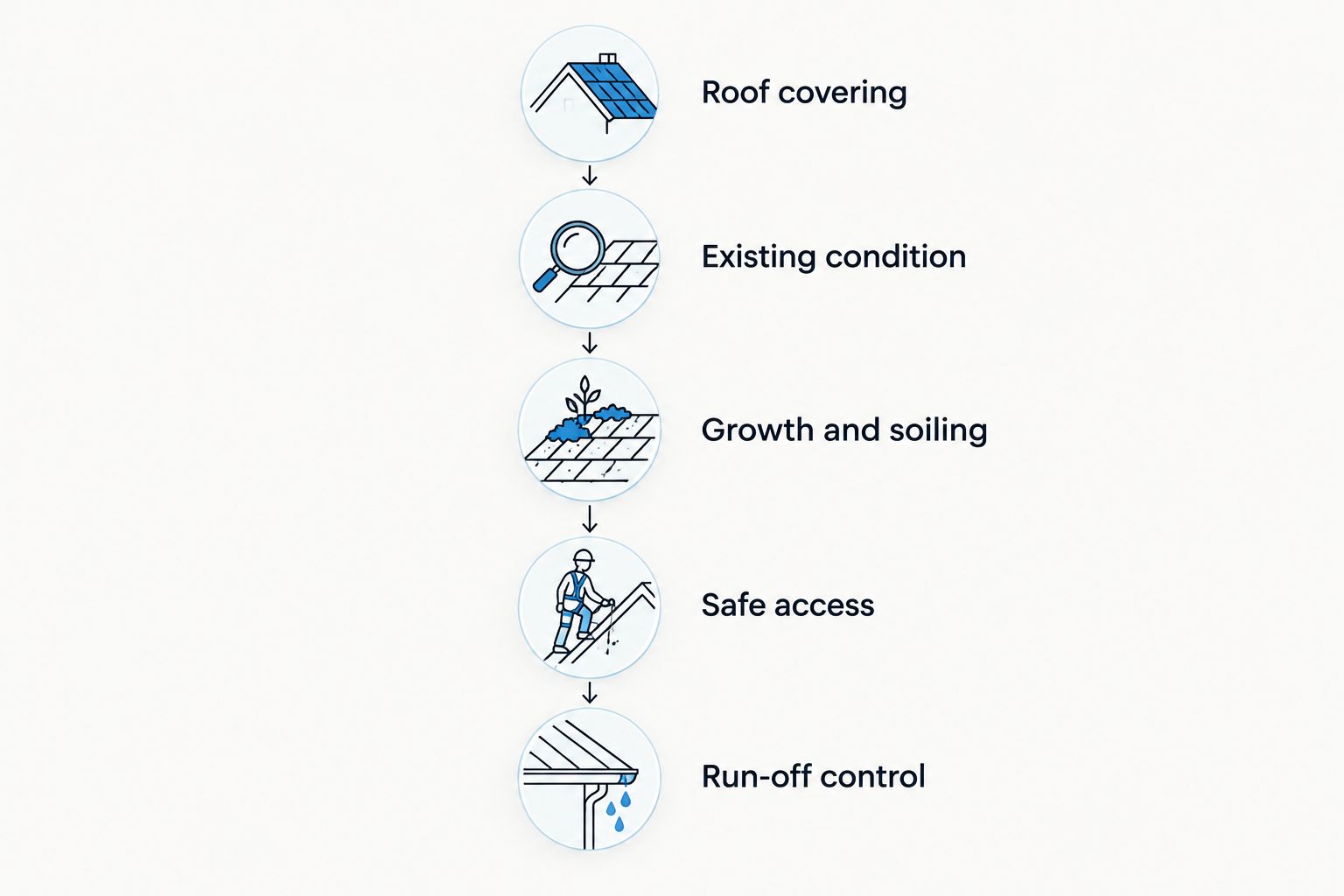
These checks give you a practical way to compare proposals in 2026. A quote that names equipment but does not address the roof's condition leaves the central decision unexplained.
Steam roof cleaning: when is it the right choice?
Steam roof cleaning uses heated water as part of the cleaning process. The relevant question is whether the covering and its current condition are suitable for that application—not whether steam is generally described as gentle.
Best for: a roof assessed as suitable for heated-water cleaning, where physical removal of growth and soiling forms part of the agreed work. Ask the contractor to explain how the application will suit the surface and how vulnerable details will be protected.
The benefit is direct cleaning of the surface. The limitation is that heat does not remove the need to control application, water direction or access, and it does not make damaged materials sound.
A proposal should distinguish the cleaning stage from any separate treatment. Do not assume that the word steam includes a follow-up treatment, gutter clearance or a particular guarantee; those are separate scope questions.
For an older roof, age should prompt closer assessment rather than an automatic yes or no. The guide to steam roof cleaning on older tiles addresses that specific decision.
Softwashing: when is it the right choice?
Softwashing applies a cleaning treatment at low pressure, with the formulation selected for the surface and the intended purpose. For roof work, ask which growth or staining the treatment addresses and whether preparation is needed first.
Best for: compatible roof surfaces where treatment of biological growth is appropriate. The contractor needs to account for the roof material, nearby surfaces, planting and the treatment product's instructions.
The benefit is treatment without relying on high-pressure washing as the cleaning mechanism. The limitation is that low application pressure alone does not establish suitability: the treatment, coverage and run-off arrangements still matter.
Do not confuse treatment with immediate physical removal. Ask what the roof should look like at completion, what change is expected afterwards, and whether any remaining deposits require further attention under the agreed scope.
For a 2026 quote, request a clear distinction between preparation, application and any later visit. Do not assume that follow-up work is included simply because the proposal uses the word softwash.
Why the roof-cleaning method varies
The method varies because roofs differ in more than their visible moss coverage. These factors belong in the assessment:
- Covering and finish: tile, slate, coatings and other finishes need their own suitability checks. A method used next door is not proof that yours is suitable.
- Age and condition: weathering, cracks and previous repairs affect the decision. Age is context, not a complete specification.
- Type of growth: attached moss and surface staining present different cleaning tasks. Ask the contractor to separate removal from treatment.
- Roof details: flashings, junctions and vulnerable edges affect how work is approached. These details need attention even when the main covering looks sound.
- Access constraints: extensions, conservatories, boundaries and occupied areas affect the working plan. The chosen cleaning method still needs a safe means of access.
- Run-off route: gutters, downpipes and the area below the roof affect containment and clean-up. Treatment handling must follow the relevant product instructions.
A useful recommendation connects these observations to the proposed method. Ask why that process fits your roof rather than accepting a general claim that it is the safest or most effective option everywhere.
What should your written roof-cleaning quote explain?
Your written quote should make the work understandable before you accept it. For Geyserclean roof cleaning, send the property address and clear photographs, then ask for the proposed scope in writing.
Use this checklist when comparing proposals in 2026:
- Assessment: what covering and visible condition has the contractor identified, and what still needs checking on site?
- Method: is the proposal for steam cleaning, softwashing or a defined sequence of work? Why does that approach suit the roof?
- Preparation: will bulky growth or loose debris need attention before the main cleaning stage?
- Protection: how will adjoining surfaces, planting and the area below be protected?
- Drainage: does the scope include gutter clearance, and does it address downpipes separately?
- Completion: what result is expected at handover, what exclusions apply, and what guarantee is offered?
Photographs help explain the job, but they do not establish every detail of roof condition. Include wide views of each accessible side and closer views taken safely from ground level; do not climb onto the roof to obtain them.
Ask what happens if an inspection reveals a defect that changes the proposed work. A written explanation is more useful than an assumption that every roof can receive the same treatment.
Request a written roof-cleaning quote
Send your property address and photos, and ask for the proposed method and scope in writing.
Does steam roof cleaning stop moss coming back?
Steam roof cleaning is not, by itself, a promise that moss will never return. Keep the immediate cleaning result separate from any treatment specification and written no-moss guarantee.
Geyserclean describes its roof guarantee as a 3–5 year no-moss guarantee. That wording concerns moss; it is not a blanket workmanship guarantee or a promise to repair the roof.
When reviewing a guarantee in 2026, ask which duration applies to your property, what the terms cover and how a concern is handled. Do not infer the applicable period from the longest duration mentioned.
Should gutter clearance happen alongside roof cleaning?
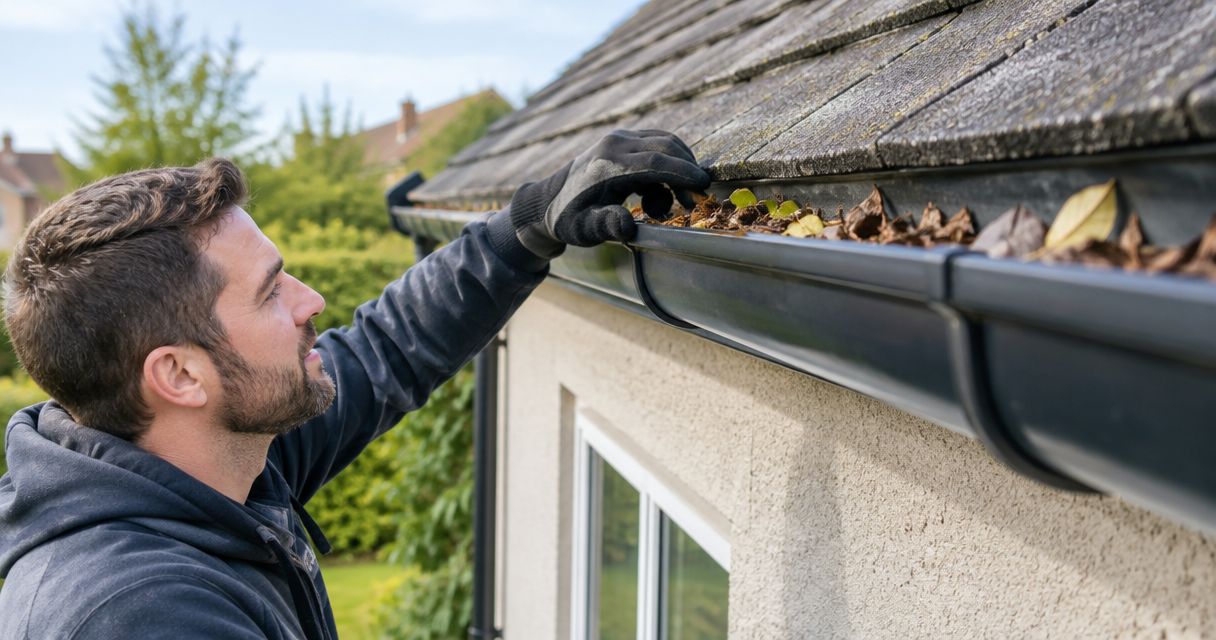
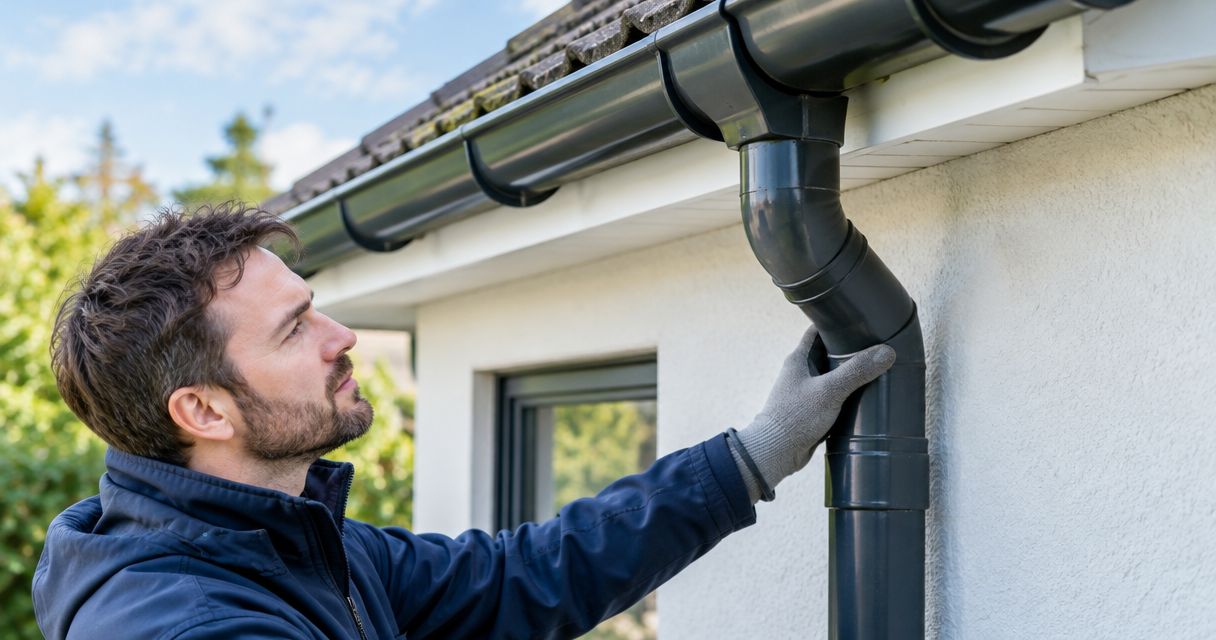
Gutter clearance needs to be discussed alongside roof cleaning because the gutters sit below the work area and receive roof drainage. Confirm whether debris collection, gutter clearance and downpipe checks are included rather than treating them as interchangeable tasks.
If a gutter already overflows, record that before work begins. Clearing visible debris does not establish that every part of the drainage route is clear or correctly functioning.
For commercial properties, also identify entrances, shared paths and occupied areas beneath the roof. The working plan should address those areas without assuming that a larger roof simply needs more of the same cleaning.
Does the same method suit render, driveways and patios?
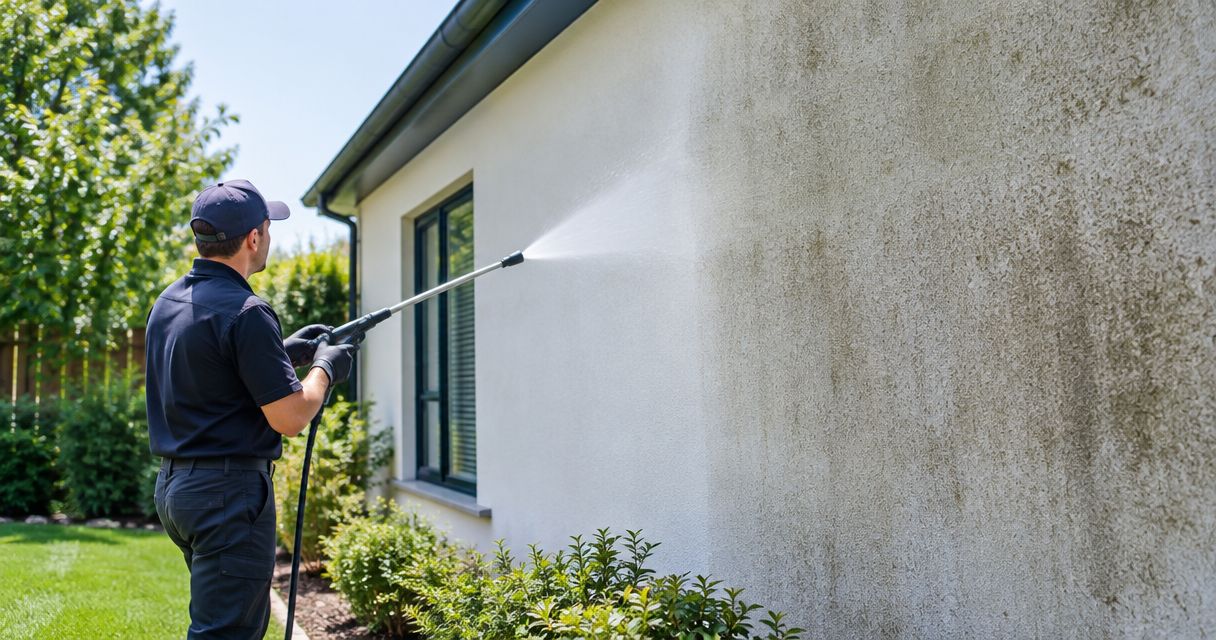
A roof-cleaning decision does not set the method for the rest of the property. Render cleaning needs its own assessment of finish and condition; driveway cleaning and patio cleaning need separate consideration of the surface and joints.
The verified render guarantee is 2 years, distinct from the roof's 3–5 year no-moss guarantee. Do not combine these into a general guarantee covering every exterior-cleaning service.
If you are requesting several services together, ask for each surface and its proposed method to be listed separately. That keeps the roof-cleaning scope clear and avoids assuming that steam or softwashing is specified throughout.
FAQ
Is steam roof cleaning better than softwashing?
Steam roof cleaning is not automatically better than softwashing. Choose after assessing the roof covering, condition, growth, access and run-off arrangements; the quote should explain why the selected method fits.
Can an old tiled roof be steam cleaned?
An old tiled roof needs a condition and material assessment before steam cleaning is specified. Age alone does not establish suitability, and visible defects need attention before a cleaning decision.
Does softwashing repair damaged roof tiles?
Softwashing does not repair damaged roof tiles. It is a cleaning treatment, so cracks, loose coverings and other defects need a separate assessment.
Will steam roof cleaning include gutter clearance?
Steam roof cleaning does not automatically include gutter clearance. Ask the contractor to list debris collection, gutter clearance and any downpipe checks in the written scope.
What does Geyserclean's roof guarantee cover?
Geyserclean describes its roof guarantee as a 3–5 year no-moss guarantee. Confirm the applicable duration and written terms for your property; it is not a blanket workmanship guarantee.
Is the render guarantee the same as the roof guarantee?
The render guarantee is 2 years, while the roof guarantee is a 3–5 year no-moss guarantee. Keep the service-specific wording separate when reviewing your quote.
What should I send when asking for a roof-cleaning quote?
Send the property address and clear photographs taken safely from ground level. Include known defects, access restrictions and any gutter problems, then request the proposed method and scope in writing.
One last thing
Ask the contractor: What would make you change the proposed cleaning method after inspecting this roof? The answer should identify relevant condition or access issues, not simply repeat a preference for particular equipment.
You do not need to choose the machinery yourself. You need a clear explanation of why the proposed work suits your roof, what is included and where the guarantee stops.