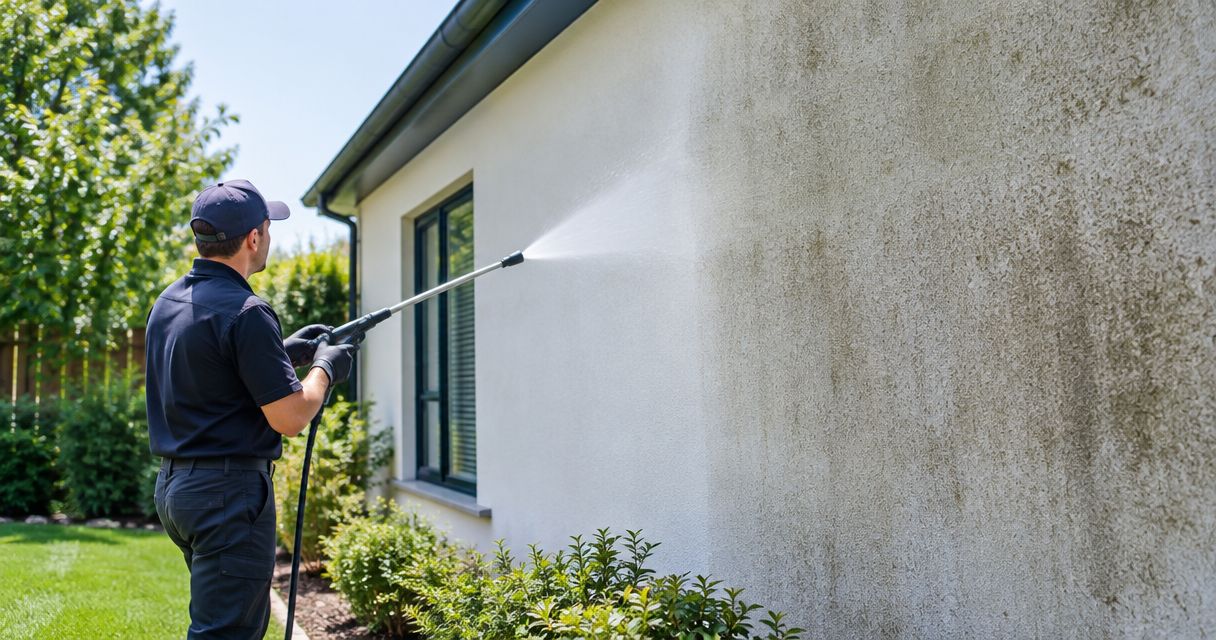
Plants are protected during soft wash render cleaning by moving portable pots, shielding exposed planting where appropriate, controlling spray and managing cleaning runoff. The contractor should follow the cleaning product’s instructions, assess where liquid will travel and agree any watering or rinsing needed. Low pressure alone does not make a cleaning solution safe for leaves, roots or garden ponds.
- Soft wash render cleaning needs spray control and runoff planning, not just low pressure.
- Move portable pots and assess planting beneath every wall before render cleaning starts.
- Geyserclean provides professional render cleaning for property owners in Milton Keynes and the surrounding Home Counties.
- Ask for a written plant-protection plan suited to the cleaning product, planting and drainage.
Why this matters
A flower bed directly below a wall sits in the path of anything that runs down it. A climbing plant creates a different problem: its leaves and stems are already against the surface being cleaned. Protection must address those different routes of exposure, rather than treating every garden alike.
Softwashing describes an approach to cleaning; it is not a declaration that every cleaning product is harmless to plants. The distinction between soft wash render cleaning and pressure washing helps explain why pressure, product selection and application control all need separate consideration.
How are plants protected during soft wash render cleaning?
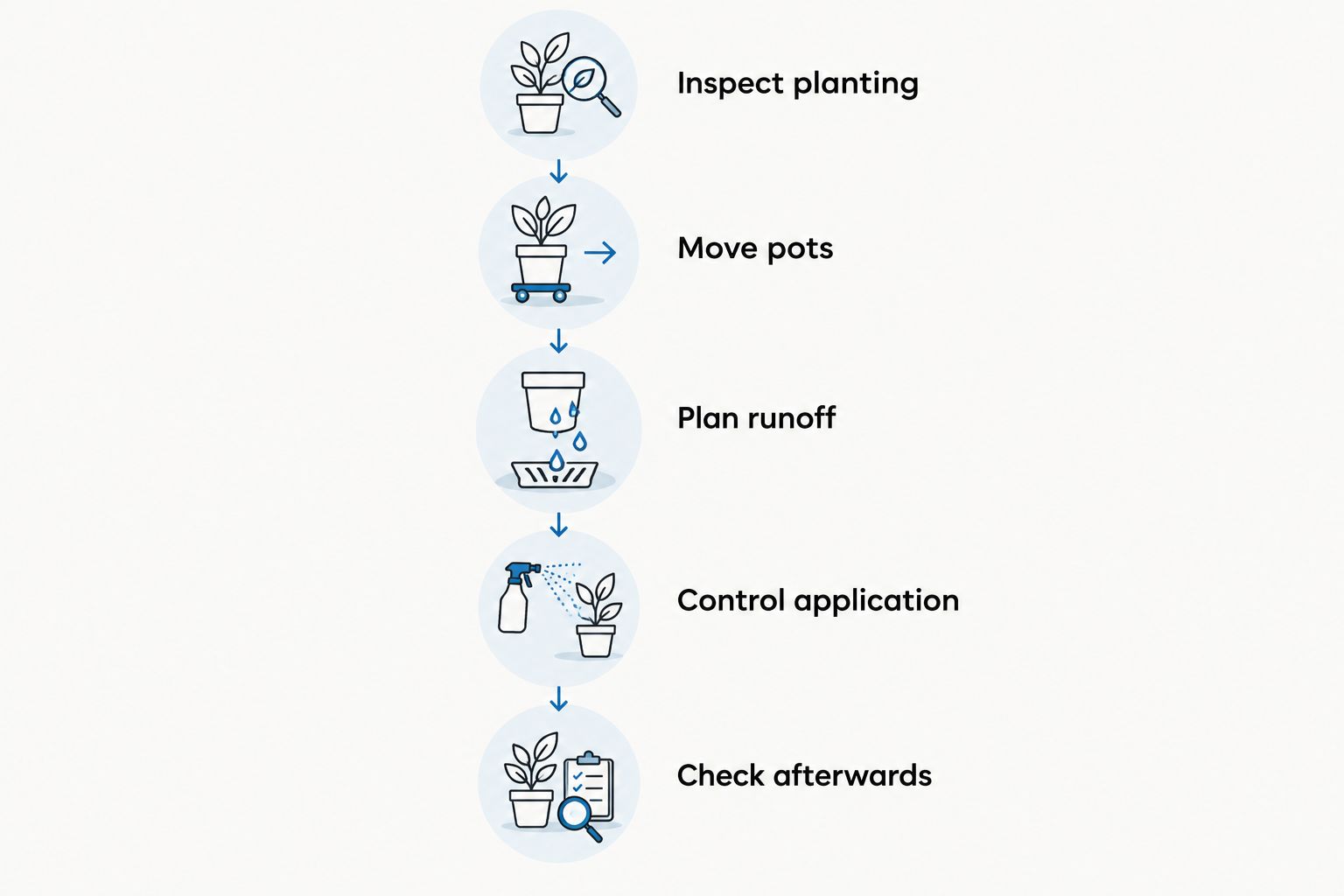
Plant protection starts before the wall gets wet and continues until runoff and temporary covers have been dealt with. Use the following sequence when discussing a proposed clean with your contractor. These are general planning questions, not a statement of any individual company’s operating procedure.
- Inspect planting. Identify beds, hedges, climbers, pots, edible crops and ponds beside or below the work. Include neighbouring planting where spray or runoff could cross the boundary.
- Move pots. Relocate portable containers outside the application area and the expected runoff route. Do not move a pot from beside the wall to a position directly beneath a downpipe without checking that route.
- Plan runoff. Establish where cleaning solution and rinse water will go. Identify drains, low points, paved channels and places where water collects around roots.
- Control application. Choose equipment, application direction and working conditions that limit unwanted spray. Protect exposed planting where the product instructions and site conditions require it.
- Check afterwards. Follow the product-specific instructions for rinsing, removing protection and dealing with accidental exposure. Inspect the planting and surrounding ground before leaving the area.
For a 2026 written quote, ask for these decisions to be described before accepting the work. A statement that plants will be protected is less useful than an explanation of what will happen beside your particular wall.
Moving pots: best for portable planting
Moving pots removes portable plants from the immediate working area. It also gives the contractor room to reach the wall without working around foliage or balancing equipment beside containers.
The limitation is practical: large planters, fixed troughs and established beds cannot simply be carried away. Agree who will move containers, where they will go and whether their new position stays clear of overspray, hoses and runoff.
Check hanging baskets and window boxes as well as ground-level pots. A basket above the flower bed can still sit alongside the section being treated.
Temporary shielding: best for planting that cannot be moved
Temporary shielding can separate fixed planting from direct spray. Its position matters: a cover that catches liquid and channels it into the bed has not solved the runoff problem.
Covers are a supporting measure, not proof that a plant is isolated from treatment. Edges, gaps and the ground beneath remain possible exposure routes. The contractor must also consider ventilation, weather and how long a cover stays in place; enclosed plants can overheat in sunshine.
Ask how shielding will be supported without crushing stems or pulling branches against the wall. Removing a wet cover also needs care so that collected liquid is not tipped onto the plants it was intended to protect.
Controlled application: essential beside planting
Keeping treatment on the intended surface reduces unnecessary exposure elsewhere. That means assessing wind, directing application carefully and avoiding uncontrolled spraying around corners or across foliage.
Low pressure addresses only part of the problem. A cleaning solution can still reach leaves through overspray or reach soil after running down the render. Product selection and runoff control remain necessary even when the spray feels gentle.
If conditions prevent controlled application, ask whether the work should pause or the approach should change. A booking date does not make unsuitable conditions acceptable.
Which protection measure suits each situation?
These measures work together. None replaces the cleaning product’s instructions or an assessment of the site.
| Measure | Best for | Main benefit | Limitation |
|---|---|---|---|
| Moving pots | Portable containers and baskets | Removes plants from the immediate work area | Does not protect fixed beds or climbers |
| Temporary shielding | Planting that must remain beside the wall | Intercepts direct spray when correctly positioned | Can trap heat or redirect liquid into soil |
| Controlled application | Every treated elevation | Limits spray outside the intended area | Does not manage runoff by itself |
| Runoff management | Beds, low points and drainage routes | Addresses liquid travelling below the application area | Requires a site-specific route and disposal plan |
Why plant protection varies between properties
A protection plan depends on the relationship between the wall, the plants and the route water takes. The same arrangement will not suit a clear paved frontage and a narrow courtyard full of established planting.
- Cleaning product: application, rinsing and environmental precautions depend on the actual formulation and its instructions.
- Plant position: foliage touching the render needs a different approach from a bed beyond the working area.
- Wall condition: loose, cracked or deteriorated render affects the cleaning decision before plant protection is considered.
- Drainage: slopes, channels and low points determine where liquid travels and collects.
- Weather: wind affects spray control; sunshine affects the conditions beneath temporary covers.
- Access: narrow side passages, neighbouring boundaries and shared entrances restrict where equipment and moved pots can go.
For a 2026 assessment, photographs should show the whole elevation and the ground below it, not just the stain. Include awkward corners and planting that you do not want moved or disturbed.
Should plants be watered before render cleaning?
Watering is not a universal instruction for every product, plant or soil condition. Ask the contractor whether clean-water wetting or rinsing forms part of the proposed method and how that matches the product guidance.
Do not assume that soaking a bed makes it immune to contamination. Waterlogged ground, container drainage and the amount of liquid entering the soil still matter. Adding water also does not turn an unsuitable runoff route into an acceptable one.
Keep the distinction clear: watering plants for their own needs is different from managing exposure to a cleaning treatment. Neither should be used as a substitute for preventing avoidable contact.
Can climbers stay against the render during cleaning?
Climbers against the render require a specific decision because their leaves and stems occupy the surface being treated. Ask whether the affected section can be accessed safely without spraying through foliage or damaging the plant.
Do not pull established growth away from a wall simply to speed up access. Agree any pruning, tying back or temporary repositioning with the property owner first. Where the plant prevents safe treatment, the scope of cleaning needs to reflect that restriction.
For commercial premises, identify who can authorise changes to planting. The person arranging the clean might not be responsible for the landscaping or neighbouring boundary.
What happens if cleaning solution reaches a plant?
The response depends on the product and the route of exposure. The contractor should stop the source, follow the product’s accidental-release and first-aid guidance as relevant, and prevent further spread.
Do not assume that adding another chemical will neutralise the problem. Mixing cleaning products can create additional hazards. Ask for the product name and relevant instructions so that any response is based on the substance involved.
Before work starts, agree who will report accidental contact and how it will be recorded. Visible leaf damage is not the only reason to investigate exposure; contaminated soil or water also needs attention under the applicable product guidance.
What should a written render-cleaning quote explain?
A useful quote connects the proposed cleaning method to your property. It should distinguish the cleaning scope from repairs, garden work and any areas that cannot be treated safely.
Ask for these points to be clear:
- Which elevations and surfaces are included.
- Why the proposed method suits the render’s age and condition.
- What needs moving before arrival, and who is responsible.
- How beds, climbers, edible plants and ponds will be addressed.
- Where runoff will go and how unsuitable routes will be avoided.
- What checking and tidying follow the treatment.
Geyserclean is best for Milton Keynes property owners seeking a professional render-cleaning service rather than a DIY treatment. Its stated services also include roof cleaning, driveway cleaning, patio cleaning and gutter clearance across the surrounding Home Counties. Send Geyserclean the property address and photographs for a written quote, including close views of planting beneath the render.
The verified render guarantee is 2 years; the roof offer is a separate 3–5 year no-moss guarantee. Neither should be read as a blanket workmanship guarantee or as a statement about plant protection. Ask for the applicable terms alongside the written scope.
Request a written cleaning quote
Send your property address and photos showing the render, nearby planting and drainage.
What should you photograph before requesting a quote?
For a 2026 enquiry, include a full view of each wall, a closer view of the render and a ground-level view showing beds and drainage. Photograph climbers where they touch the wall and identify ponds, edible planting or delicate containers in your message.
For shared or commercial properties, show entrances and public routes as well. Explain any access restrictions and who controls the landscaped areas. Clear photographs help define the work, but they do not replace an on-site assessment where one is needed.
FAQ
Is soft wash render cleaning safe for garden plants?
Soft wash render cleaning requires plant-protection measures; low pressure alone does not make the treatment safe for planting. The cleaning product, application control and runoff route determine the precautions needed.
Do I need to move my pots before the render is cleaned?
Move portable pots out of the working area and expected runoff route, with the location agreed beforehand. Ask who is responsible for large containers, hanging baskets and window boxes.
Will covering my flower beds protect them completely?
Covering flower beds does not provide complete protection by itself. Covers need suitable positioning, ventilation and removal, while runoff must be managed separately.
Can cleaning runoff go into a flower bed?
A flower bed should not be treated as a default disposal route for cleaning runoff. The contractor must follow the product instructions and applicable environmental requirements when planning where liquid goes.
What should I ask about a pond beside the wall?
Identify the pond before work is agreed and ask how both spray and runoff will be kept away from it. Product-specific environmental precautions are essential; a cover alone is not a complete plan.
Should I water my plants before the contractor arrives?
Ask the contractor before watering specifically for cleaning protection. Any wetting or rinsing procedure should match the product guidance, planting and soil conditions rather than a blanket instruction.
Does Geyserclean’s render guarantee cover plant protection?
Geyserclean’s stated render guarantee is 2 years, but that duration does not establish plant-protection cover. Ask for the guarantee terms and the site-specific protection arrangements separately.
What should I include in a 2026 render-cleaning enquiry?
Include the property address and photographs of the render, nearby planting and drainage. Identify climbers, ponds, edible crops and access restrictions so the written quote can address them.
One last thing
Look below the wall, not just at the spray. A carefully directed application still needs a plan for the liquid travelling down the render. Trace that route with the contractor before work begins, especially where paving slopes towards a bed or neighbouring garden.
Keep the agreed scope with your 2026 quote. The useful record is not simply that plants were discussed, but which plants need protection, what will be moved and how runoff will be handled.