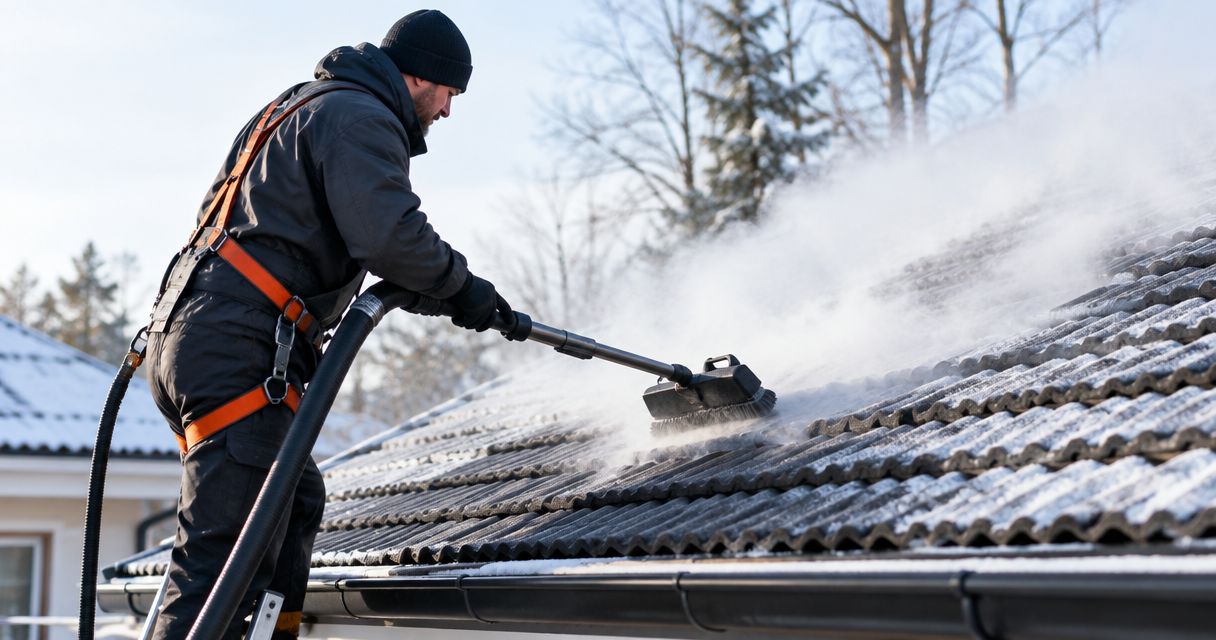
Steam roof cleaning can be carried out in cold weather, provided the roof, access arrangements and surrounding areas are safe for wet work. Frost, ice, strong winds and the risk of runoff freezing can require postponement, even when the cleaning equipment itself can operate.
- Steam roof cleaning depends on roof condition, safe access and runoff control—not simply the season.
- Postpone wet work when frost, ice or freezing runoff make the working area unsafe.
- Choose steam or softwashing after assessing the roof material, age and condition.
- Geyserclean provides roof cleaning for homeowners and commercial property owners in Milton Keynes and the surrounding Home Counties.
Can steam roof cleaning be carried out in cold weather?
Yes, but a cold-weather booking is conditional on the conditions at your property. A dry, sheltered roof presents a different job from an icy roof above a shaded driveway, even when both appointments fall on the same day.
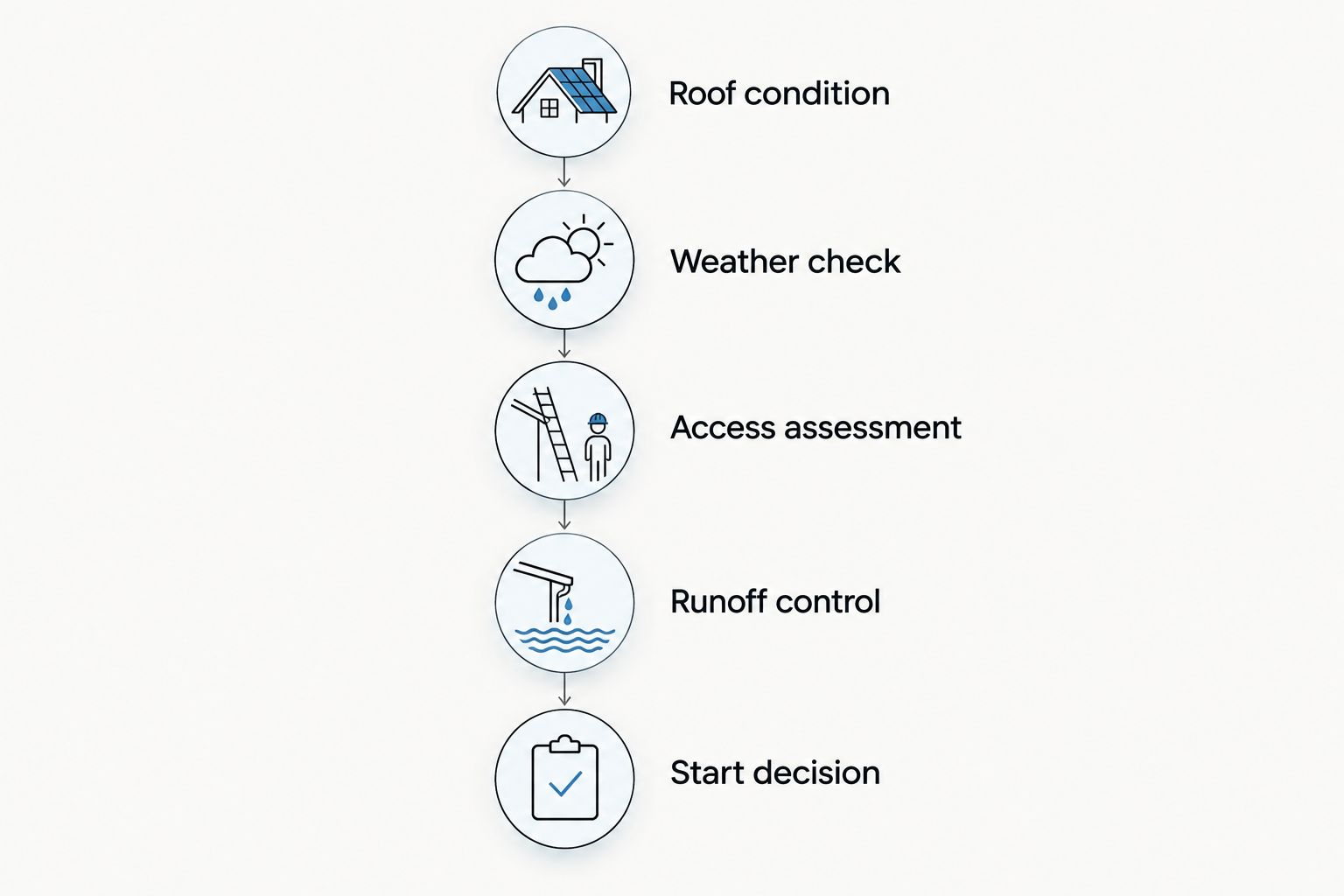
For a 2026 booking, ask how the contractor will assess the following before starting:
- Roof condition: identify the covering, its age where known, visible defects and previous repairs.
- Weather check: consider frost, wind, rain and the conditions expected during the work.
- Access assessment: establish how the work will be reached without relying on slippery surfaces.
- Runoff control: identify where water and loosened material will go, including gutters and pedestrian routes.
- Start decision: confirm whether the planned method remains suitable or the work needs rescheduling.
You can send your address and photographs to Geyserclean for a written quote. Include the roof and the ground beneath it: the access route and runoff destination matter alongside the tiles.
Why this matters
A roof-cleaning appointment involves more than applying heat to a roof. Equipment needs safe positioning, water needs somewhere to drain, and people still need to use the property without crossing an unsafe working area.
For homeowners in Milton Keynes and nearby towns, the practical question is whether the whole job can be managed safely that day. For a commercial property, that assessment also needs to account for staff, visitors, deliveries and shared access.
Geyserclean is best suited to property owners seeking professional roof cleaning in Milton Keynes and the surrounding Home Counties. The method still needs to match the individual roof; location alone does not establish whether steam is suitable.
When cold-weather cleaning can proceed—and when it should wait
Use this comparison to understand the decision, rather than treating it as permission to start work yourself. A contractor needs to assess the actual roof and working area.
| Site condition | Practical advantage | Limitation or reason to wait |
|---|---|---|
| Cold conditions without frost or ice | Cold weather alone does not rule out cleaning | Access, wind, drainage and roof suitability still need checking |
| Frost or ice on the roof or access route | Postponing allows the working area to be reassessed after thawing | Wet cleaning should not proceed where ice makes access unsafe |
| Runoff reaching a freezing surface | Identifying the route allows the contractor to assess controls | Work should wait if water cannot be kept from creating an ice hazard |
| Wind affecting the working method | Rescheduling avoids forcing an unsuitable access arrangement | A calm area at ground level does not establish safe conditions at roof height |
| Damaged or uncertain roof covering | Inspection can identify issues before a cleaning method is selected | Cleaning is not a substitute for repairs or material identification |
The benefit of keeping a cold-weather appointment is straightforward: suitable work does not have to be ruled out simply because it is winter. The limitation is equally clear: a booking cannot guarantee that the conditions will be suitable when the contractor arrives.
Does the temperature alone decide whether work can start?
No. Water's freezing point is 0°C under ordinary conditions, but that is not a universal roof-cleaning operating limit. The temperature of the roof and shaded ground can differ from the air-temperature forecast.
A forecast above freezing therefore does not prove that every surface is free of ice. Equally, a cold forecast does not describe the roof material, access method, wind exposure or drainage arrangements.
For your 2026 appointment, ask what would cause the work to be postponed. A useful answer addresses visible conditions and the planned working method, rather than relying on a single temperature shown on a weather app.
Why the cold-weather decision varies
The same method will not suit every roof or every weather window. These factors explain why a contractor needs to assess the property rather than promise that steam is always suitable:
- Roof material: tiles, slates and other coverings need an appropriate cleaning approach; they are not interchangeable surfaces.
- Age and condition: cracks, loose material, deteriorated details and previous repairs affect what should happen before cleaning.
- Access arrangements: the working position and the route used to reach it must remain suitable in the conditions.
- Frost and runoff: existing ice and water that could freeze affect both the roof-cleaning area and the ground below.
- Wind and exposure: exposed roof areas and access equipment need assessment, not just a check from the front door.
- Drainage and occupancy: gutters, downpipes, entrances and shared paths influence how water and pedestrian access are managed.
Tell the contractor about known problems when requesting a quote. An existing leak or a regularly overflowing gutter is useful information, not something to leave until work begins.
Is softwashing a better option than steam in cold weather?
Softwashing is not an automatic cold-weather alternative to steam. It still involves wet work, and any treatment must be appropriate for the roof and used in accordance with its instructions.
Steam provides a heat-based cleaning approach; softwashing uses an appropriate cleaning treatment. Neither description establishes suitability for an older covering, a damaged roof or a freezing access route.
Ask for the reason behind the recommendation. The explanation should connect the chosen method to the material, age, condition and contamination on your roof, rather than simply describing one method as better for every property.
The guide to how steam roof cleaning or softwashing is chosen explains that decision in more detail. For a 2026 quote, request the proposed method in writing so you can compare the scope rather than the service name alone.
What should happen if the roof has frost or ice?
Wet cleaning should wait where frost or ice makes the planned work unsafe. A surface that looks clearer from the ground still needs assessment before the contractor proceeds.
Do not climb onto the roof to check it or attempt to thaw an access route as a way of keeping the appointment. Tell the contractor what you can see safely from ground level, including frost on shaded paths or ice beneath a downpipe.
A postponed clean is not a failed clean. It is a decision to avoid carrying out the planned work under unsuitable conditions; confirm how the revised appointment will be arranged.
What should you send for a useful written quote?
Send the property address and clear photographs taken from safe ground-level positions. Include more than a close-up of moss: the contractor also needs context around the roof.
Useful photographs and notes include:
- The front, rear and accessible sides of the building.
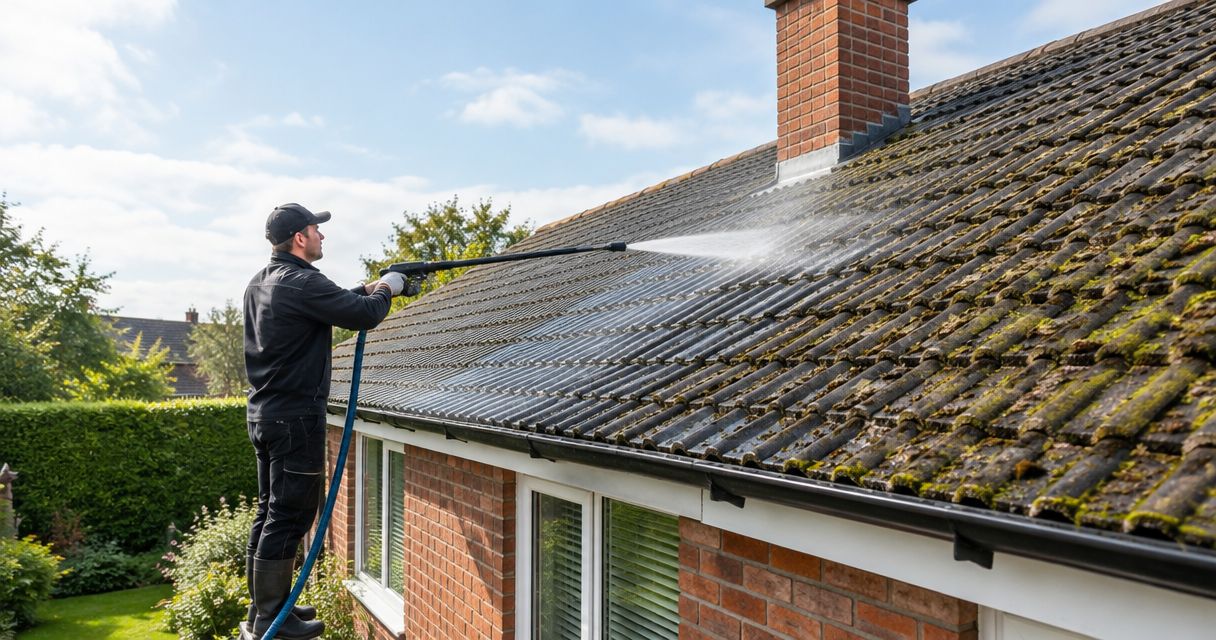
- The roof slopes, visible moss and any known damaged areas.
- Gutters, downpipes and places where water already overflows.
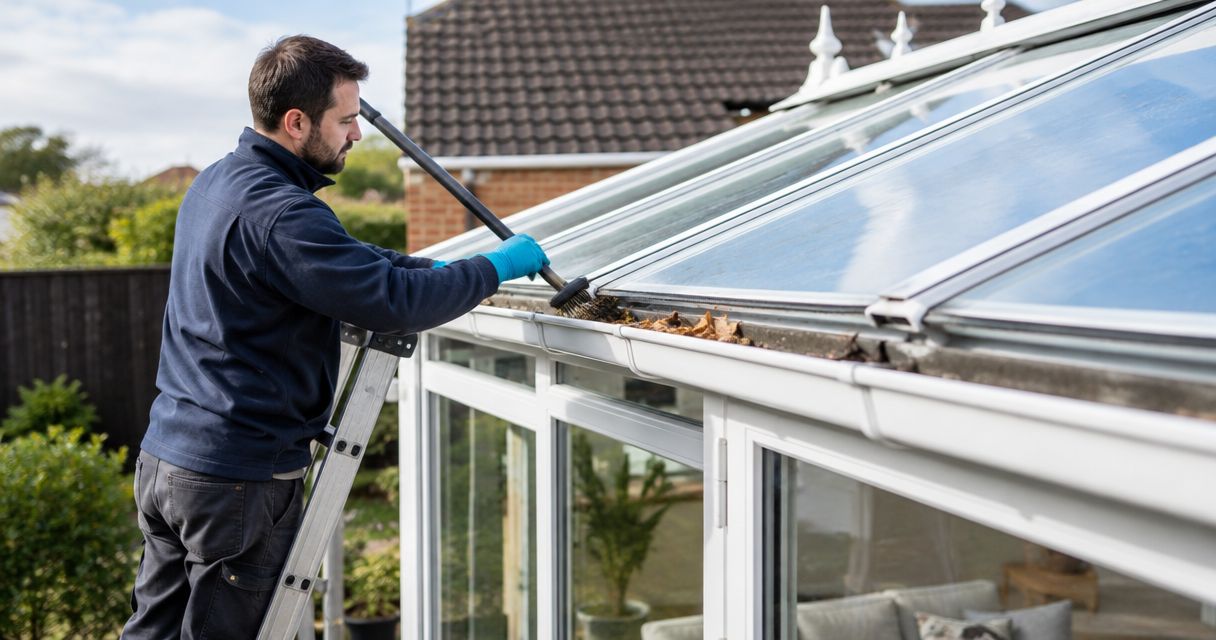
- Side passages, gates, conservatories and extensions affecting access.
- Driveways, patios, entrances and shared paths beneath the work.
- Existing leaks, recent repairs or information about the roof covering.
Ask the quote to distinguish roof cleaning from repairs and additional services. Gutter clearance, render cleaning, driveway cleaning and patio cleaning should not be assumed to be included simply because they are available from the same business.
For commercial premises, add opening hours and any access restrictions. A 2026 cleaning plan should account for how people use the building during the proposed work, not just how equipment reaches it.
Request a written roof-cleaning quote
Send your property address and photos, including the roof, access routes and any known defects.
Should gutters be checked before cold-weather roof cleaning?
Yes. The contractor needs to understand where cleaning water and loosened material will go, and gutters and downpipes form part of that route.
Tell the contractor about overflowing gutters, leaking joints or water collecting near an entrance. These observations help define the work, but they do not establish whether the cause is a blockage, a defect or another drainage issue.
Keep gutter clearance and drainage repairs separate in the written scope. Clearing debris does not itself confirm that every joint, outlet or downstream connection is sound.
This distinction also matters when arranging render cleaning. Water management around walls and entrances should be considered alongside the surface being cleaned, rather than treated as an afterthought.
Does cold-weather cleaning change the no-moss guarantee?
Geyserclean describes its roof offer as a 3–5 year no-moss guarantee. That is not a blanket workmanship guarantee, a roof-repair guarantee or a promise that every cleaning method suits every roof.
Ask which duration applies to your quoted work and request the written terms. The start date, scope and any conditions should be clear before you accept the quote; do not infer them from the headline duration.
Geyserclean's render guarantee is 2 years, which is separate from the roof no-moss guarantee. Neither guarantee replaces the need to assess whether weather conditions are suitable on the day.
For a 2026 booking, retain the accepted quote and the guarantee wording together. That gives you a clear record of the service agreed, rather than relying on a general description of exterior cleaning.
FAQ
Can steam roof cleaning be done during winter?
Yes, steam roof cleaning can be carried out during winter when the roof, access and runoff arrangements are suitable. Frost, ice, wind or freezing runoff can require postponement.
Is there a minimum temperature for steam roof cleaning?
There is no single temperature that establishes whether every roof-cleaning job is safe. Water freezes at 0°C under ordinary conditions, but roof and ground temperatures, access and the proposed method also need assessment.
Does hot steam make an icy roof safe to clean?
No, hot steam does not establish that an icy roof or its access route is safe. Existing ice and water reaching cold surfaces still need to be considered before work starts.
Should I choose softwashing instead of steam in cold weather?
Not automatically: softwashing still involves wet work and must suit the roof and treatment instructions. Choose the method after assessing the covering, age, condition and site conditions.
Can an older roof be steam cleaned in cold weather?
An older roof needs its material and condition assessed before steam cleaning is selected. Age alone does not establish suitability, and visible defects should be considered before cleaning.
Will gutter clearance be included with my roof clean?
Only treat gutter clearance as included when the written quote says so. Ask separately about debris removal, downpipes and any existing overflow problems.
What should I do if my roof-cleaning appointment is postponed?
Confirm the revised booking arrangements and whether the scope remains unchanged. Do not climb onto the roof or try to remove ice yourself to keep the original appointment.
One last thing
Photograph the ground beneath the roof as carefully as the roof itself. A shaded path, a downpipe beside an entrance or restricted access beside an extension can be central to the cold-weather decision.
Send those photographs with your property address and ask for a written quote that names the method, scope and weather-related arrangements. The useful commitment is a suitable cleaning plan—not a promise to work regardless of conditions.