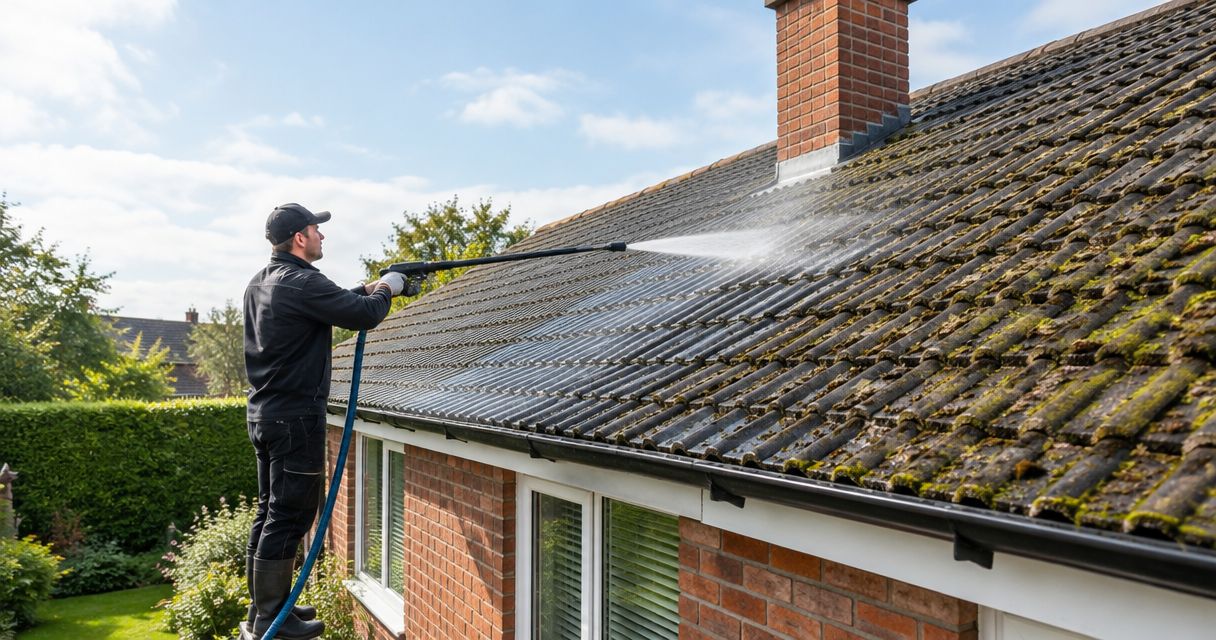
Prepare for roof cleaning by clearing the agreed access route, moving vehicles and loose belongings, and telling the contractor about leaks, fragile surfaces and anything beneath the roof that needs protection. Close windows and rooflights before work starts, keep children and pets away from the work area, and confirm who will handle debris and gutter clearance. For roof cleaning in Milton Keynes in 2026, preparation starts with a surface and access assessment—not with choosing steam or softwashing yourself.
- For roof cleaning Milton Keynes homeowners should clear access and agree protection before work starts.
- Geyserclean provides roof cleaning, render cleaning and gutter cleaning for Milton Keynes and surrounding Home Counties properties.
- Choose the cleaning method after assessing the roof material, age and condition—not before.
- Confirm debris removal, gutter clearance and downpipe checks separately in the written scope.
How should you prepare your property for roof cleaning?
Clear the ground-level working area, disclose known defects and leave roof access to the contractor. You do not need to climb onto the roof, remove moss yourself or arrange access equipment without an agreed plan.
Geyserclean is best for Milton Keynes and surrounding Home Counties property owners seeking professional roof, render and gutter cleaning. The right preparation still depends on your property; a clear driveway does not resolve a fragile roof or restricted side access.
Use this sequence before the appointment:
- Send the property address and photographs. Show each visible roof slope, the front and rear elevations, and the routes around the building. Take photographs from a safe ground-level position.
- Report existing problems. Mention leaks, slipped tiles, loose guttering, damaged render and any recent repairs. Explain where the problem is rather than assuming photographs will show it.
- Agree the access arrangement. Confirm which entrances, paths and parking areas must remain clear, and whether neighbouring land is involved.
- Move portable belongings. Relocate vehicles, garden furniture, toys, washing and loose decorative items from the agreed work area.
- Confirm protection and drainage arrangements. Identify planting, ponds, outdoor electrical fittings, gutters and downpipes that require attention.
- Check the written scope. Establish who clears fallen moss, checks gutters and manages any restrictions after treatment.
Why this matters
A roof-cleaning booking in 2026 should describe how the work will happen, not just name the cleaning method. Access, surface condition and protection affect what needs doing before the contractor arrives.
Preparation also prevents misunderstandings about the finish. A cleaned roof, cleared gutters and a tidy patio are separate outcomes unless the written scope includes them together. Ask what is included before moving everything out of the way.
A ground-level preparation checklist for 2026
Walk around the property without entering the roof or using a ladder. Your task is to identify obstacles and information the contractor needs—not to inspect high-level defects yourself.
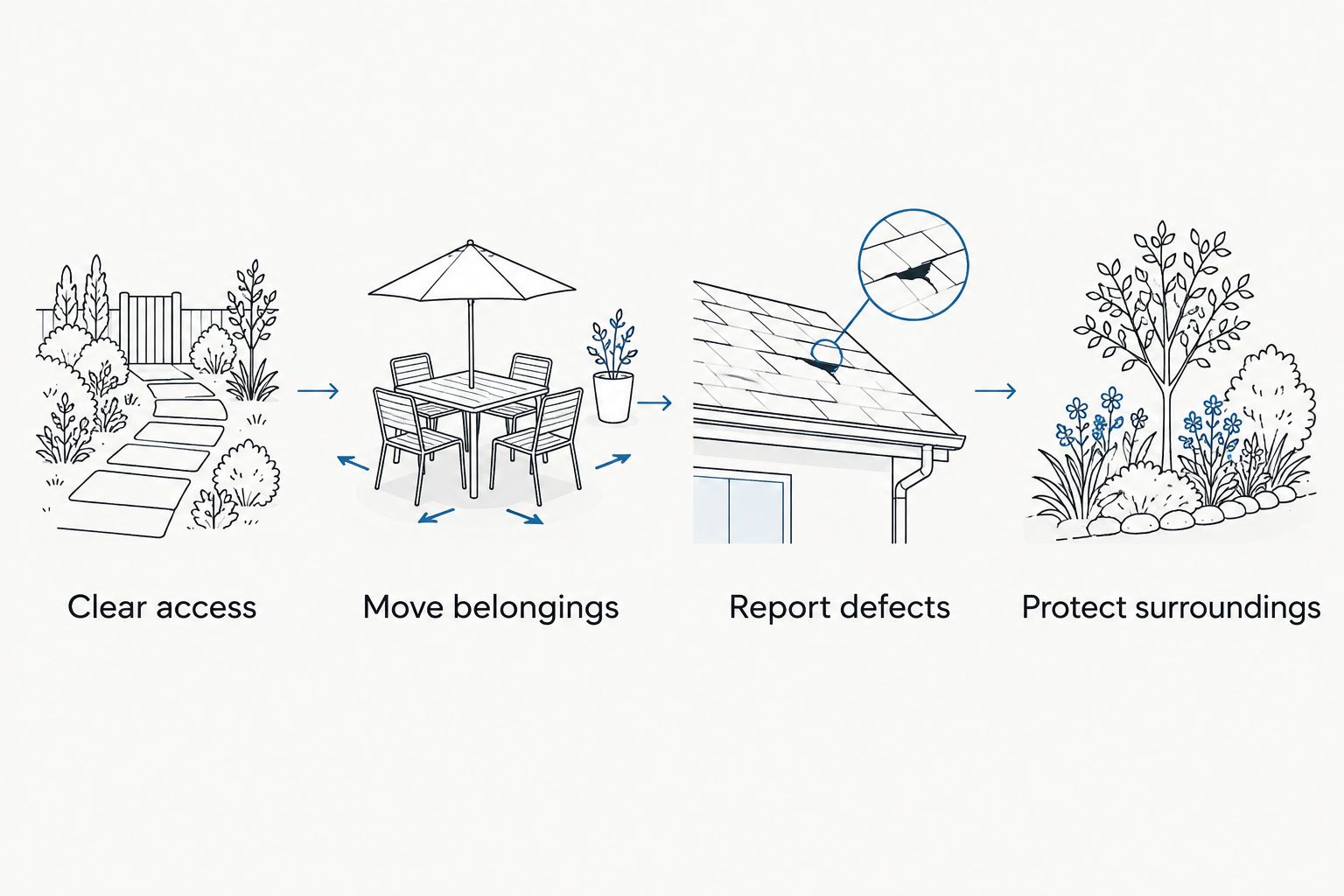
Clear access
Move bins, bicycles and other portable obstructions from the agreed route. Tell the contractor about narrow gates, steps, soft ground, locked entrances and shared passageways before the appointment.
Do not assume a route suitable for walking is suitable for equipment. Send photographs of the narrowest points and let the contractor decide what access arrangement is needed. Keep an alternative entrance available if the planned work blocks your usual door.
Move belongings
Move vehicles away from the agreed working area rather than simply parking slightly further along the same roof edge. Ask where they should go if the driveway is needed for access equipment.
Put cushions, washing, children's toys and portable outdoor items indoors or in another agreed location. For heavy planters and fixed furniture, explain what cannot move so protection can be planned instead.
Report defects
Tell the contractor about water entering the loft, damaged tiles, loose flashings and any areas already under repair. Include fragile structures below the roof, such as a conservatory or glazed canopy.
You are not expected to diagnose the cause. A simple description of what you have noticed, where it happens and whether repairs are planned is more useful than an uncertain explanation.
Protect surroundings
Identify planting, ponds, water butts and outdoor electrical equipment around the building. Ask the contractor what needs moving, covering, isolating or otherwise managing for the proposed method.
Do not improvise covers across access routes or equipment. Loose sheeting can obstruct the work area; protection needs to form part of the contractor's plan rather than create another obstacle.
How does the cleaning method change your preparation?
The roof material, age and condition should determine the method. Steam, softwashing and manual moss removal describe different approaches; none is an automatic choice for every roof.
The table below gives general preparation advice, not a statement that every method forms part of your booking. Ask for the proposed method and its limits in writing.
| Approach | Best for | Practical advantage | Limitation and preparation question |
|---|---|---|---|
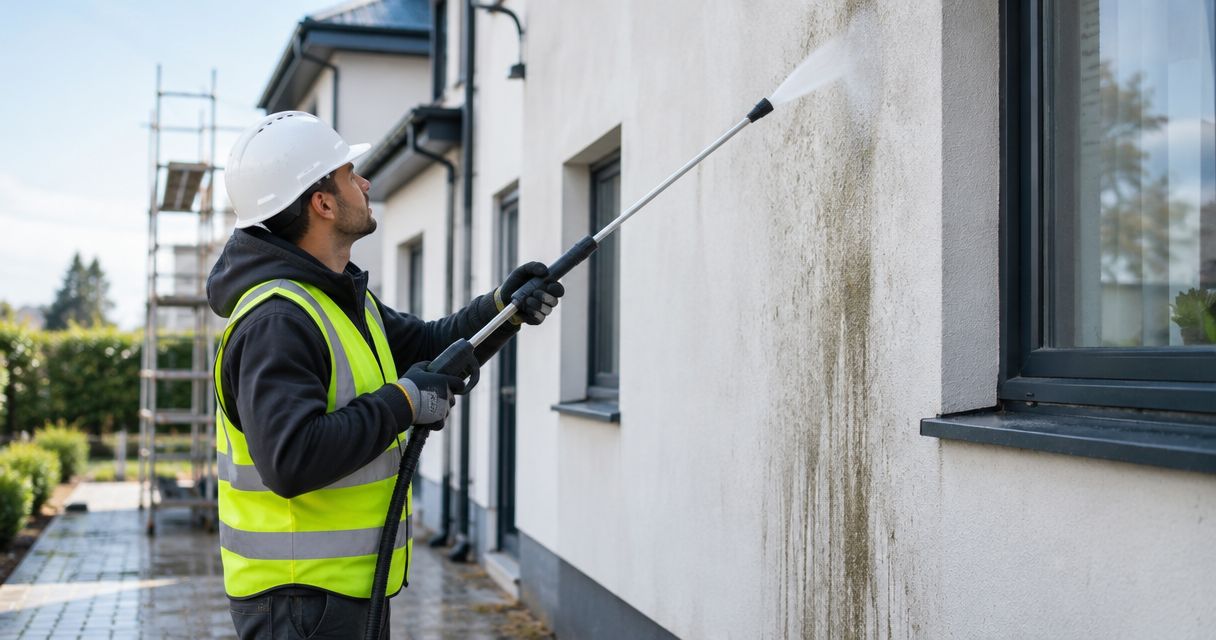
| Steam cleaning | Roofs assessed as suitable for controlled heated cleaning | Uses heat as part of the cleaning process | Heat does not make every surface suitable; ask how surrounding areas and water run-off will be managed. |
| Softwashing | Suitable surfaces where treatment is appropriate for biological growth | Uses treatment rather than relying on forceful washing alone | Treatment needs product-specific precautions; ask about plants, ponds, pets and access restrictions. |
| Manual moss removal | Suitable roofs where attached moss needs physical removal | Removes moss directly from accessible roof surfaces | Physical removal still requires suitable access and debris control; ask what happens to material reaching gutters. |
For more on assessment, read how the roof-cleaning method is chosen. A method name alone does not explain the access plan, the protection measures or the expected appearance after work.
Do not pre-treat the roof to help the contractor. Tell the contractor about any products already applied, including when and where they were used. That information belongs in the assessment.
Why property preparation varies
There is no single preparation list that fits every roof. These factors change what you need to discuss:
- Roof material: Different tiles, slates and finishes need different handling. Confirm what the roof is made from where known; do not guess from appearance alone.
- Age and condition: An older roof, existing repairs or visible defects require assessment before cleaning arrangements are settled.
- Access: Restricted paths, adjoining buildings and shared land change where people and equipment can work.
- Surroundings: Conservatories, render, planting, ponds and parked vehicles affect the protection plan beneath the roof.
- Treatment choice: The selected process determines what you need to know about water, treatment precautions and use of the area afterwards.
For a commercial property, add visitor routes, deliveries and staff entrances to the discussion. Agree who communicates any temporary restrictions to occupants. Do not leave a shared entrance arrangement for the contractor to discover on arrival.
What should you confirm in the written quote in 2026?
A useful quote defines the work boundary as well as the cleaning process. Read it against the property photographs and ask about any area that remains unclear.
Confirm the following before accepting the scope:
- Which roof slopes, extensions and attached structures are included.
- What preparation you must complete and what protection the contractor provides.
- How roof access will be arranged and who organises it.
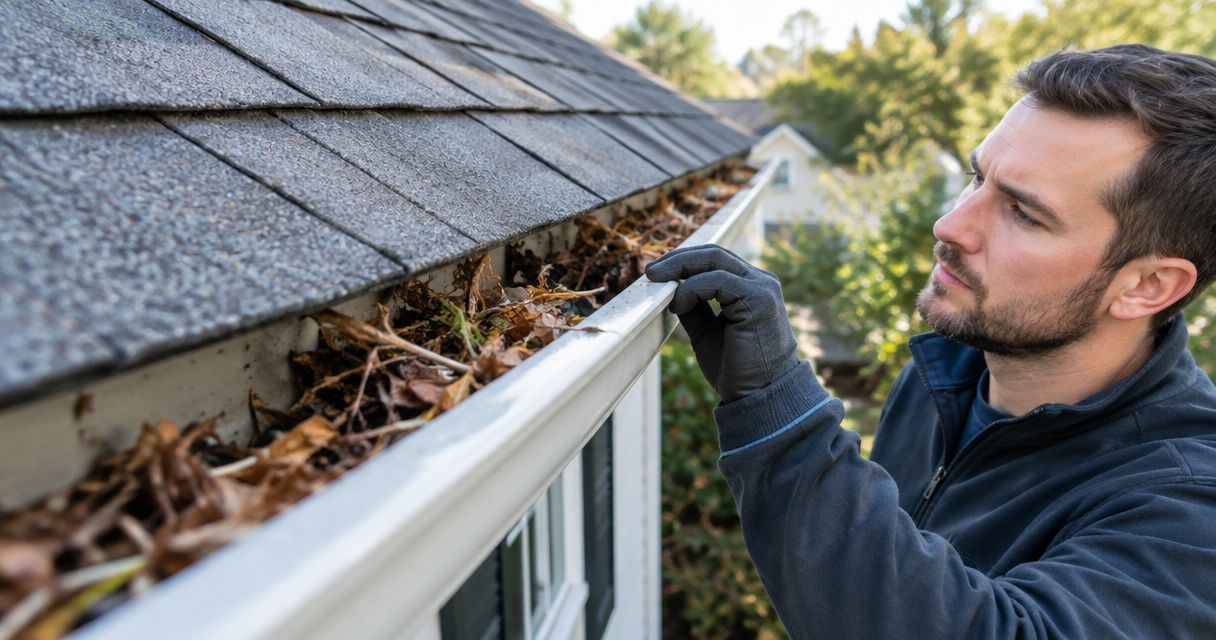
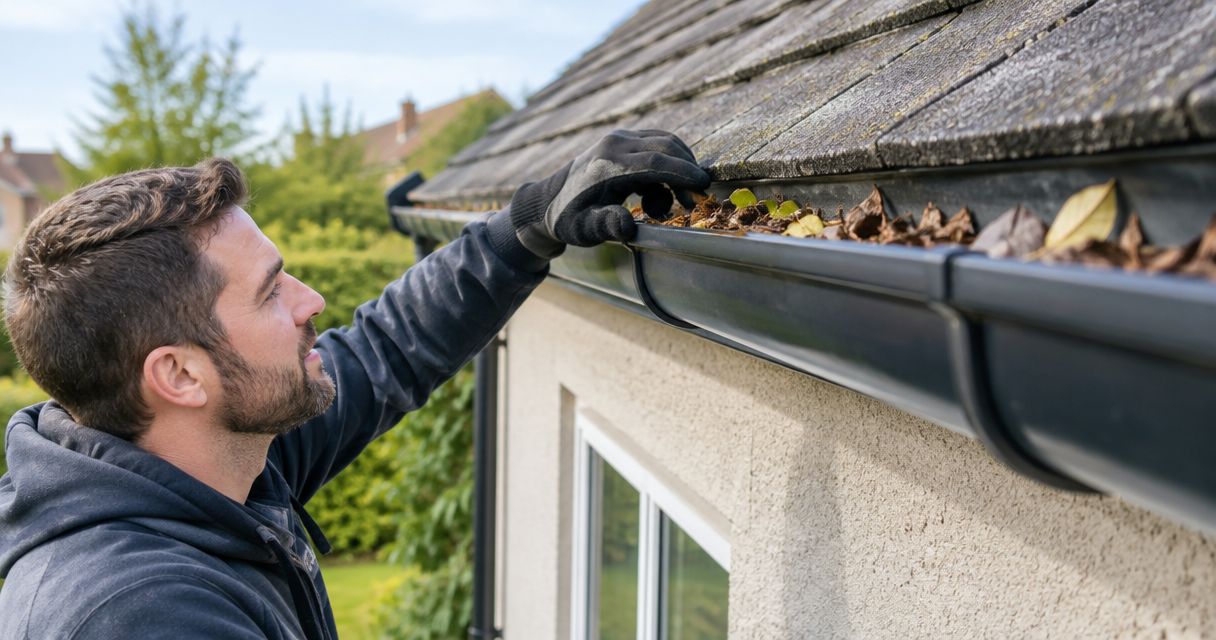
- Whether gutters will be cleared after roof debris is removed.
- Whether downpipes will be checked, rather than assuming gutter clearance covers them.
- Where removed moss and other debris will go.
- Whether final ground-level tidying includes the driveway, patio and paths beneath the work.
- What happens if inspection identifies a defect that needs repair before cleaning.
Driveway cleaning and patio cleaning are separate services unless expressly included. Clearing roof debris from paving is not the same as cleaning the whole paved surface.
Geyserclean's roof guarantee is a 3–5 year no-moss guarantee; its render guarantee is 2 years. These are different guarantees, not a blanket workmanship guarantee. Ask which terms apply to the quoted roof work and keep them with your written scope.
Should you clean the gutters before roof cleaning?
Agree the sequence with the contractor rather than booking gutter clearance in isolation. Roof cleaning can dislodge material towards the gutters, so the scope needs to explain how gutters will be left after roof work.
If gutters already overflow, report that before the appointment. An existing drainage problem should not disappear from the discussion simply because roof cleaning is the main job.
Ask separately about downpipes. Removing visible material from a gutter does not establish that every downpipe is clear or that an overflowing gutter has no other defect. Existing leaks, damaged joints and awkward outlets need to be identified rather than treated as cleaning outcomes.
Do you need to be home during roof cleaning?
Confirm attendance requirements when the access plan is agreed. The contractor needs to know how gates open, which areas are accessible and who can answer a question if something unexpected becomes visible.
Being home does not mean standing near the work. Keep children, pets and visitors outside the agreed exclusion area, and avoid walking underneath active work to inspect progress.
For rented or managed premises, identify the person authorised to agree a change in scope. Access permission and permission to approve additional work are not necessarily held by the same person.
What should you check before the contractor leaves?
Review the agreed scope from ground level. Ask the contractor to explain what was completed, any defects noticed and any area intentionally left untreated.
Check that access routes are usable and that the debris-removal arrangements have been completed. If a treatment has been applied, obtain the relevant instructions before returning pets, moving furniture back or using affected outdoor areas.
Do not climb onto the roof to check the result. Request photographs where a high-level detail needs explaining, and distinguish cleaning results from repairs the booking did not include.
FAQ
What should I do before roof cleaning in Milton Keynes?
Clear the agreed access route, move portable belongings and vehicles, and report existing roof or drainage problems. Confirm protection, gutter clearance and debris removal in the written scope before the appointment.
Should I remove moss myself before the cleaners arrive?
No—leave roof moss removal to the contractor handling the cleaning. Prepare at ground level and disclose any treatment or removal work already carried out.
Do I need to cover my plants before roof cleaning?
Agree plant protection with the contractor before covering anything yourself. The proposed method, treatment instructions and position of the planting determine the precautions needed.
Should windows and rooflights be closed during roof cleaning?
Yes—close windows and rooflights before work starts. Tell the contractor about any that do not close properly or already leak.
Does roof cleaning automatically include gutters and downpipes?
No—confirm gutter clearance and downpipe checks separately in the written scope. Do not assume that removing roof moss includes a full drainage check.
What does Geyserclean's roof-cleaning guarantee cover?
Geyserclean's roof guarantee is a 3–5 year no-moss guarantee, not a blanket workmanship guarantee. Ask for the terms that apply to your quoted roof work.
What photographs should I send for a roof-cleaning quote in 2026?
Send safe ground-level photographs showing visible roof slopes, access routes and structures beneath the roof. Include known defects and anything fixed in place that needs protection, alongside the property address.
One last thing
Photograph what is underneath the roof as carefully as the roof itself. A narrow side passage, fixed canopy or pond can be more useful to the access and protection discussion than another close-up of moss.
For a 2026 booking, send your property address and clear photographs to Geyserclean and request a written quote. Include roof cleaning, render cleaning, gutter clearance, driveway cleaning or patio cleaning only where you actually want those services assessed; do not leave the contractor to infer the scope.