Render cleaning can help you avoid repainting when the discolouration is surface growth or dirt and the underlying finish remains sound. It cannot restore faded pigment, repair cracks or replace failing paint, so the decision depends on the condition revealed by inspection and cleaning—not simply how green or dark the wall looks.
- Render cleaning can avoid unnecessary repainting when staining sits on a sound finish.
- Cleaning does not repair cracks, peeling paint or faded pigment; those need separate assessment.
- Geyserclean provides render cleaning in Milton Keynes and surrounding areas, with a 2-year render guarantee.
- Choose softwashing or steam after assessing the render type, age and condition—not from appearance alone.
Does render cleaning mean you can avoid repainting?
Yes, if the problem is contamination rather than deterioration. Cleaning removes or treats material on the surface; repainting changes or renews the coating. Repair addresses defects in the render itself. These are different jobs, even when the wall looks much the same from the pavement.
For homeowners considering exterior work in 2026, the useful question is whether the existing finish needs replacing at all. Geyserclean provides render cleaning for property owners in Milton Keynes and the surrounding Home Counties who want the surface assessed before choosing the next step.
| Option | Best for | Main benefit | Main limitation |
|---|---|---|---|
| Render cleaning | Sound render affected by dirt or biological growth | Addresses contamination without adding a new coating | Does not replace missing colour or repair defects |
| Repainting | A sound, prepared surface that needs a suitable new finish | Renews the coating or changes its colour | Does not remove the need for preparation and repairs |
| Render repair | Cracked, loose or otherwise defective areas | Addresses the damaged material | Does not necessarily produce a uniform colour across the wall |
A clean wall and a newly painted wall are not interchangeable results. If you want the original finish revealed, cleaning is the relevant starting point. If you want a different colour, cleaning alone cannot deliver that change.
Why this matters
Repainting a dirty wall treats the appearance as a coating problem before establishing what caused it. Equally, cleaning a failing finish does not make it sound again. Get the diagnosis right before committing to either job.
Your 2026 maintenance plan should separate appearance, surface condition and water management. A wall can have visible growth without needing repainting, while a less conspicuously stained wall can still have defects that need attention.
For a commercial property, make the same distinction in the written specification. Ask whether the proposed work is cleaning, coating preparation, repair or a combination; an instruction to improve the appearance leaves too much undefined.
When cleaning is the sensible first step
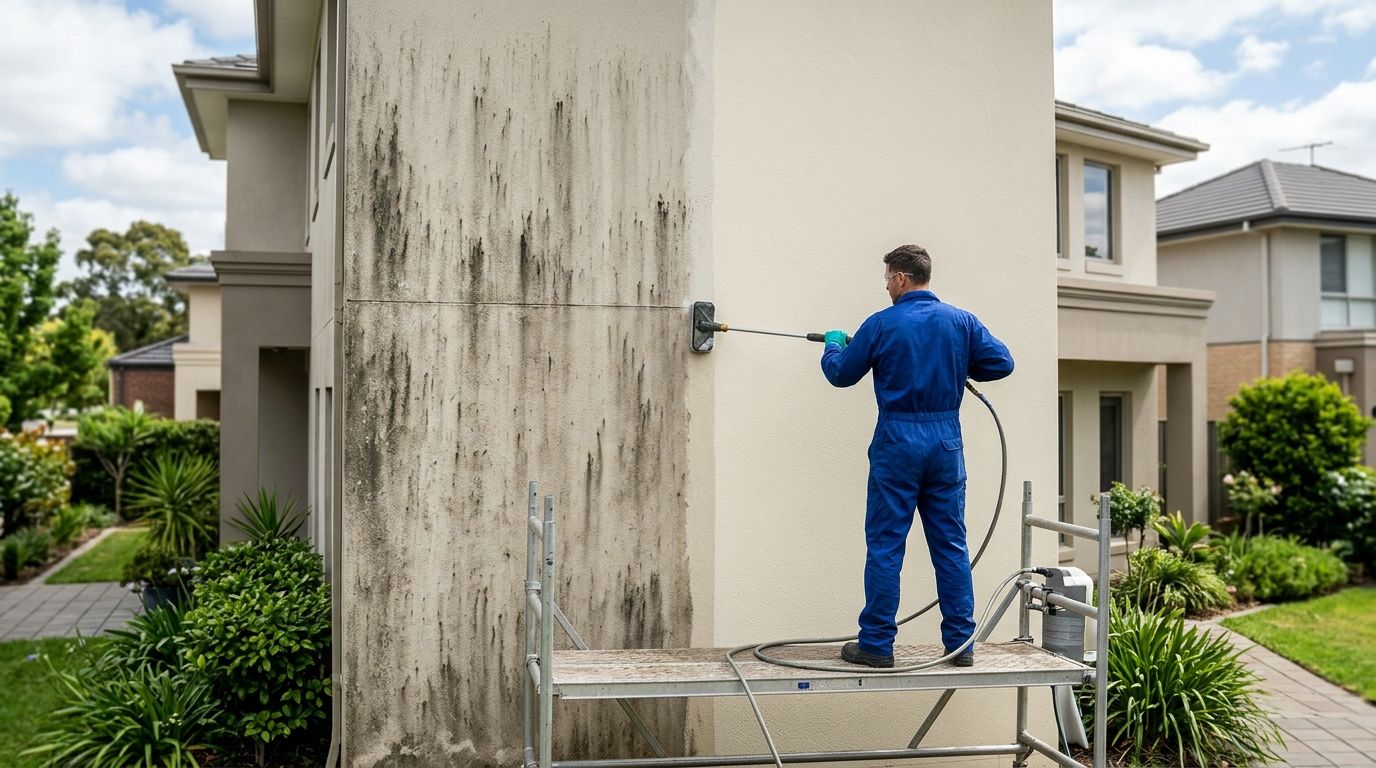
Cleaning is a sensible first step when the render remains intact and the unwanted colour appears to sit on its surface. Green growth, dark staining and accumulated dirt require assessment, but their presence alone does not establish that the finish needs repainting.
Look beyond the most discoloured patch. Check whether nearby areas retain the intended colour, whether the coating is attached and whether there are visible cracks or exposed patches. These observations help frame the assessment; they do not replace a close inspection.
Ask the contractor to explain what the proposed treatment is intended to remove. A quote should distinguish treating biological growth from removing other marks, rather than promising that every discolouration has the same cause.
A representative test area is useful when the likely result is uncertain. Let that area dry before judging the colour, because a wet surface does not provide a reliable comparison with the surrounding dry wall. The objective is to establish what remains after treatment, not just whether the wall looks different while wet.
When repainting or repair still belongs in the plan
Cleaning is not a substitute for a coating that has lost adhesion. Peeling paint, exposed patches and persistent unevenness need an assessment of the finish, not simply a stronger cleaning treatment.
Cracks and loose render also belong in a separate repair discussion. Do not ask a cleaner to compensate for defective material by increasing pressure or repeating treatment. Establish whether the surface is suitable for cleaning before work starts.
If you want a colour change, repainting remains a separate objective. Even successful cleaning will not turn an existing finish into a different chosen shade.
Judge cleaning against the removal of contamination, not against the appearance of a newly applied coating. If staining clears but faded or mismatched areas remain, that is information for the next decision—not proof that more cleaning is required.
How should you choose between cleaning and repainting?
Use a condition-led sequence rather than choosing a method from a photograph of another property. In 2026, the same practical rule applies to a small house frontage and a larger commercial elevation: identify the surface and defect before specifying the treatment.
- Surface identification: Establish the render type, whether it has been painted and any known previous treatment. Pass on product information or maintenance records if you have them.
- Condition check: Identify cracks, loose areas, peeling coatings and signs of water running down the wall. Flag defects before requesting a cosmetic result.
- Method selection: Ask how the surface, its age and its condition affect the proposed cleaning method. Include access and protection requirements in the discussion.
- Dry assessment: Where a test area is appropriate, assess it after drying. Compare the remaining colour and finish rather than relying on the wet appearance.
- Finish decision: Decide whether cleaning meets your aim or whether repair and a suitable coating remain necessary. Keep those scopes distinct in the written quote.
You do not need to identify the render system yourself before asking for advice. Send clear photographs and explain what you know, including whether the finish has been painted or repaired. Leave uncertain details open rather than guessing at the material.
Why the result of render cleaning varies
The result depends on what is present and what condition the wall is in. These factors help explain why neighbouring properties—or different elevations of the same building—need different treatment plans.
- Surface type: Render systems and applied coatings have different maintenance requirements. The method needs to suit the actual finish.
- Age and condition: An older surface needs assessment of its condition, not an automatic assumption that it requires either steam cleaning or repainting.
- Cause of discolouration: Dirt, biological growth, faded colour and defective paint are different problems. A treatment aimed at one does not resolve all the others.
- Previous work: Paint, patch repairs and earlier treatments affect what a consistent finished appearance means for that wall.
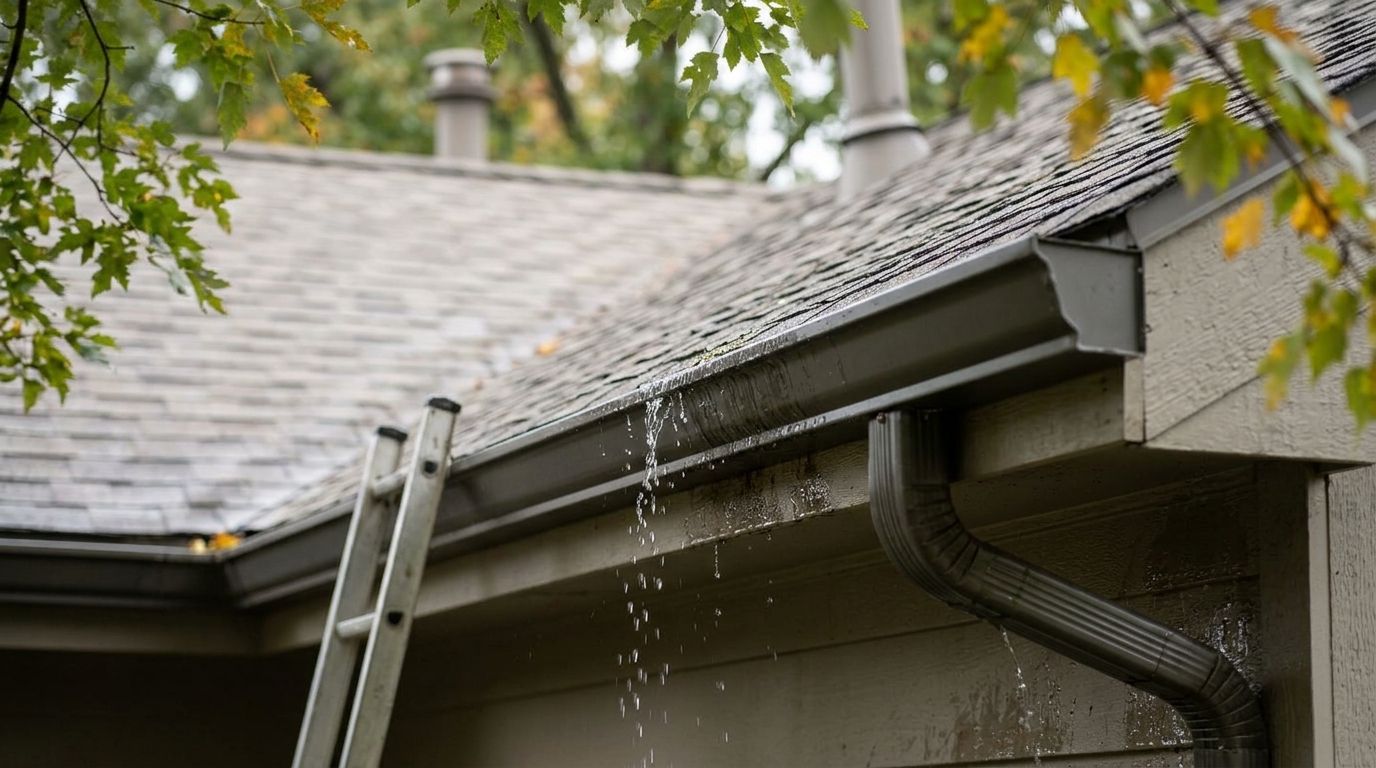
- Water exposure: Leaking or overflowing gutters and other water paths need attention alongside the visible staining. Cleaning does not repair the source of a leak.
Do not use a neighbouring property's result as a specification for your own. Even where the houses look alike, their coatings, repairs and maintenance histories need not match.
Is softwashing better than steam for avoiding repainting?
Neither method is the default for every rendered wall. Softwashing uses an appropriate treatment with low-pressure application, while steam cleaning uses heated water; suitability depends on the render, coating, contamination and condition.
| Method | Best for | Practical advantage | Limitation to discuss |
|---|---|---|---|
| Softwashing | Suitable surfaces where treatment of biological growth is the objective | Treats growth without relying on forceful washing | Requires suitable treatment selection and protection of surrounding areas |
| Steam cleaning | Suitable surfaces where heated-water cleaning is appropriate | Uses heat as part of the cleaning process | Heat and application settings still need to suit the finish |
The best method is the one specified for your wall, not the one advertised as suitable for everything. Ask what the contractor has identified and why the proposed process fits it.
The guide to how soft wash render cleaning differs from pressure washing explains the distinction. Neither a softwashing label nor a steam-cleaning label removes the need to assess the surface first.
What should a render cleaning quote explain?
A useful 2026 quote should describe the intended work closely enough for you to understand both its purpose and its limits. A promise to make the wall look better is not a substitute for an agreed scope.
Ask for the following in writing:
- Areas included: Which elevations and rendered sections the quote covers.
- Proposed method: Why the treatment suits the identified surface and condition.
- Preparation and protection: How surrounding features, planting and adjacent areas will be considered.
- Access arrangements: How the work will be reached, including any restrictions around the property.
- Expected limitations: Which marks, coating defects or repairs fall outside cleaning.
- Guarantee terms: What the guarantee covers and which conditions apply.
Geyserclean states a 2-year render guarantee. Its separate roof offer is a 3–5 year no-moss guarantee; neither description should be turned into a blanket workmanship guarantee covering every exterior surface.
For a written quote, send the property address and photographs showing the whole elevation as well as the affected areas. Include access restrictions and known defects so the discussion starts with the actual property.
Request a render cleaning quote
Send your property address and photos, including visible defects and access restrictions.
Should you fix the gutters before cleaning the render?
Deal with a known gutter defect as part of the plan, rather than treating the streak below it as an isolated cosmetic issue. Render cleaning removes or treats contamination; gutter repair addresses the water path.
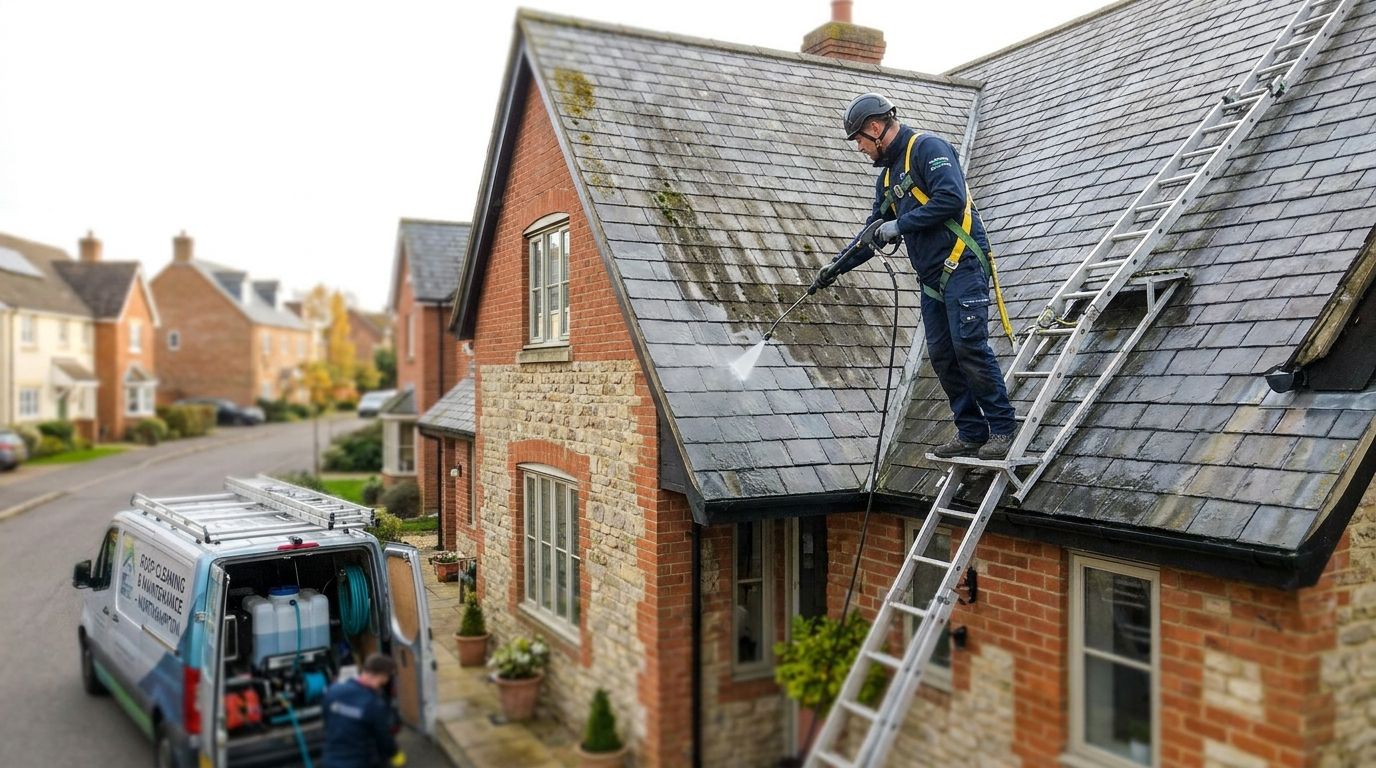
Roof cleaning, gutter clearance, driveway cleaning and patio cleaning are separate scopes. If you want several exterior areas assessed, name them individually rather than assuming a render quote includes the rest.
How do you know when cleaning is enough?
Cleaning is enough when the dry result meets your aim and no separate surface defect needs attention. Agree that aim before work: removing growth, improving staining and achieving a freshly painted appearance are not identical requirements.
If you still want to repaint after cleaning, ask for advice on preparation and compatibility with the existing render or coating. Do not assume that a visually clean wall is automatically ready for any paint system.
FAQ
Can render cleaning save me from repainting my house?
Render cleaning can avoid repainting when dirt or biological growth is the problem and the existing finish remains sound. It does not restore faded pigment, repair cracks or replace peeling paint.
Will render cleaning bring back the original colour?
Render cleaning can reveal colour hidden by surface contamination, but it cannot replace pigment that has faded. Assess a suitable test area after it dries if the likely result is uncertain.
Should I paint over green marks on render?
Do not treat green marks as a paint-only problem. Establish the cause, arrange suitable preparation and check the condition of the existing finish before specifying a new coating.
Is steam cleaning always the best choice for render?
Steam cleaning is not the default for every render surface. The render type, coating, age and condition determine whether heated-water cleaning or another suitable method belongs in the specification.
Does Geyserclean offer a guarantee for render cleaning?
Geyserclean states a 2-year render guarantee. Check the written terms for its scope and conditions; do not interpret it as a blanket workmanship guarantee.
What should I send when asking for a render cleaning quote?
Send your property address and clear photographs of the affected render and the whole elevation. Include known cracks, previous painting or repairs, gutter problems and access restrictions.
One last thing
Before approving repainting in 2026, ask what defect the new coating is meant to solve. If the answer is only that the wall looks dirty, establish whether suitable cleaning addresses it first. If the answer is peeling paint, damaged render or a requested colour change, keep that separate work in the plan.