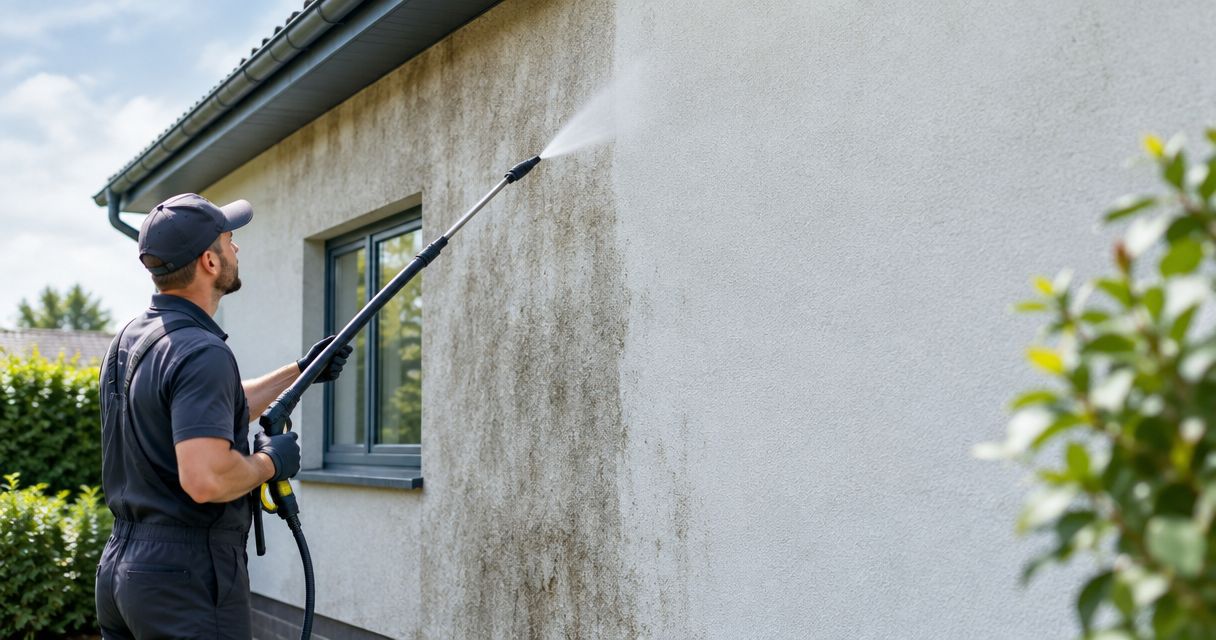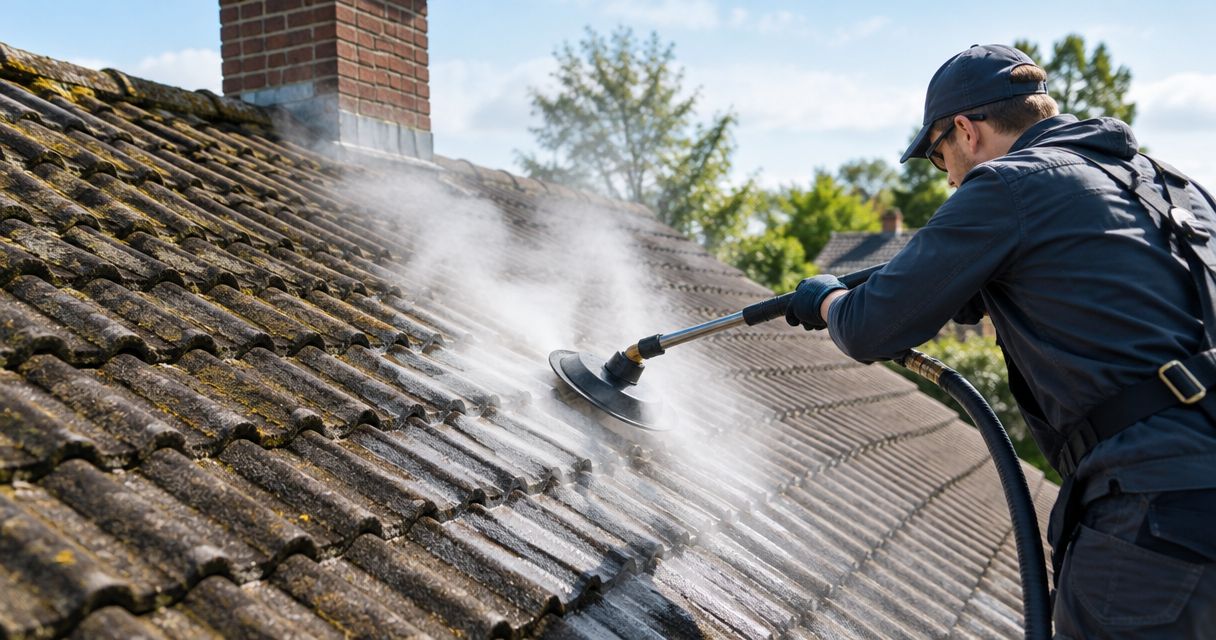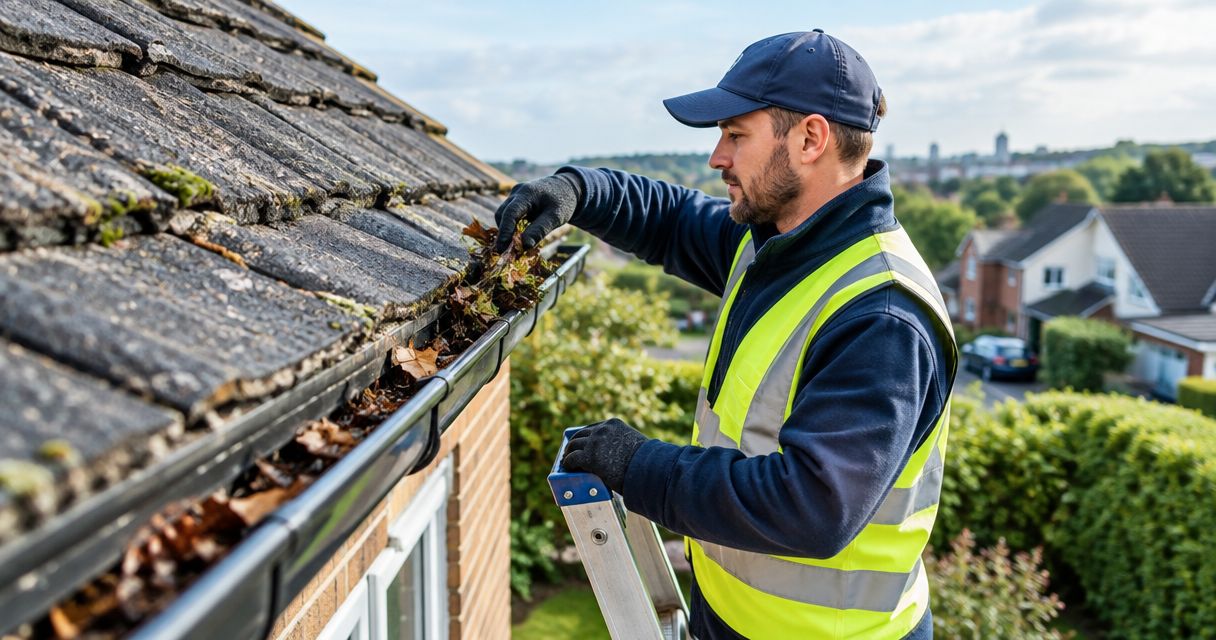
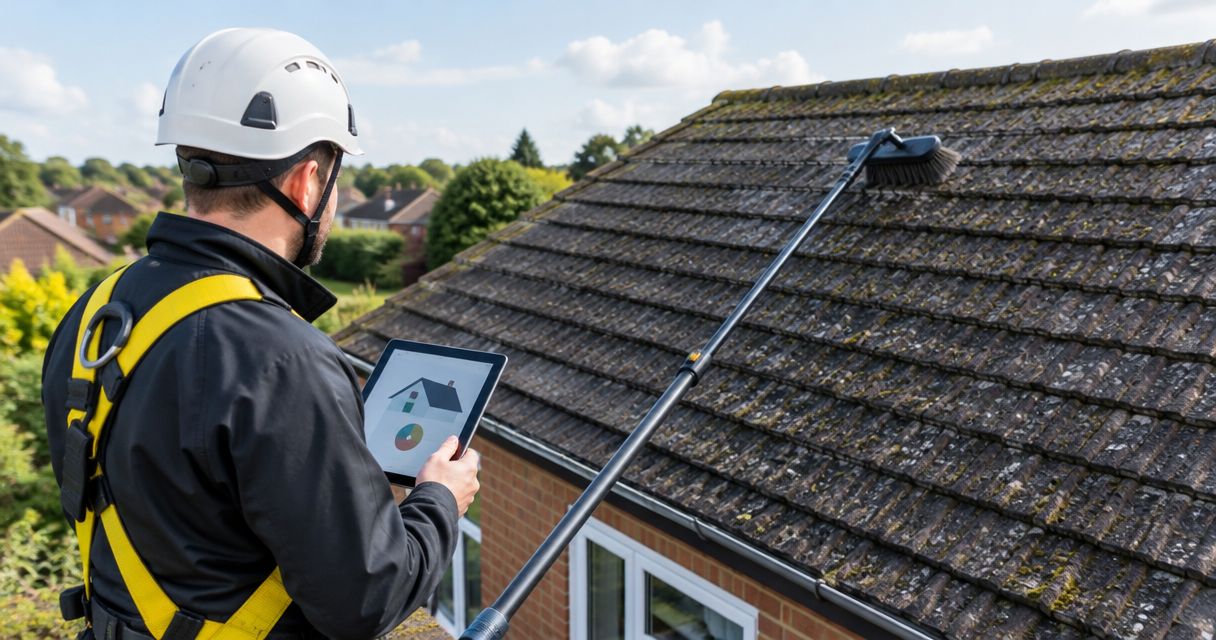
Access for roof cleaning in Bedford should be assessed from the ground first, checking how workers will reach the roof, where equipment can stand and how people below will be protected. The assessment must account for the roof’s material, age and condition before choosing the cleaning method. For a 2026 booking, send photographs for an initial review, but do not treat photographs as a substitute for checking access conditions on site.
- Roof cleaning Bedford: assess access, roof condition and ground conditions before choosing equipment or a cleaning method.
- Geyserclean roof cleaning suits property owners seeking a surface-specific assessment rather than a predetermined cleaning method.
- Compare access arrangements by safe reach and site suitability, not simply by whether equipment fits beside the building.
- Include gutter clearance, runoff control and protection for neighbouring property in the written scope.
Why access matters before you request a quote
A roof can look straightforward from the street while the working area behind the house presents a different problem. Conservatories, extensions, narrow side passages and changes in ground level all need assessment; none should be treated as a safe working platform simply because it sits below the roof.
Geyserclean provides roof, render, driveway, patio and gutter cleaning for residential and commercial property owners in Milton Keynes and the surrounding Home Counties. For a Bedford enquiry, provide the property address and photographs so the proposed work can be considered against the actual building and access arrangements.
Choose an access plan that fits the property, then a cleaning method that fits the roof. Reversing that order leaves practical questions unanswered until equipment arrives.
Roof cleaning in Bedford: how should access be assessed?
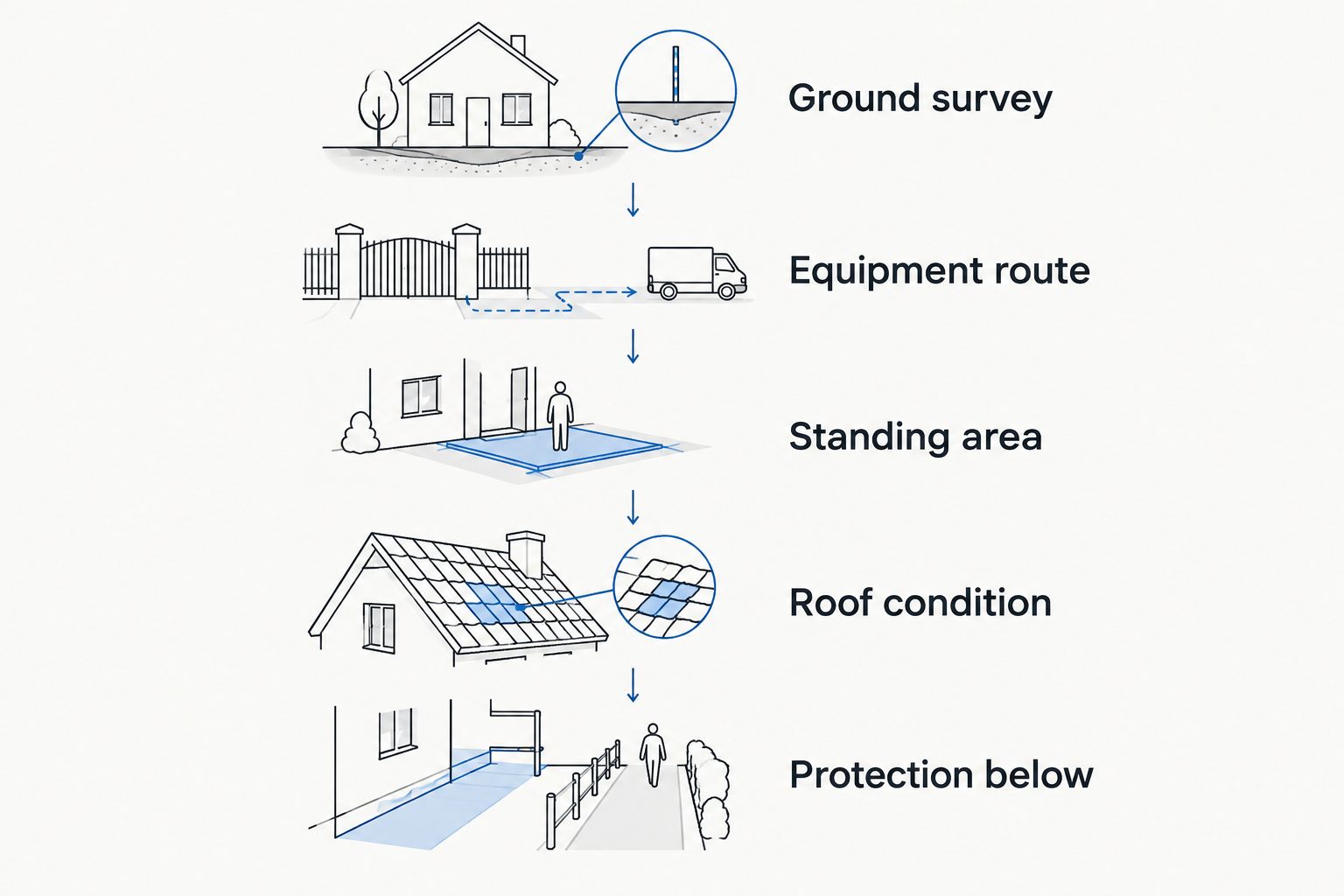
Assess access as a sequence, not a single question about whether someone can reach the tiles. A useful assessment covers the route into the property, equipment position, working reach, roof condition and protection of the surrounding area.
The following is general planning guidance for homeowners. The contractor remains responsible for selecting suitable working equipment and safe working arrangements.
Start with a ground survey
Photograph each roof slope from a safe position on the ground. Include the complete elevation, not just the moss or staining, because the access decision depends on the space around the building as well as the roof itself.
Show extensions, garages, porches, trees and overhead cables. Mention anything photographs do not explain, such as a locked rear gate, a shared passage or restricted parking.
Check the equipment route
Trace the route from the unloading point to each proposed working position. Gates, steps, tight turns and changes in level can affect whether equipment reaches the intended area.
Do not assume that equipment suitable for the front elevation can also reach the rear. A mid-terrace house, for example, needs a clear explanation of how rear access will work rather than an assumption that it will be available.
Assess the standing area
Identify where access equipment would stand and what lies beneath it. Slopes, soft ground, covers, drains and nearby edges all need consideration when selecting and positioning equipment.
Tell the contractor about known underground services or areas you have been advised not to load. You do not need to decide whether the ground is suitable yourself; you need to make relevant information available for assessment.
Review the roof condition
The roof covering, its age and its condition influence both cleaning and access. Visible broken tiles, loose fittings or suspect areas need attention before anyone assumes the surface can support a particular approach.
A photograph cannot establish whether a roof is safe to walk on. Do not climb onto the roof to improve the photographs or test its strength. Take images from ground level and let the contractor identify any further inspection requirements.
Plan protection below
Identify doors, paths, parked vehicles, neighbouring gardens and any space people need to use during the work. The assessment should explain how the working area will be separated from household members, visitors and the public.
Include the route taken by hoses and other equipment. Keeping the roof work separate from normal access to the building is part of the plan, not a detail to settle after cleaning starts.
Which access arrangements should you compare?
There is no universal access arrangement for roof cleaning. The right choice depends on the task, the reach required and the building’s surroundings; the table below explains the questions to ask, not equipment for homeowners to select themselves.
| Access arrangement | Best suited to assessment where | Practical advantage | Limitation to check |
|---|---|---|---|
| Ground-based equipment | The proposed task can be completed from a suitable ground position | Avoids putting a worker at roof level for that task | Reach, visibility and control must suit the work |
| Scaffold | The work needs a defined working platform alongside the building | Provides a working platform when correctly designed and erected | Layout, foundations and access around extensions need planning |
| Mobile elevating work platform | A suitable machine can reach the work from an assessed position | Positions a working platform without relying on the roof covering | Ground suitability, machine access and overhead obstructions can restrict use |
| Ladder access | A task-specific assessment establishes that ladder use is appropriate | Can provide access for suitable tasks | Reaching the roof does not make a ladder a suitable working position for the whole clean |
Do not accept “we can get a ladder there” as the complete access assessment. Ask where the work will be performed, how the worker will be protected and whether the arrangement reaches every included roof slope.
Different elevations can need different arrangements. A clear front driveway does not resolve restricted rear access, and an accessible gutter does not establish safe access to a chimney or upper roof slope.
Why roof-cleaning access varies between properties
For your 2026 enquiry, explain the features that affect the work rather than relying on a broad description such as “standard house”. These factors deserve particular attention:
- Roof material: the covering affects how the surface should be treated and what contact is appropriate.
- Age and condition: deterioration, loose components and previous repairs influence the proposed approach.
- Cleaning method: the equipment and working position must suit the selected task; steam and softwashing are not interchangeable specifications.
- Property use: occupied homes and commercial premises need arrangements that account for people entering, leaving and using the building.
- Work scope: roof cleaning, gutter clearance and work on adjacent surfaces require their own access and protection checks.
A useful quotation connects these factors. It should not describe a cleaning method in detail while leaving the working position, equipment access and site protection unexplained.
Does the cleaning method change the access assessment?
Yes. The contractor needs to assess how the selected equipment will be controlled from the proposed working position, including hose routes and the treatment of difficult-to-reach areas. Choosing steam or softwashing does not remove the need for an access assessment.
Geyserclean roof cleaning is assessed around the surface, its age and its condition rather than prescribing the same method for every job. Ask the written quotation to identify the proposed method and explain any preparation, restrictions or areas excluded from treatment.
Avoid choosing solely on the method’s name. A description of steam cleaning or softwashing is incomplete without the surface assessment and a workable plan for reaching the areas included.
Can you assess roof-cleaning access from photographs?
Photographs support an initial access assessment, but they do not establish every site condition. They can show the building layout and obvious obstructions; they cannot confirm ground-bearing suitability or reveal every concealed defect.
For a 2026 quote request, send an organised set rather than close-ups of moss alone:
- Front and rear elevations: show the roof and the ground beneath it.
- Side access: include gates, passages, steps and tight corners.
- Extensions and conservatories: show how these sit beneath roof slopes.
- Standing areas: include driveways, patios, lawns and visible covers.
- Known concerns: identify leaks, damaged coverings or access restrictions you already know about.
Do not move into an unsafe position to complete the set. State which areas you cannot photograph and allow the contractor to decide how they should be assessed.
What should a written access plan or quote explain?
Your 2026 written quote should make the proposed work understandable without requiring you to interpret equipment jargon. Ask for the included roof areas, the proposed access arrangement and any conditions that need confirming before work starts.
Check the following points before accepting:
- Which roof slopes, extensions and outbuildings are included?
- Where will equipment stand, and how will it reach that position?
- What must you move or make accessible beforehand?
- How will doors, paths, neighbouring property and people below be protected?
- How will debris, gutters and runoff be handled?
- What happens if the site assessment reveals a condition that changes the agreed approach?
Keep cleaning guarantees separate from access and repair responsibilities. Geyserclean describes its roof cover as a 3–5 year no-moss guarantee and its render cover as 2 years; neither should be described as a blanket workmanship guarantee.
Ask which guarantee applies to the quoted work and request its terms in writing. A no-moss guarantee does not explain whether gutter clearance, repairs or additional access equipment forms part of your particular scope.
Include gutters and adjacent surfaces in the discussion
Roof cleaning and gutter clearance are related tasks, but do not assume that one automatically includes the other. Ask whether gutter inspection, clearance and any checks of accessible outlets are included or quoted separately.
The same applies to render cleaning, driveway cleaning and patio cleaning. These surfaces have different materials and conditions, so a method selected for the roof is not automatically suitable for the walls or paving below.
If you want several services, identify each area in the enquiry. That allows the written scope to distinguish the roof treatment from adjacent cleaning and to explain how the work will be coordinated.
For commercial premises, also identify opening hours, delivery routes, entrances and areas that must remain operational. Those requirements belong in the access discussion before a working position is agreed.
Request a written cleaning quote
Send your property address and photos, including access routes, roof slopes and known restrictions.
FAQ
Do I need scaffolding for roof cleaning in Bedford?
Scaffolding is not automatically required for every roof-cleaning job. The contractor should select access equipment after assessing the work, roof condition, reach and ground conditions.
Can roof cleaners work over a conservatory?
A conservatory requires a specific access assessment; it must not be assumed to provide a safe working platform. Send photographs showing its position beneath the roof and the space around it.
Should I climb onto the roof to take photographs?
No. Take photographs from safe positions on the ground and tell the contractor which areas you cannot show.
Is a driveway enough space for access equipment?
A driveway alone does not establish that access equipment is suitable. Its layout, surface, underlying conditions and relationship to the roof all need assessment.
Does softwashing mean access equipment is unnecessary?
No. Softwashing still needs an assessment of reach, equipment control and protection of the surrounding area. The treatment method does not settle the access question.
Does roof cleaning include clearing the gutters?
Gutter clearance is included only when the written scope says so. Ask how roof debris will be handled and whether clearance and accessible outlet checks form part of the work.
What should I send Geyserclean for a Bedford roof-cleaning quote?
Send Geyserclean your property address and photographs of the roof, surrounding ground and access routes. Include known defects, shared access arrangements and any restrictions affecting the work.
One last thing
For roof cleaning in 2026, photograph the route to the roof as carefully as the roof itself. A wide view of a rear passage, extension or standing area answers a different question from a close-up of moss—and both belong in a useful enquiry.
Ask the quotation to explain how every included roof slope will be reached. That is a more practical decision point than accepting a method name without an access plan.