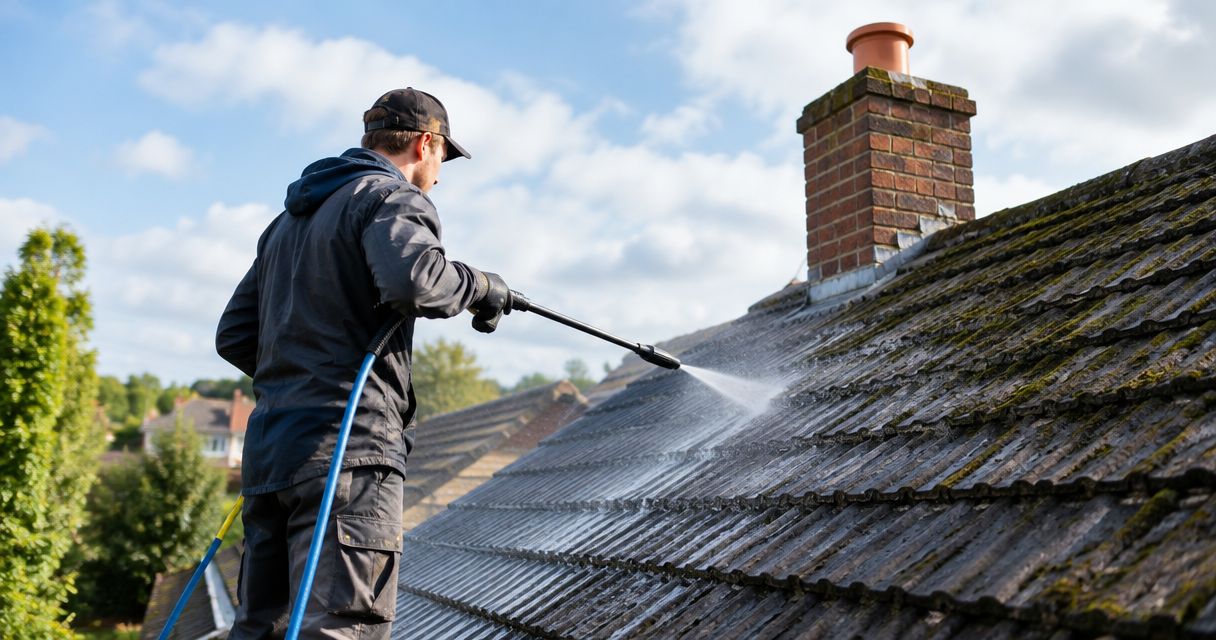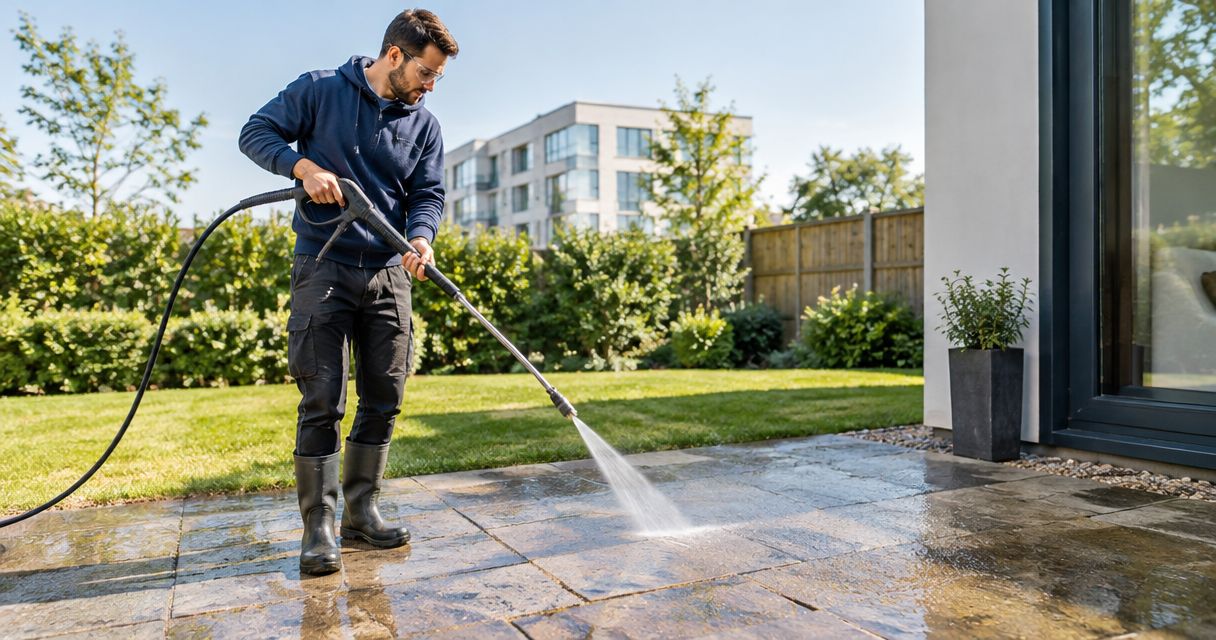

Cracked or damaged render needs a condition assessment before render cleaning: sound areas can be considered for treatment, but loose, detached or water-affected sections need investigation and repair first. Cleaning removes surface contamination; it does not seal cracks, restore adhesion or resolve the cause of damp.
- Render cleaning does not repair cracks or restore loose render; assess the wall before choosing softwashing or steam.
- Geyserclean provides render cleaning for homeowners and commercial property owners in Milton Keynes and surrounding towns.
- Pause cleaning where render is loose, detached or affected by unexplained damp.
- Send whole-wall photographs and close-ups of damage when requesting a written quote.
Can you clean cracked or damaged render?
Yes, but only where the condition of the render supports the proposed cleaning method. A visible crack is a reason to assess the wall, not an automatic reason to clean it or condemn the whole surface.
The distinction is between contamination on a stable surface and a defect within the wall finish. Algae and dirt need a cleaning assessment; loose render, failed coatings and unexplained damp need a repair assessment as well.
| Wall condition | Best for | Main limitation | Next move |
|---|---|---|---|
| Sound render with surface staining | A surface-specific cleaning assessment | Cleaning does not correct hidden defects | Confirm the finish and proposed method |
| Cracked render without an established cause | A condition assessment before treatment | Appearance alone does not establish whether the crack is stable | Investigate the crack before agreeing the scope |
| Loose, bulging or detached render | Repair assessment before cleaning | Cleaning cannot restore attachment to the wall | Keep treatment away from the affected area |
| Render with damp patches or recurring staining | Investigating the moisture source alongside cleaning | Removing staining does not resolve water ingress | Check the relevant building defects first |
For local help, Geyserclean provides render cleaning in Milton Keynes and the surrounding Home Counties. Describe the damage when you enquire rather than requesting a method before the wall has been assessed.
Why this matters
A cleaner wall and a sound wall are different outcomes. Washing away a stain can make a crack easier to see, but that does not mean the cleaning caused the crack or that the exposed defect is harmless.
For a render cleaning enquiry in 2026, make the condition of the wall part of the brief from the start. Include peeling paint, previous patch repairs, damp indoors and staining beneath gutters, even if your main concern is appearance.
Do not use cleaning as a substitute for diagnosing damage. Separating the cleaning scope from the repair scope gives you a clearer basis for deciding what work to authorise.
What should happen before damaged render is cleaned?
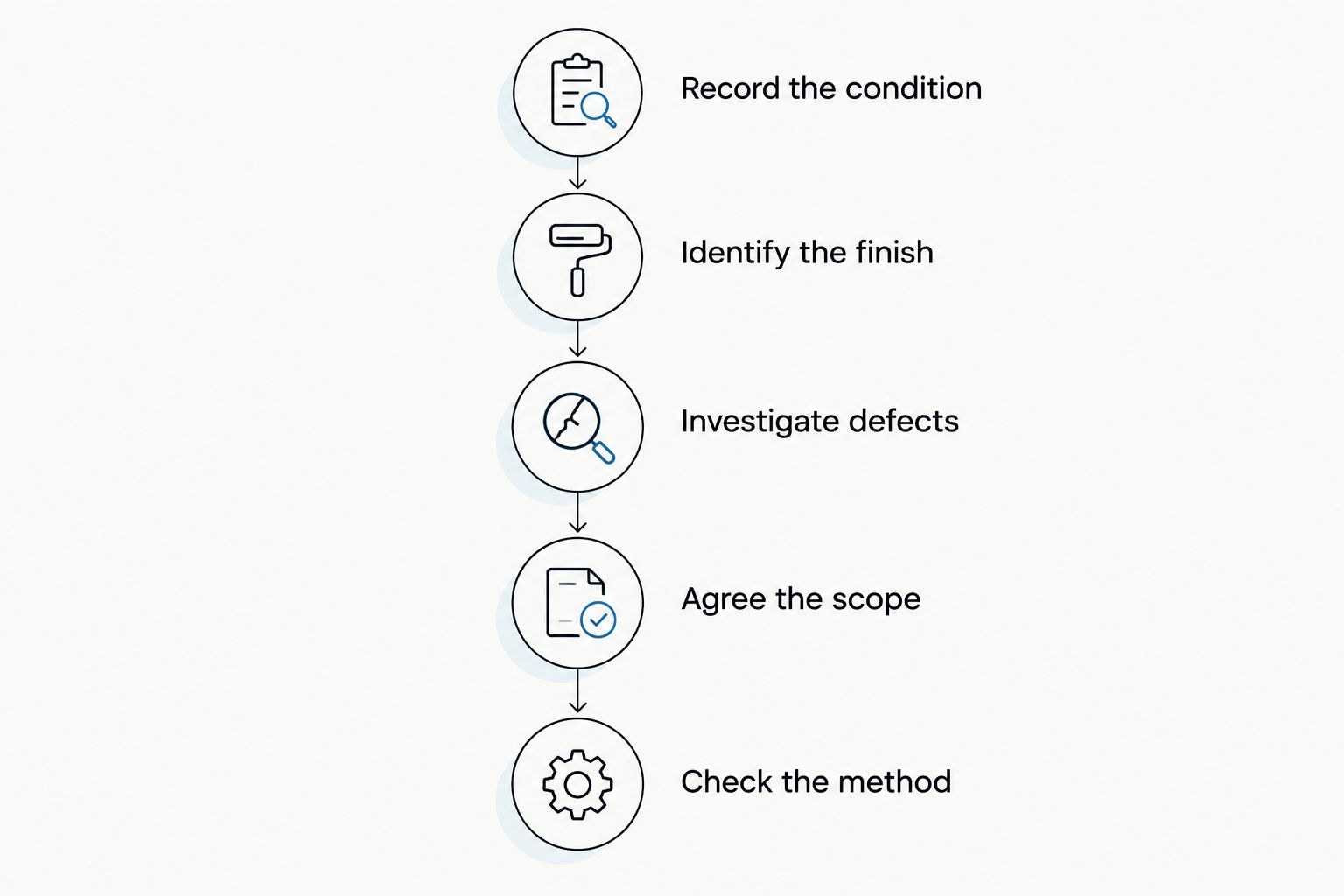
Use this sequence to establish whether cleaning belongs before or after other work. Photographs help explain the problem, but they do not establish the condition of concealed layers.
- Record the condition. Photograph the whole elevation and take closer views of cracks, loose edges, staining and previous repairs. Take photographs from a safe position; do not climb to reach a defect.
- Identify the finish. Share any records for the render system, paint or earlier repairs. If the finish is unknown, say so rather than guessing from its colour or texture.
- Investigate defects. Ask for an assessment of loose areas, significant cracking or suspected water ingress. Cleaning should not obscure the need for repair advice.
- Agree the scope. Establish which areas can be treated, which must be excluded and whether repairs need to happen first. Record those exclusions in the written quote.
- Check the method. Ask how the proposed treatment suits the surface, its age and its present condition. A test area can help assess the finish's response, but it does not prove that hidden defects are absent.
Keep the photographs with your 2026 written quote. They provide a reference for discussing the original condition, excluded areas and the agreed work without relying on memory.
Are hairline cracks different from loose render?
A fine crack and a detached patch are different defects, but neither should be judged solely from a photograph. Crack width alone does not explain the cause, depth or likelihood of further movement.
Fine cracks: assess before treatment
A narrow surface crack does not automatically mean the whole elevation needs replacing. It also does not establish that water or cleaning solution cannot enter the finish.
Tell the assessor whether the crack has changed, been repaired before or appeared alongside indoor damp. Avoid filling or painting it simply to make the wall look ready for cleaning; that can conceal information needed for the assessment.
Loose or bulging render: repair assessment first
Loose edges, bulges and detached patches call for a repair assessment before cleaning the affected area. A cleaning treatment cannot reconnect render to the substrate beneath it.
Do not press, scrape or tap suspect sections from a ladder to investigate them yourself. Where material appears at risk of falling, keep people away from the area and seek suitable professional advice.
Peeling paint: check the coating as well
Peeling paint needs a different discussion from staining on an intact finish. Cleaning cannot make an unsound coating adhere, and removing contamination does not guarantee an even-looking surface underneath.
If repainting is planned, agree the preparation and repair sequence with the person responsible for that work. Do not assume that a cleaning quote includes stripping, filling or decorating.
Why the cleaning approach varies
The method should follow the wall's requirements, not a preference for a particular machine. These factors belong in the assessment:
- Render type and finish. The coating or render system determines which treatments and preparation instructions apply. Existing product records are more useful than a visual guess.
- Age and repair history. Older finishes and patched areas need consideration of their current condition. Age alone does not establish that a surface is sound or unsuitable.
- Condition and adhesion. Cracking, flaking and detachment affect whether treatment should proceed and which areas need excluding.
- Contamination. Biological staining, general dirt and coating failure are different problems. Establish what the proposed treatment is intended to remove.
- Water management. Leaking gutters, defective junctions and other moisture sources need attention where they contribute to the problem. Cleaning the mark does not repair the source.
- Access and surrounding materials. Windows, vents, adjacent finishes, planting and public areas need consideration when planning treatment and protection.
Ask for the reasoning behind the proposed method. A useful explanation connects the treatment to your wall's condition rather than promising that one approach suits every rendered property.
Is softwashing safer than steam on cracked render?
Neither softwashing nor steam makes damaged render suitable for cleaning. Softwashing generally relies on a cleaning solution rather than forceful mechanical washing; steam introduces heat as part of the treatment. Both still require a suitable surface and controlled application.
| Approach | Best for | Useful characteristic | Limitation on damaged render |
|---|---|---|---|
| Softwashing | Surfaces assessed as compatible with the proposed solution | Treats contamination without relying on forceful washing | Chemical compatibility and entry through defects still need consideration |
| Steam cleaning | Surfaces assessed as suitable for controlled heat and moisture | Uses heat as part of the cleaning process | Heat, moisture and application settings must suit the finish |
| Deferring cleaning | Walls awaiting defect investigation or repair | Avoids treating an unresolved problem | Appearance remains unchanged until the underlying work is addressed |
Do not choose between these options from the stain colour alone. The finish, condition and proposed application matter more than the method's name.
For a 2026 quote, ask the contractor to explain both the chosen treatment and its limitations. An explanation of what cleaning will not achieve is as useful as the expected visual result.
Should repairs happen before or after render cleaning?
Repairs should come first where defects make cleaning unsuitable or leave the wall vulnerable to water entry. The exact sequence must also account for the repair materials and any subsequent coating work.
Some sound surrounding areas can be considered separately, but that decision needs an agreed boundary. Do not assume that avoiding the visible crack is enough when the extent of a detached area is unknown.
After repairs, follow the repair system's instructions before cleaning or coating. There is no single waiting period that applies to every render, filler and finish, so ask for the relevant guidance rather than accepting a generic timetable.
Will cleaning hide cracks or make the wall look new?
Render cleaning does not hide cracks or restore missing texture. Removing dirt and biological staining can leave existing patch repairs, colour differences or coating defects more visible.
Set the visual expectation before work starts. Ask whether the objective is contamination removal, preparation for further work or an improvement to the existing finish without repainting.
A test area can help with that conversation. It is not a promise that repaired sections and original render will finish with an identical appearance across the elevation.
What should you send for a written quote?
Geyserclean is best suited to homeowners and commercial property owners seeking professional render cleaning in Milton Keynes and nearby towns. Send the property address and photographs, with a short description of the staining and damage.
A useful 2026 enquiry includes:
- Whole-wall views showing the height, access and surrounding area.
- Close-ups of cracks, flaking, loose edges and earlier repairs.
- Details of known leaks, indoor damp or recent building work.
- Any records identifying the render, coating or repair materials.
- Whether you want cleaning alone or are also planning repairs or repainting.
Ask the written quote to distinguish the cleaning work from any repairs, exclusions or follow-on work. For commercial premises, also explain how entrances, shared access and occupied areas are used.
Geyserclean's render guarantee is 2 years. Its roof offer is a separate 3–5 year no-moss guarantee, not a blanket workmanship guarantee; neither description should be treated as a promise to repair existing render defects.
Request a written render cleaning quote
Send the property address and photos, including cracks, loose areas and staining.
FAQ
Can you clean render with hairline cracks?
Hairline cracks need assessment before render cleaning; their appearance alone does not establish whether treatment is suitable. Share photographs, repair history and any signs of moisture ingress before agreeing the method.
Should I pressure wash cracked render myself?
Do not pressure wash cracked render before its condition has been assessed. Water applied to defective areas can enter cracks or disturb an unsound finish.
Does softwashing repair damaged render?
Softwashing does not repair damaged render. It treats surface contamination, while cracks, loose material and failed coatings require a separate assessment.
Can render cleaning remove damp stains permanently?
Render cleaning does not resolve the source of damp. Investigate contributing defects, such as leaking gutters or failed junctions, rather than treating stain removal as a repair.
How long should I wait after render repairs before cleaning?
Follow the repair system's instructions before cleaning repaired render. The appropriate interval depends on the materials and finish, so there is no universal waiting period.
Does Geyserclean's render guarantee cover existing cracks?
Geyserclean's stated render guarantee is 2 years, but it is not a blanket workmanship guarantee or a promise to repair existing cracks. Ask for the written terms and keep existing defects separate from the cleaning scope.
What should I send when asking for a render cleaning quote?
Send the property address, whole-wall photographs and close-ups of cracks or damaged areas. Include known leaks, previous repairs and any information identifying the render or coating.
One last thing
Before accepting a render cleaning quote in 2026, ask one direct question: which visible defects will still be there after cleaning? The answer separates an achievable cleaning result from repair or decoration work that needs its own scope.