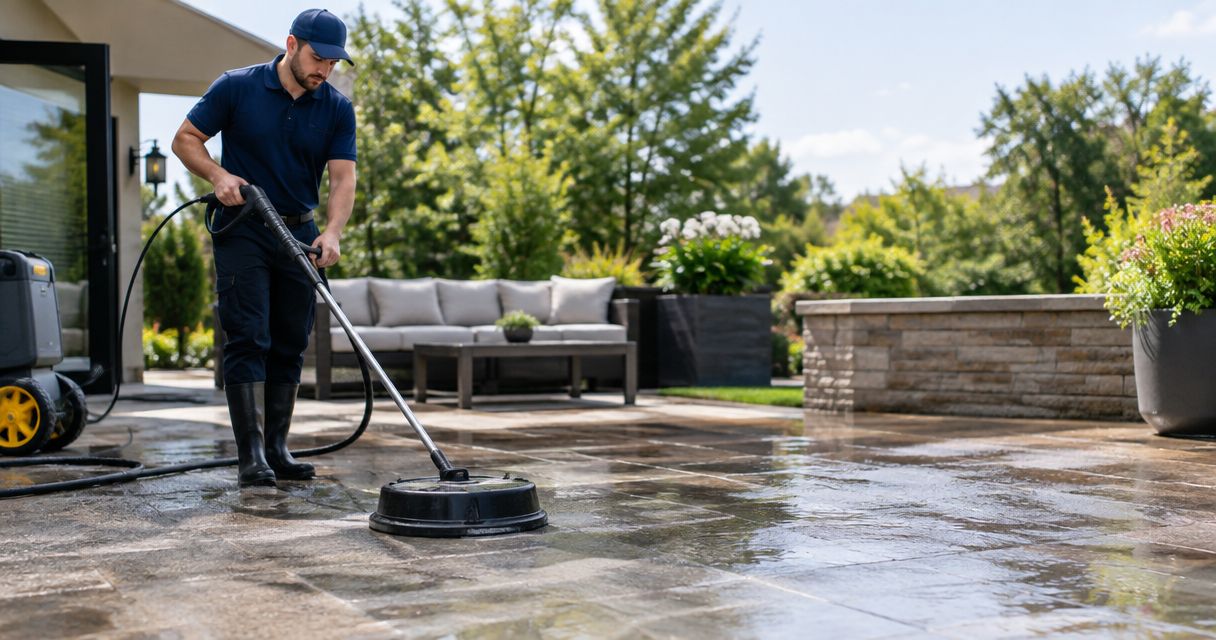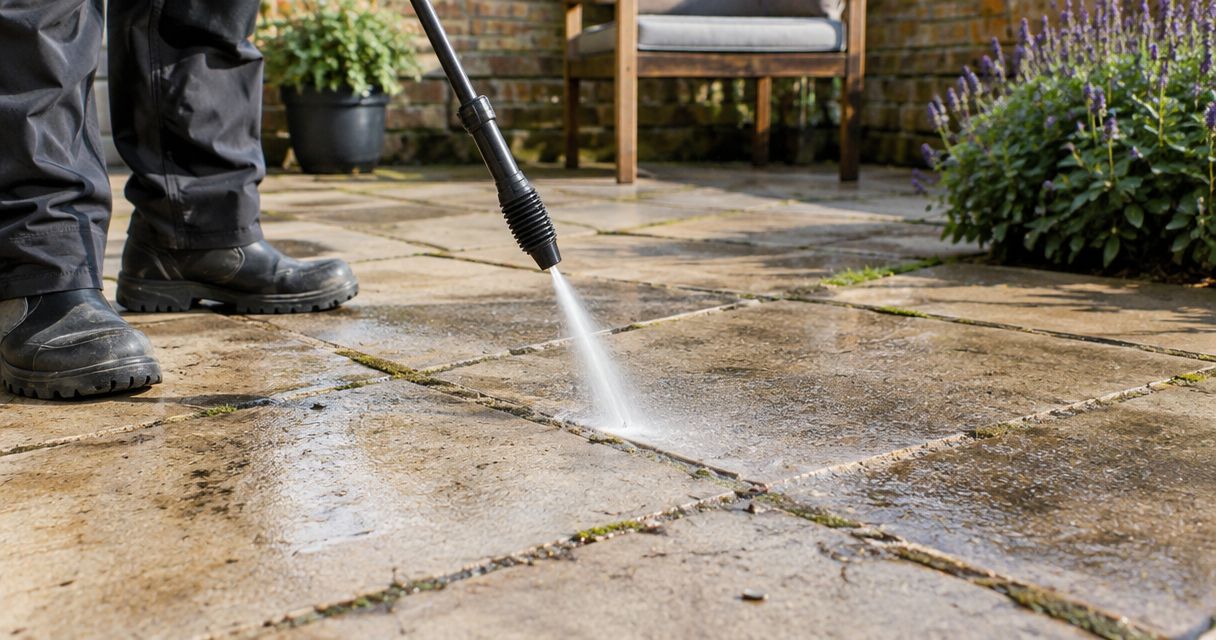
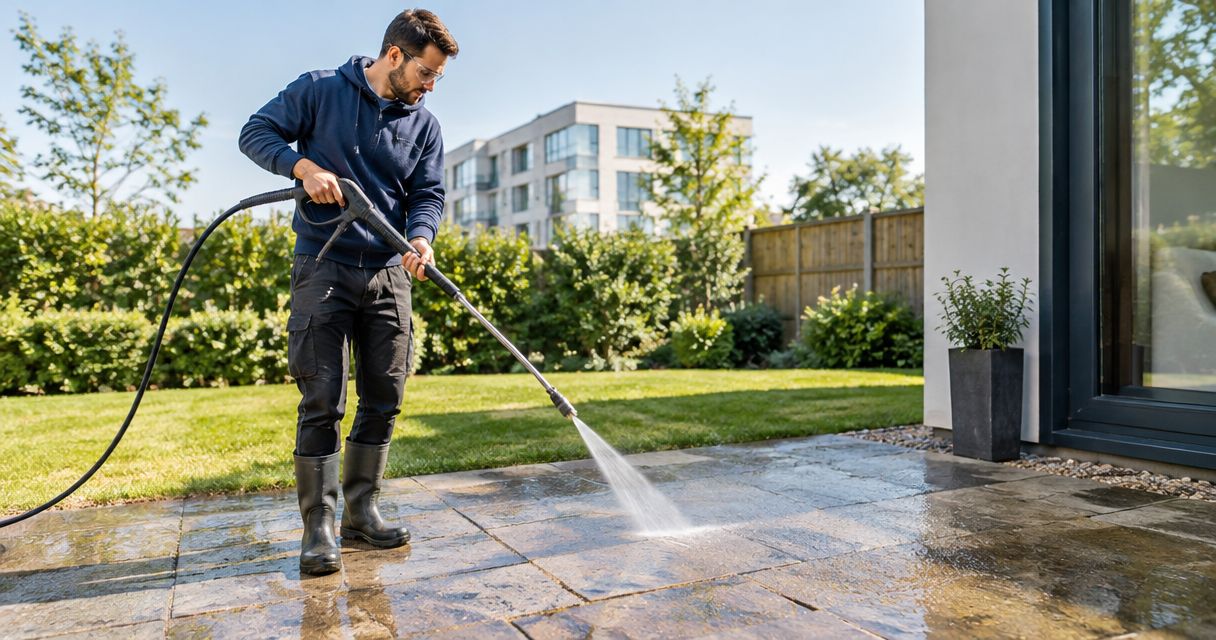
Roofs, render, paving joints and gutter fittings all need care during pressure washing in Milton Keynes: the surface’s material, age and condition should decide the method, not the machine available. For a 2026 cleaning job, ask for a surface-specific approach that identifies loose finishes, defective joints and access restrictions before work starts.
- For pressure washing Milton Keynes properties, choose the method after checking the surface, joints and existing damage.
- Geyserclean suits local property owners seeking professional roof cleaning, render cleaning and gutter clearance.
- Pressure washing, steam cleaning and softwashing have different uses; none suits every surface.
- Send the property address, overview photographs and close-ups of defects when requesting a written quote.
Geyserclean is best for Milton Keynes property owners seeking professional roof, render and gutter cleaning. The practical starting point is a description of the surface and its condition, rather than a request for the strongest wash.
Pressure washing in Milton Keynes: which surfaces need care?
Every exterior surface needs assessment, but fragile materials, coatings and loose joints need particular attention. Cleaning removes contamination; it does not repair the surface beneath it. Use this comparison to frame your enquiry.
| Surface | What needs checking | Suitable starting point | Main limitation |
|---|---|---|---|
| Roof tiles and slates | Cracks, loose coverings, pointing and access | Assess the covering before choosing removal and treatment methods | Cleaning cannot repair defective roof coverings |
| Render | Cracks, hollow or loose areas, paint and previous repairs | Identify the render and finish before selecting treatment | Staining and coating failure need different responses |
| Block paving | Jointing sand, movement and drainage | Check block stability and agree joint maintenance | Washing can remove jointing material |
| Patio paving | Loose slabs, open joints and surface finish | Assess the paving and joints before a test area | Unsound joints can deteriorate during cleaning |
| Gutters | Debris, outlet blockages, joints and fixings | Identify the cause of restricted drainage | Clearing debris does not repair leaks or poor alignment |
Why this matters
A clean-looking surface is not proof that the method was suitable. You also need sound joints, intact finishes and water directed away from vulnerable openings.
For homeowners comparing cleaning quotes in 2026, the useful distinction is between removing dirt and correcting defects. Ask which task the contractor is quoting for. Commercial property managers should also identify pedestrian routes, entrances and areas that must remain accessible during work.
Roof cleaning: assess the covering before the method
Roof cleaning needs more than a decision about water pressure. Tile or slate condition, ridge and verge details, previous repairs and safe access all affect the proposed work.
Ask the contractor to explain how moss will be removed and how the roof covering will be protected. An older roof is not automatically unsuitable for cleaning, but age alone does not establish that steam, softwashing or pressure washing is appropriate.
Do not treat roof cleaning as a substitute for repairs. Broken coverings, defective pointing and known leaks belong in the assessment before cleaning starts. Send photographs taken from ground level rather than climbing onto the roof to gather information.
Where moss is the concern, distinguish its removal from any treatment intended to manage regrowth. A quotation should explain those stages separately, including any restrictions that apply to the chosen method.
Render cleaning: identify the finish and the staining
Render needs a different assessment from driveway paving. The contractor should consider the render type, any painted finish, visible cracking and whether the surface is firmly attached.
Green or dark staining does not, on its own, tell you which treatment to use. Ask whether the proposed work targets surface dirt, biological growth or another identified cause. Damaged coatings and uneven previous repairs can remain visible after cleaning.
The advantage of a suitable cleaning treatment is that it addresses contamination without automatically committing you to repainting. Its limitation is equally clear: cleaning does not restore failed paint or repair cracked render.
For a closer method comparison, read how soft wash render cleaning differs from pressure washing. The useful question is not which method sounds gentlest, but which method suits the particular finish.
Gutter clearance: separate debris removal from repairs
Gutter clearance and pressure washing are not interchangeable jobs. Leaves, moss and other debris need removing from the drainage route; washing the outside of the gutter does not establish that the outlet is clear.
Tell the contractor where water overflows and whether the problem occurs at a corner, joint, outlet or along a longer section. Ground-level photographs of those locations help describe the problem without unsafe access.
Clearance is useful when debris restricts flow. Its limitation is that loose fittings, leaking joints, poor alignment or a separate drainage blockage require a different response. Ask what checks are included and whether any repair work needs a separate quotation.
Driveway cleaning: include the joints in the specification
Block paving needs an assessment of both the blocks and the material between them. Before washing, identify loose blocks, sunken areas, weeds, open joints and where the water will drain.
Pressure washing can remove dirt effectively from suitable paving, but it can also displace jointing sand. Ask whether re-sanding is required and whether it forms part of the proposed work. Do not assume that a clean driveway is a fully maintained driveway.
Other driveway materials need their own assessment. A method selected for sound block paving should not automatically carry across to a coated, patched or deteriorating surface.
Best for sound paving: a cleaning specification that also addresses joint condition. Its limit is straightforward: washing cannot correct settlement, poor drainage or structural movement.
Patio cleaning: inspect loose slabs and failing joints first
A patio can contain several different materials, finishes and repair products. Tell the contractor what you know about the paving, but do not guess the stone type from colour alone.
Open or crumbling joints deserve attention before cleaning. The wash can expose existing weaknesses, and a loose slab needs assessment rather than a stronger pass with the machine.
A test area is useful for checking the proposed method against the finish. Agree where it will be carried out and what the contractor will look for before proceeding across the whole patio.
The benefit of appropriate patio cleaning is the removal of surface contamination. The limitation is that established staining, surface wear and differences between replacement slabs can remain visible afterwards.
Pressure washing, steam or softwashing: which fits the job?
These are different approaches, not a ranking from bad to good. Pressure washing relies on water force, steam cleaning uses heat, and softwashing relies on an appropriate cleaning treatment rather than high water pressure as its main action.
| Method | Best for | Main advantage | Main limitation |
|---|---|---|---|
| Pressure washing | Suitable, sound hard surfaces after assessment | Removes surface dirt through water action | Force can disturb weak joints or finishes |
| Steam cleaning | Surfaces assessed as suitable for heat-based cleaning | Adds heat to the cleaning process | Heat does not make every material suitable |
| Softwashing | Compatible surfaces where treatment addresses the identified contamination | Reduces reliance on high-pressure water | Treatment compatibility and protection measures still matter |
Choose the method after assessing the surface, not before. None of these descriptions establishes the specification for your property. Ask about the proposed process, protection of nearby materials and any manufacturer’s guidance relevant to the finish.
A useful 2026 quotation explains why the method fits the job. A method name alone tells you little about preparation, application, rinsing or the condition checks that precede it.
Why the cleaning method varies
The same visible staining can sit on surfaces with very different tolerances. These factors should guide the assessment:
- Material and finish: roof coverings, render, paving and gutter components need different handling.
- Age and repairs: previous coatings, replacement materials and patched areas can respond differently.
- Existing condition: cracks, loose sections and failing joints affect what work is sensible.
- Contamination: moss, surface dirt and biological staining do not necessarily require the same process.
- Access and surroundings: safe working positions, entrances, planting and neighbouring surfaces need consideration.
- Drainage: identify where wash water will travel and whether outlets or channels need attention.
These are reasons for a property-specific specification, not reasons to accept an unexplained recommendation. If the quote simply says exterior cleaning, ask which surfaces and stages it covers.
What should you send for a written quote?
Give the contractor enough information to distinguish a straightforward cleaning task from a job needing closer inspection. For your 2026 enquiry, use this sequence:
- Property details: send the address, the surfaces you want cleaned and whether the property is residential or commercial.
- Overview photos: show each elevation or paved area, including entrances and surrounding space.
- Defect photos: include visible cracks, loose joints, overflow points and previous repairs from a safe position.
- Access details: explain gates, restricted routes, shared areas and any known drainage concerns.
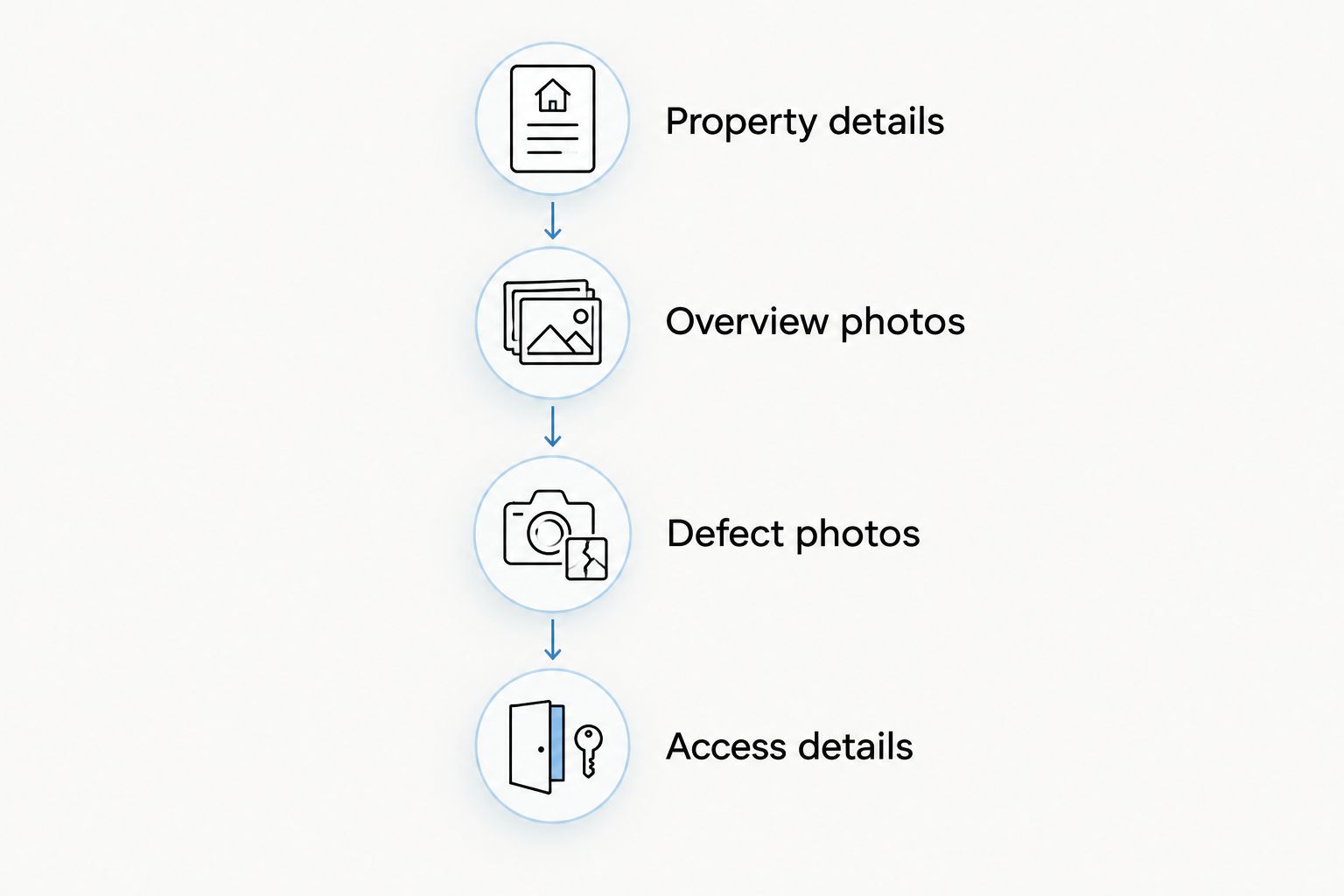
Ask the written quote to identify the surfaces, method, preparation, exclusions and proposed aftercare. Where repairs or re-sanding are relevant, have them addressed explicitly rather than assuming they are included.
Send Geyserclean your property address and photographs for a written quote covering the roof cleaning, render cleaning, gutter clearance, driveway cleaning or patio cleaning you need. Describe known defects as clearly as the areas you want cleaned.
Request a surface-specific written quote
Send your property address and photos, including access restrictions and visible defects.
Does a roof-cleaning guarantee cover repairs?
A 3–5 year no-moss guarantee concerns moss, not a blanket promise about roof workmanship or repairs. Geyserclean’s roof guarantee is a 3–5 year no-moss guarantee; its render guarantee is 2 years.
Keep those service-specific guarantees separate when comparing a 2026 quote. Ask for the applicable written terms and do not assume that a cleaning guarantee covers pre-existing defects, unrelated leaks or every exterior surface.
Should you repair loose joints before pressure washing?
Loose joints need assessment before pressure washing. Tell the contractor about them at the enquiry stage so the cleaning and any repair requirements can be considered together.
The right sequence depends on the paving, the jointing material and its condition. Do not commission an aggressive wash on the assumption that any resulting gaps can simply be filled afterwards.
Can you clean the gutters and roof in the same visit?
Roof cleaning and gutter clearance can be discussed within the same enquiry, but do not assume they are bundled together. Ask the written quote to distinguish roof work, gutter clearance, downpipe checks and any external gutter washing.
Where roof work will dislodge debris, ask how the drainage route will be left at completion. That is a scope question, not a reason to assume every gutter problem will be resolved.
FAQ
Is pressure washing suitable for every driveway in Milton Keynes?
No, pressure washing needs to suit the driveway material, finish and condition. Ask about loose areas, drainage and jointing material before agreeing the method.
Can I pressure wash the render on my house?
Do not pressure wash render without checking the render type, finish and condition. Cracks, loose areas and damaged paint need assessment before selecting a cleaning treatment.
Is steam cleaning always safer for an older roof?
No, steam cleaning is not automatically suitable for an older roof. The covering, repairs, condition and access should determine the proposed method.
Will gutter clearance stop every overflow?
No, gutter clearance only addresses debris within the agreed scope. Leaking joints, poor alignment or a separate blockage need their own assessment.
What does the roof no-moss guarantee mean?
The roof guarantee is a 3–5 year no-moss guarantee, not a blanket workmanship guarantee. Ask for the written terms applicable to your property and proposed service.
What should I send when asking for an exterior cleaning quote?
Send the property address, overview photographs, close-ups of visible defects and access details. State whether you need roof, render, driveway, patio or gutter cleaning so the written quote has a clear scope.
One last thing
Photograph the defects, not just the dirt. A close-up of green staining describes what you want removed; an overview showing loose joints, damaged render or an overflowing outlet helps establish what needs assessing first.
Keep the written specification with your property records. It should distinguish cleaning, repairs and aftercare without requiring you to infer what the contractor meant.