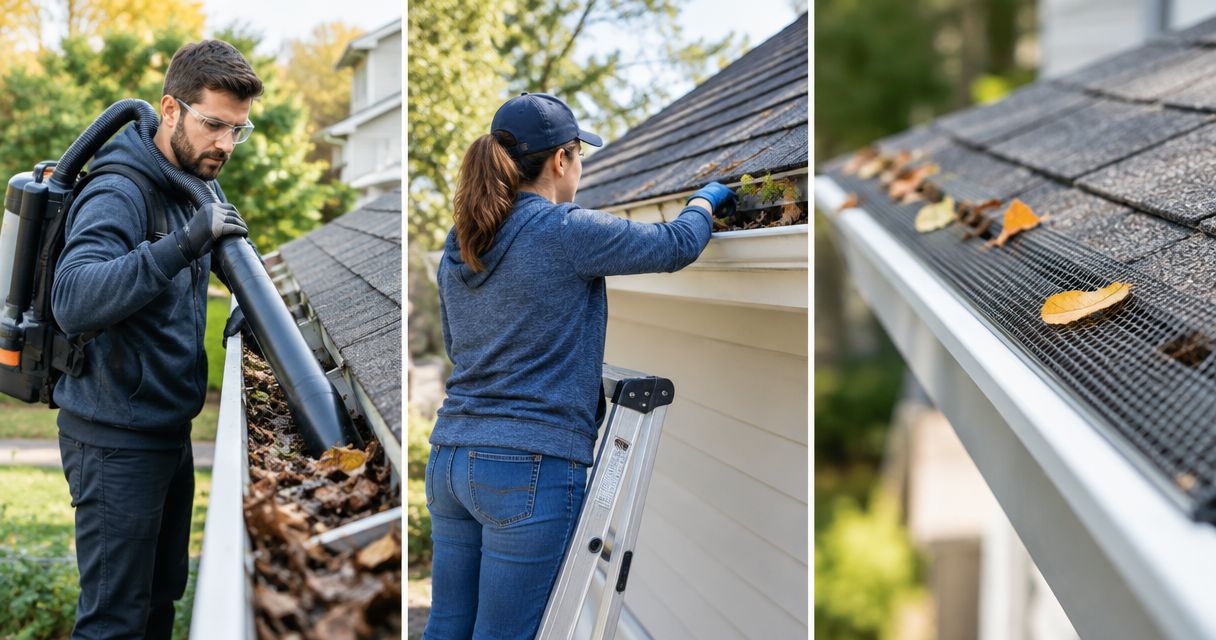

Best overall: professional gutter clearance matched to the property. Best for reachable gutters: ground-based vacuum clearance. Best for compacted debris: controlled manual removal. Best for obstructed gutters: specialist-access clearance. For bungalow and two-storey homes, choose by gutter condition and safe access, not height alone.
- For gutter clearance bungalow enquiries, Geyserclean suits Milton Keynes homeowners seeking a property-specific written quote.
- Ground-based vacuum clearance suits gutters that equipment can reach without obstructing extensions, cables or neighbouring property.
- Manual removal suits debris that needs direct handling, but requires suitable access and working-at-height precautions.
- Specialist access suits awkward rooflines; confirm downpipe checks and distinguish clearance from repairs.
Why this matters
A bungalow is not automatically an easy clearance job. A conservatory, narrow side passage or deep roof overhang can make its gutters harder to reach than those on an unobstructed two-storey house. Low height does not make an unsuitable ladder position safe.
For a 2026 booking, start with the actual problem: leaves in the channel, an obstructed outlet, water escaping at a joint or a visibly displaced section. These need different responses. Removing debris does not repair a failed joint or correct the gutter's fall.
Geyserclean provides gutter clearance for residential and commercial properties in Milton Keynes and the surrounding Home Counties. Use the contact page to send the property address and photos for a written quote. Include the awkward elevations, not just the front of the house.
What makes the best gutter clearance option?
Judge a clearance proposal against these criteria before choosing equipment or a contractor:
- Safe access: the working position must suit the ground, roofline, obstructions and nearby hazards.
- Gutter condition: loose brackets, brittle components and leaking joints need identifying before debris removal.
- Debris removal: the method must remove the blockage, rather than simply shift it towards the outlet.
- Outlet checks: establish whether the work includes checking accessible outlets and downpipes.
- Completion evidence: agree how you will see which sections were cleared and which remain inaccessible.
- Written scope: identify exclusions, repair recommendations and any separate access arrangements before work begins.
A machine name is not a complete specification. Ask what happens if the chosen approach cannot remove the debris or reach a hidden section.
Gutter clearance options at a glance
These are method recommendations for 2026, not a claim that every contractor supplies every option. No single method wins on every property.
| Option | Best for | Main advantage | Key limitation |
|---|---|---|---|
| Ground-based vacuum clearance | Reachable gutters with suitable debris | Removes debris while the operator works from ground level | Reach, gutter shape and compacted material can limit access |
| Controlled manual removal | Debris needing direct handling | Allows targeted removal where the worker can safely reach | Requires suitable access and working-at-height controls |
| Specialist-access clearance | Gutters obstructed by extensions or complex rooflines | Provides an alternative working position | Access equipment needs its own space and assessment |
A bungalow and a two-storey home can need the same method. Equally, different elevations of one property can need different approaches.
1. Ground-based vacuum: best for reachable gutter runs
Ground-based gutter vacuum equipment draws debris through poles into a collection unit. It suits work where the operator can position the equipment safely and reach the gutter opening without forcing poles around obstacles.
Best for: homeowners with reachable gutter runs and debris that the selected equipment can remove.
A vacuum-first approach avoids putting a worker at gutter height for the removal itself. That is useful, but it does not prove that every corner, outlet or downpipe is clear. The contractor still needs a way to assess the channel and explain any sections the equipment cannot reach.
Ground-based vacuum pros
- Keeps the operator at ground level during reachable clearance work.
- Collects removed material rather than deliberately washing it down the pipe.
- Can suit both bungalows and two-storey properties when reach and positioning are suitable.
- Allows an access-led approach without assuming that ladders are necessary.
Ground-based vacuum cons
- Compacted material and rooted growth can require a different removal method.
- Overhangs, gutter profiles and obstructions can prevent effective nozzle access.
- Clearing the channel does not establish the condition of concealed drainage.
Ask how the gutter will be inspected before and after clearance. If a camera is proposed, confirm whether you receive images and whether the outlet areas are visible; do not assume these are standard inclusions.
Verdict: Buy vacuum clearance when reach and debris suitability are confirmed; skip a vacuum-only promise that ignores inaccessible sections.
2. Controlled manual removal: best for stubborn local blockages
Manual clearance removes debris directly with suitable hand tools. It is an option when material needs handling at close range and a safe working position can be established.
Best for: localised compacted debris that cannot be removed effectively from the ground.
Direct access can help a worker distinguish a packed outlet from a damaged fitting. It also introduces working-at-height risks. A bungalow's lower gutter line does not remove those risks, particularly beside soft ground, steps or sloping driveways.
Controlled manual removal pros
- Allows targeted removal of stubborn material.
- Gives a close view of the accessible gutter section.
- Can complement ground-based clearance instead of replacing it across the whole property.
Controlled manual removal cons
- Requires an assessed access method and suitable working position.
- Repeated repositioning can make extensive runs impractical from a ladder.
- Reaching sideways or working above an extension creates additional access problems.
General ladder safety guidance calls for 3 points of contact when climbing. That is not permission to undertake gutter clearance yourself: tool handling, sideways reach, ground conditions and the task itself still determine whether a ladder is suitable.
Ask the contractor how debris will be contained and how lower roofs, planting and paths will be protected. Do not accept access that depends on leaning across a conservatory roof or using the gutter as a handhold.
Verdict: Buy controlled manual removal for a defined blockage with suitable access; skip improvised ladder work.
3. Specialist access: best for obstructed gutter lines
A tower, scaffold arrangement or suitable access platform can provide a working position where ordinary ground-based or ladder access does not fit. The equipment choice depends on the property and site conditions, not simply the number of storeys.
Best for: gutters above extensions, restricted elevations and rooflines that need a separately planned access solution.
Specialist access is an access method, not a cleaning result. Once the worker can reach the gutter, the debris still needs removing and the accessible outlets need checking within the agreed scope.
Specialist-access clearance pros
- Provides an alternative where direct ground-level access is obstructed.
- Supports close inspection of otherwise difficult gutter sections.
- Allows clearance and identified repair needs to be assessed from a suitable position.
Specialist-access clearance cons
- Equipment positioning needs space and suitable ground conditions.
- Boundaries, overhead hazards and neighbouring property can restrict deployment.
- Access arrangements add planning beyond the clearance task itself.
For a commercial building or shared residential property, identify who can authorise access and any temporary exclusion area. A managing agent should also establish which elevations and drainage runs fall within the instruction.
For a bungalow, send photographs showing the depth of any conservatory or extension below the gutter. A close-up of the blockage alone does not show whether equipment can reach it.
Verdict: Buy planned specialist access when obstructions justify it; hold until the working position and responsibilities are clear.
How the options were ranked
The order prioritises suitable ground-level working where practical, followed by targeted direct removal and then separately planned access. Each recommendation is conditional on reach, condition, debris type and completion checks.
This is a property-selection guide, not a performance test or contractor league table. The best choice is the least complicated safe approach that can complete the specified work, including identifying sections it cannot clear.
A practical assessment before your 2026 booking
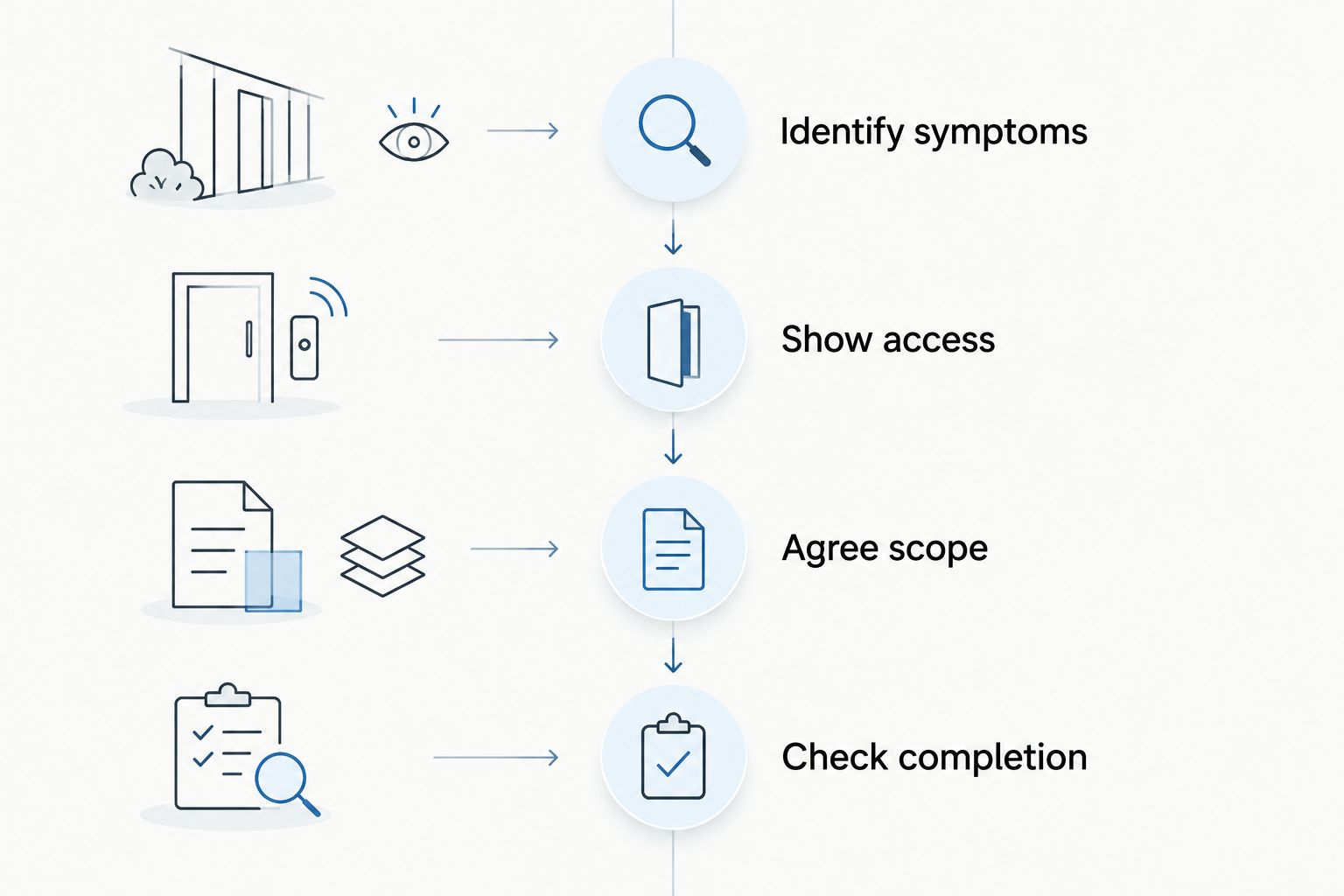
Use this sequence to make your enquiry specific. You can gather the information from ground level; do not climb onto a roof or extension to improve a photograph.
Identify symptoms
Describe where water escapes and when you notice it. Water spilling over the front edge, leaking at a joint and backing up beside an outlet are different observations. Report what you see rather than diagnosing a blocked underground drain.
Show access
Photograph each elevation, including gates, side passages, conservatories and changes in ground level. Mention shared access and areas that cannot be entered. Avoid guessing the working height from the number of storeys.
Agree scope
Ask which gutter runs are included, whether accessible downpipes will be checked and what happens if a blockage cannot be cleared. Establish whether repairs require a separate instruction.
Check completion
Agree what evidence or explanation you will receive afterwards. You need to know what was cleared, what could not be reached and whether an unresolved defect needs another trade or a repair visit.
What should a written quote explain?
For gutter clearance in 2026, a useful quote describes the work rather than just naming the equipment. It should make the following points clear:
- Which elevations, gutter runs and accessible outlets are included.
- The proposed access approach and any conditions requiring reassessment.
- Whether downpipe checks or blockage removal are included.
- How removed debris will be collected and handled.
- How inaccessible sections and defects will be reported.
- Whether any repairs need separate approval.
Ask Geyserclean for a written gutter clearance quote based on your address, photos and access details. Confirm the proposed method and inclusions for your own property; the general options above are not a statement that a particular machine or access system is included.
If roof cleaning, render cleaning, driveway cleaning or patio cleaning is also being considered, list each service separately. Shared access does not make their methods interchangeable: steam or softwashing must be selected for the surface, age and condition, not prescribed for every job.
Request a written gutter clearance quote
Send your property address and photos, including extensions, side access and the affected gutter runs.
Which gutter clearance option should you choose?
Choose ground-based vacuum clearance as the first option to assess, not as an automatic specification. It suits reachable runs without requiring the operator to work at gutter height during removal. Use targeted manual clearance when material needs direct handling, and planned specialist access when the building obstructs a safe working position.
For a 2026 appointment, the deciding question is: can the proposed approach reach and clear the affected sections safely, with an agreed check afterwards? If the answer is unclear, send better access photographs before accepting the scope.
Geyserclean is a gutter clearance option for Milton Keynes homeowners who want a property-specific written quote. Choose the service on its confirmed scope, not an assumption that bungalow gutters are always straightforward.
FAQ
What's the best gutter clearance option for a bungalow?
Ground-based vacuum clearance is a useful first option to assess when the gutter opening is reachable and the debris is suitable. Extensions, narrow access and compacted material can require a different approach.
Do two-storey homes always need ladders for gutter clearance?
No, two-storey homes do not always need ladders for gutter clearance. Suitable ground-based equipment can reach some gutter runs, while obstructions and gutter condition determine whether another access method is needed.
Is vacuum gutter clearance better than manual removal?
Vacuum clearance is preferable where it can remove the debris effectively from a safe ground-level position. Manual removal suits material needing direct handling, provided a suitable working position is established.
Does gutter clearance include unblocking the downpipes?
Do not assume downpipe unblocking is included in gutter clearance. Ask the contractor to specify accessible outlet checks, downpipe work and any exclusions in the written quote.
Can gutters above a conservatory be cleared safely?
Gutters above a conservatory need an access assessment before the method is chosen. Send photographs showing the extension and surrounding ground; do not stand on the conservatory roof to inspect the gutter.
Will gutter clearance stop every leak?
No, gutter clearance removes debris but does not repair failed joints, damaged sections or incorrect falls. Continued leaking or overflow needs assessment rather than repeated clearance without a diagnosis.
What information should I send for a gutter clearance quote?
Send the property address, photos of each affected elevation and details of the problem. Include side access, extensions, shared areas and any visible damage so the proposed scope addresses the actual property.
Does a roof or render guarantee cover gutter clearance?
Do not treat a roof or render guarantee as gutter clearance cover. Geyserclean's roof guarantee is a 3–5 year no-moss guarantee, and its render guarantee is 2 years; neither is a blanket workmanship guarantee or a gutter performance promise.
One last thing
A clean gutter can still overflow if its outlet, fall or downstream drainage is faulty. Photograph the original overflow location from ground level and keep that image with the written scope. If the symptom returns, it gives the next inspection a precise starting point instead of another general request to clean the gutters.