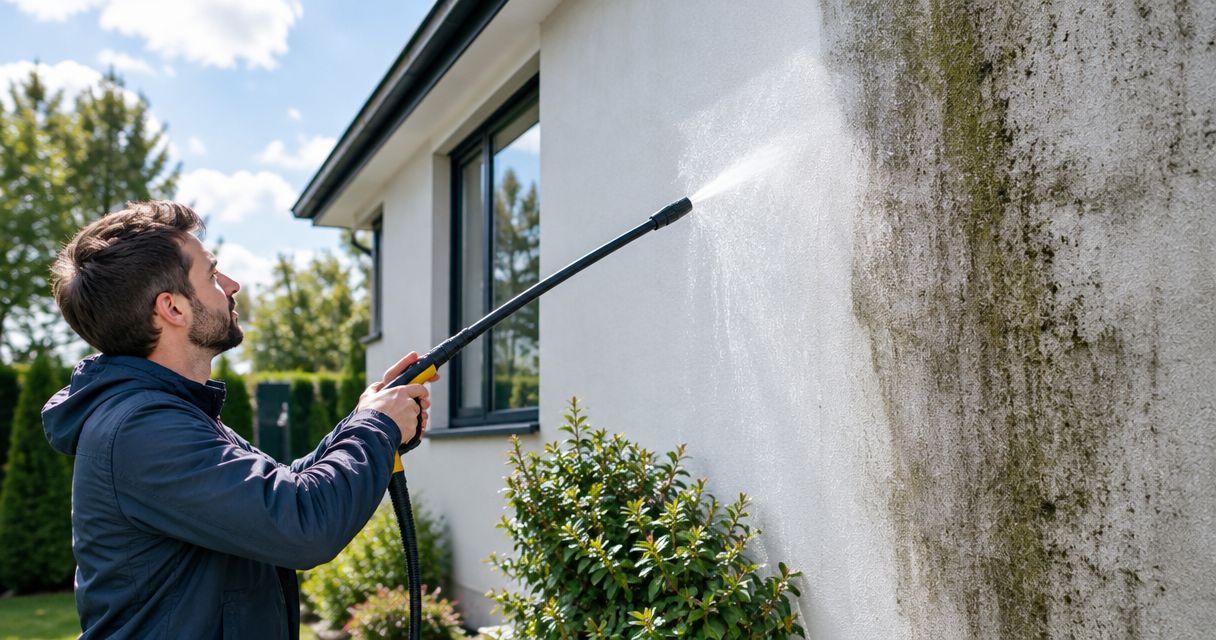
Best overall for biological staining on compatible render: softwashing. Best for suitable surfaces needing heat-assisted cleaning: controlled steam. Best for small, accessible marks: gentle manual cleaning. None makes render weatherproof; this 2026 comparison ranks methods by surface suitability and the conditions that affect lasting results.
- Render cleaning methods compared: softwashing is the first option to assess for biological staining on compatible render.
- Controlled steam suits selected surfaces; heat and pressure still require a compatibility check.
- Geyserclean provides render cleaning in Milton Keynes, with methods chosen for the surface, age and condition.
- Gutter leaks and persistent damp need attention alongside cleaning; cleaning alone does not correct them.
Why this matters
A clean wall is not necessarily a wall that sheds rain properly. Cleaning removes contamination; it does not repair cracks, renew failed coatings or stop a leaking gutter from repeatedly wetting the render.
For homeowners comparing Geyserclean render cleaning services, the useful question is not which machine produces the strongest result. It is which treatment suits the existing finish without creating a separate repair problem.
Geyserclean render cleaning is best suited to Milton Keynes property owners seeking a method selected for their wall's surface, age and condition. Its stated render guarantee is 2 years. That is distinct from its 3–5 year roof no-moss guarantee, not a blanket workmanship guarantee.
What makes the best render cleaning method?
For this 2026 guide, weather resistance means preserving the existing finish and addressing conditions that encourage recurring staining. It does not mean adding waterproofing through cleaning.
Judge each proposal against these criteria:
- Surface compatibility: identify the render system, any paint or coating, and available manufacturer guidance.
- Existing condition: check cracks, loose areas, exposed edges and failed finishes before choosing equipment.
- Stain type: distinguish biological growth from dirt, mineral deposits and marks associated with water runoff.
- Controlled application: specify suitable chemistry, temperature, pressure and rinsing rather than relying on a method name.
- Water management: identify overflowing gutters, leaking downpipes and repeated splashback that cleaning cannot fix.
A method ranks well only when it fits those checks. There is no defensible universal weather-resistance score for softwashing, steam or pressure washing across every render system.
Render cleaning methods compared at a glance
| Rank and method | Best for | Standout feature | Key limitation |
|---|---|---|---|
| 1. Softwashing | Biological staining on compatible render | Treatment selected for the contamination, with controlled application | Chemical compatibility, runoff and weather conditions need planning |
| 2. Controlled steam cleaning | Compatible surfaces needing heat-assisted cleaning | Heat assists removal without making aggressive pressure the starting point | Heat remains unsuitable for some finishes and defects |
| 3. Gentle manual cleaning | Small, accessible marks | Local treatment rather than cleaning an entire elevation | Labour-intensive and not a complete answer to widespread growth |
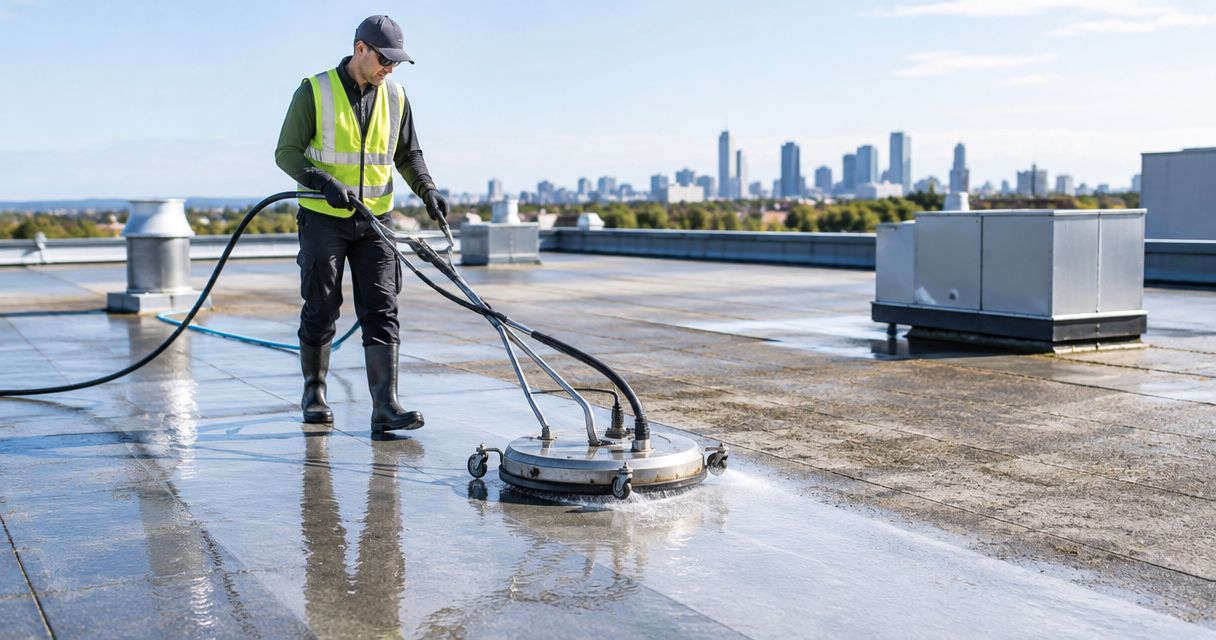
| 4. Pressure washing | Specifically approved, sound surfaces | Mechanical removal where the render specification permits it | Unsuitable pressure or technique can damage the finish |
These are conditional recommendations, not measured durability results. A contractor can also combine compatible stages rather than treat each method as a completely separate package.
1. Softwashing: best for biological staining on render
Softwashing uses an appropriate cleaning treatment applied with controlled pressure. For algae and other biological staining, it addresses the contamination rather than relying solely on force to remove its visible appearance.
It is the first method to assess where biological growth is the main problem and the render system permits the proposed treatment. The cleaning product, application, contact conditions and rinse requirements must suit the surface.
Softwashing pros:
- Targets biological contamination with a treatment selected for that purpose.
- Avoids making high-pressure washing the default approach.
- Allows the specification to reflect the finish and stain type.
Softwashing cons:
- Incorrect chemistry or application can affect finishes and nearby materials.
- Plants, runoff routes and adjoining surfaces need protection.
- Rain and wind can affect application planning; the product instructions govern suitable conditions.
For lasting results, ask what happens after the wall dries and how runoff-related staining is being addressed. Do not accept a promised weatherproof finish simply because a treatment is described as softwashing.
Best for: compatible render with biological staining across a larger area.
Verdict: Buy a softwashing service only after compatibility and protection measures are specified.
2. Controlled steam: best for heat-assisted render cleaning
Controlled steam cleaning uses heat to assist removal. It is an option where the finish, underlying condition and contamination make thermal cleaning appropriate.
Low operating pressure does not make heat harmless. Painted surfaces, repairs and vulnerable edges still require assessment, and a suitable test area helps establish whether the proposed settings are appropriate.
Controlled steam pros:
- Uses heat as part of the cleaning action rather than relying only on pressure.
- Offers an alternative to assess where the contamination responds to thermal cleaning.
- Allows a contractor to evaluate a targeted approach on a suitable test area.
Controlled steam cons:
- Heat can affect incompatible coatings or vulnerable finishes.
- Steam alone does not establish how biological regrowth will be managed.
- Access, runoff and protection requirements still apply.
Ask whether steam is the whole specification or one stage within it. A proposal should explain any accompanying treatment, not leave you to assume that hot cleaning automatically produces longer-lasting results.
In a 2026 quote, the word steam is not enough detail. Ask how temperature, pressure and technique will be selected for your particular wall.
Best for: sound, compatible render where heat-assisted removal is justified by the contamination.
Verdict: Hold until the contractor confirms surface compatibility and explains the complete treatment.
3. Gentle manual cleaning: best for isolated accessible marks
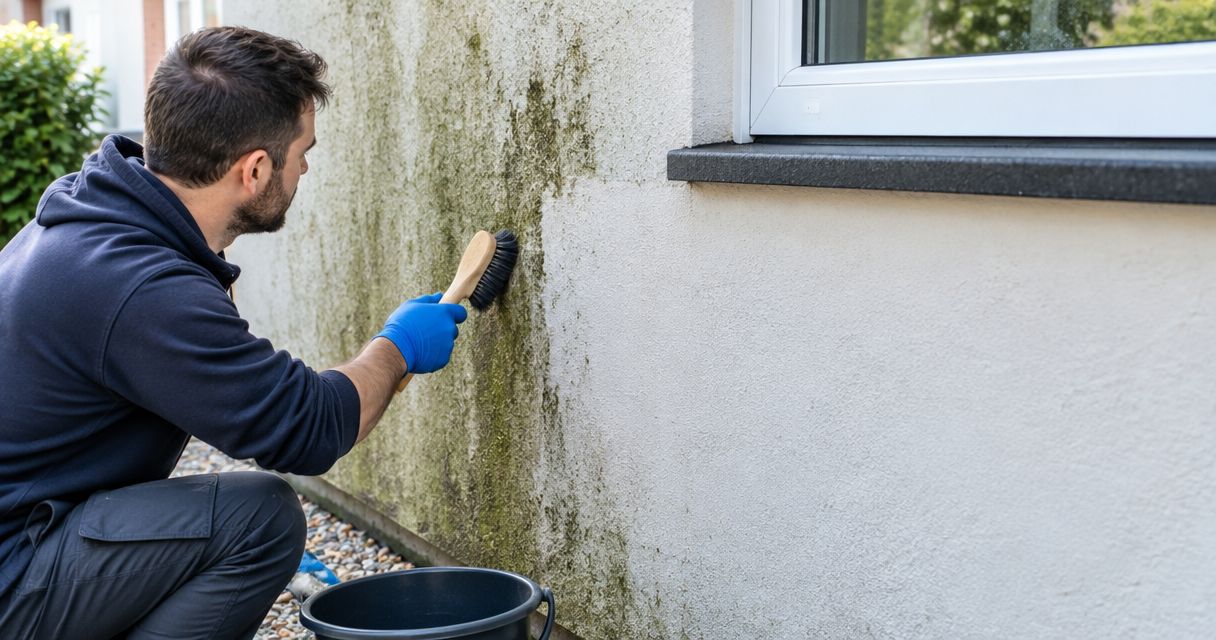
Gentle manual cleaning means local work with a suitable cleaner and non-abrasive tools. It is a proportionate option for a small mark where the surrounding render does not need a full clean.
This is not a recommendation to scrub every stain. Abrasive pads, unsuitable brushes and repeated rubbing can change the appearance of textured or coated finishes.
Gentle manual cleaning pros:
- Limits work to the affected area.
- Makes it easier to observe how a small test area responds.
- Avoids bringing powered washing to a minor, accessible mark unnecessarily.
Gentle manual cleaning cons:
- Local cleaning can leave a visibly different patch against surrounding dirt.
- Repeated scrubbing can alter the finish.
- It is impractical for widespread staining or areas requiring specialist access.
For weather-related marks, identify the source first. Cleaning beneath a dripping joint without fixing the drip leaves the cause unchanged.
Keep homeowner checks at ground level. An awkward upper-storey stain is an access problem as well as a cleaning problem; do not turn a small cosmetic job into unsafe ladder work.
Best for: isolated, reachable marks on a surface whose care guidance permits gentle local cleaning.
Verdict: Buy local treatment where it is proportionate; skip aggressive scrubbing.
4. Pressure washing: best for expressly approved surfaces
Pressure washing removes contamination through mechanical action. It belongs in a render-cleaning proposal only where the system's guidance and the wall's condition support the chosen equipment and technique.
It is not the default recommendation for an unidentified finish. Pressure, nozzle choice, working distance and vulnerable details all affect the result.
Pressure washing pros:
- Provides mechanical removal where the surface specification permits it.
- Can form a controlled stage within an approved cleaning process.
- Offers a defined alternative when gentler methods do not suit the contamination.
Pressure washing cons:
- Inappropriate pressure can erode finishes or damage coatings.
- Water directed at cracks and vulnerable junctions can enter those openings.
- Visible dirt removal alone does not resolve the cause of recurring biological staining.
A pressure-washing approach suitable for driveway cleaning or patio cleaning is not automatically suitable for render. Each surface needs its own assessment, including the condition of joints, coatings and edges.
Best for: sound render with explicit support for the proposed washing method.
Verdict: Skip as a default; consider only with a surface-specific justification.
How this ranking works
The ranking prioritises compatibility, stain treatment and control of application. It does not claim laboratory testing or assign invented years of performance to individual methods.
Softwashing leads for compatible biological staining because the treatment addresses that contamination. Steam occupies a separate heat-assisted role; manual cleaning suits local work; pressure washing requires clear approval for the surface.
For your 2026 decision, the condition of the wall overrides the order in the table. An unsuitable first-ranked method is still unsuitable.
Check the wall before choosing the method
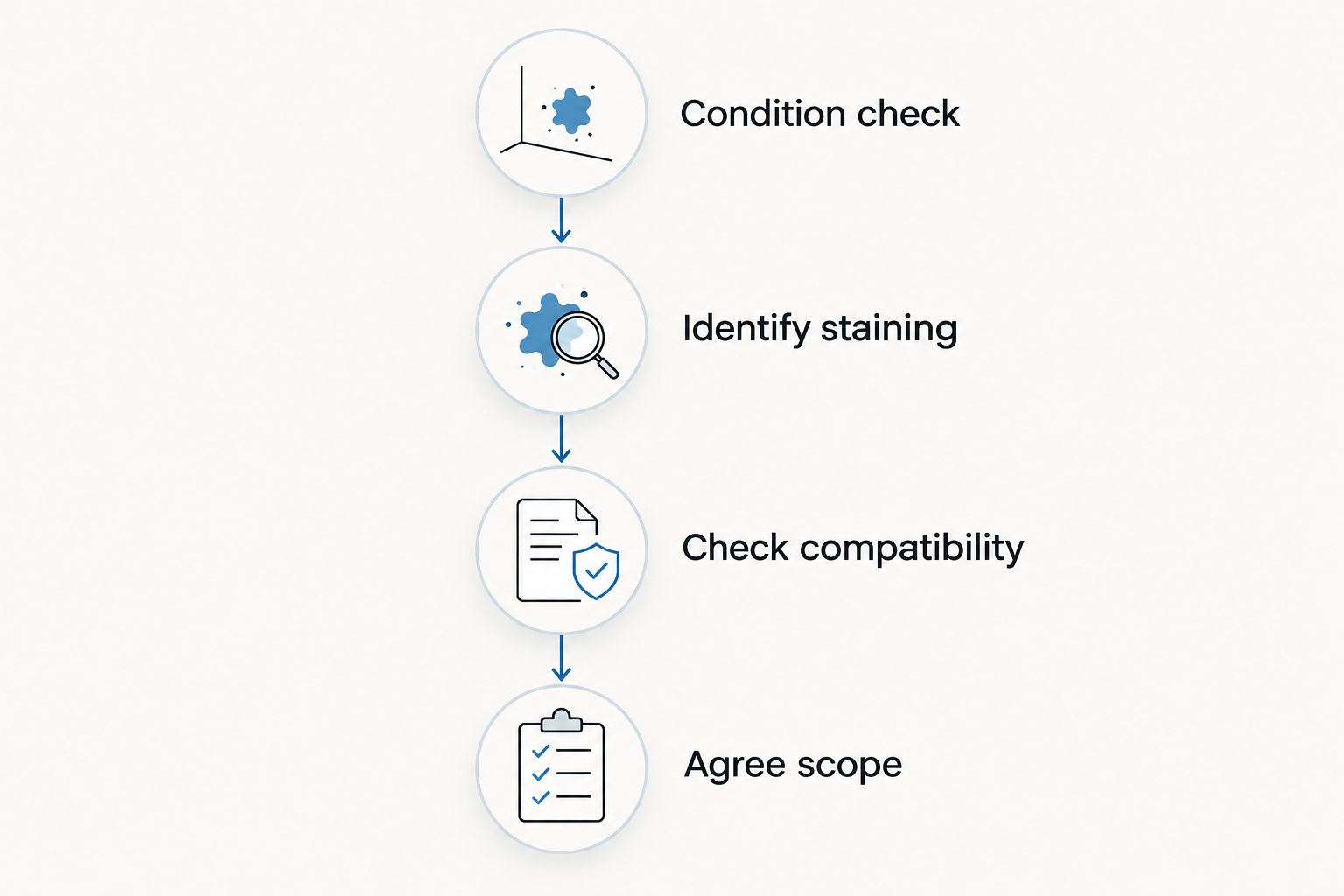
Use this sequence when discussing a quote. Your observations help define the job, but they do not replace the contractor's assessment.
- Condition check: photograph cracks, flaking finishes, repairs and loose-looking areas from a safe position.
- Identify staining: show its distribution, including marks beneath gutters, sills and pipework.
- Check compatibility: share any known render-system details, paint history or manufacturer care instructions.
- Agree scope: ask for the method, preparation, protection, access and limitations in writing.
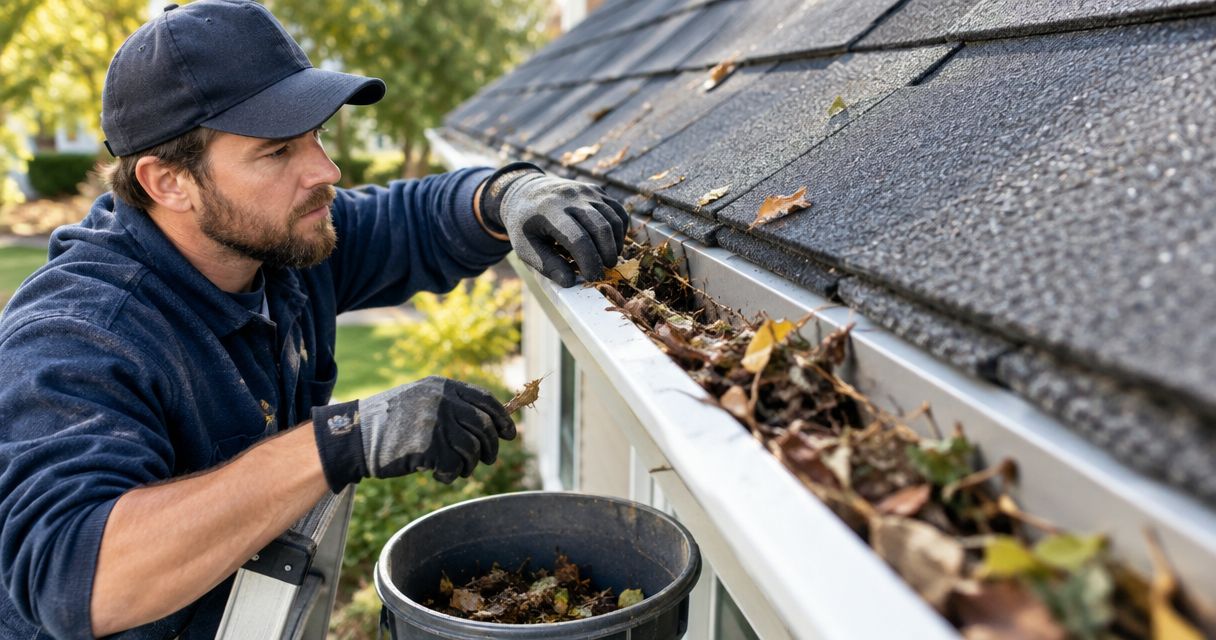
Look above the stained area as well as directly at it. Roof cleaning and gutter clearance are separate services, but their scope matters when debris or drainage problems are contributing to repeated wetting.
For blocks and commercial premises, include access restrictions, shared entrances and areas used by occupants. Do not assume a domestic access plan transfers unchanged to a managed property.
What should your written quote explain?
A useful quote tells you why the method fits the wall. Compare the specification before comparing the headline total.
- Which elevations and surfaces are included?
- What condition issues require repair or further assessment first?
- Which cleaning and rinsing stages are proposed?
- How will plants, windows, adjoining materials and runoff be managed?
- What access arrangements are needed?
- What does the stated guarantee cover, and which conditions apply?
For a 2026 booking, request current terms rather than relying on a method's general reputation. The guide to comparing render cleaning quotes explains the questions to put alongside each proposal.
Send Geyserclean your property address and clear photos for a written quote. Include the whole elevation and closer views of the staining, without climbing to obtain them.
Request a written render cleaning quote
Send your property address and photos so the proposed work can reflect the wall's condition.
Which render cleaning method should you choose?
Start by assessing softwashing for biological staining on compatible render, not by booking a method before the wall is checked. Choose controlled steam only where heat suits the finish, and local manual cleaning where the problem is genuinely small.
If cracks, failed coatings or persistent water paths are present, establish the repair or drainage requirements alongside the cleaning plan. Cleaning should not disguise a condition that needs separate attention.
FAQ
What's the best render cleaning method for wet weather?
There is no cleaning method that makes render weatherproof. Choose a compatible treatment and address leaks, cracks or drainage faults separately; application weather must follow the treatment instructions.
Is softwashing better than steam for render?
Softwashing is the first option to assess for biological staining on compatible render, while steam suits selected heat-assisted cleaning tasks. The finish, condition and contamination determine which approach is appropriate.
Can I pressure wash the render on my house?
Do not pressure wash unidentified render without checking its care guidance and condition. Where pressure washing is permitted, the equipment and technique must suit that specific surface.
Does render cleaning stop algae coming back?
Render cleaning does not permanently prevent biological growth. Suitable treatment addresses existing contamination, while shade, moisture and repeated wetting remain relevant to recurrence.
Should I have the gutters checked before render cleaning?
Yes, check gutters and downpipes where staining follows water runoff. Cleaning the wall does not repair a leaking joint or clear a blocked drainage route.
What guarantee does Geyserclean give for render cleaning?
Geyserclean states a 2 year render guarantee. Ask for its written coverage and conditions; the separate 3–5 year roof no-moss guarantee is not a render guarantee or a blanket workmanship guarantee.
What should I send when asking for a render cleaning quote?
Send the property address, whole-elevation photos and closer views of staining or visible defects. Add any known render-system details, previous coatings and access restrictions, taking photographs only from safe positions.
One last thing
Photograph the wall during rain from a safe indoor or ground-level position. A dry-weather image shows the stain; a wet-weather image can also show the route water takes towards it.
Include both when requesting advice. The most useful cleaning specification deals with what is on the wall without overlooking why it keeps appearing there.