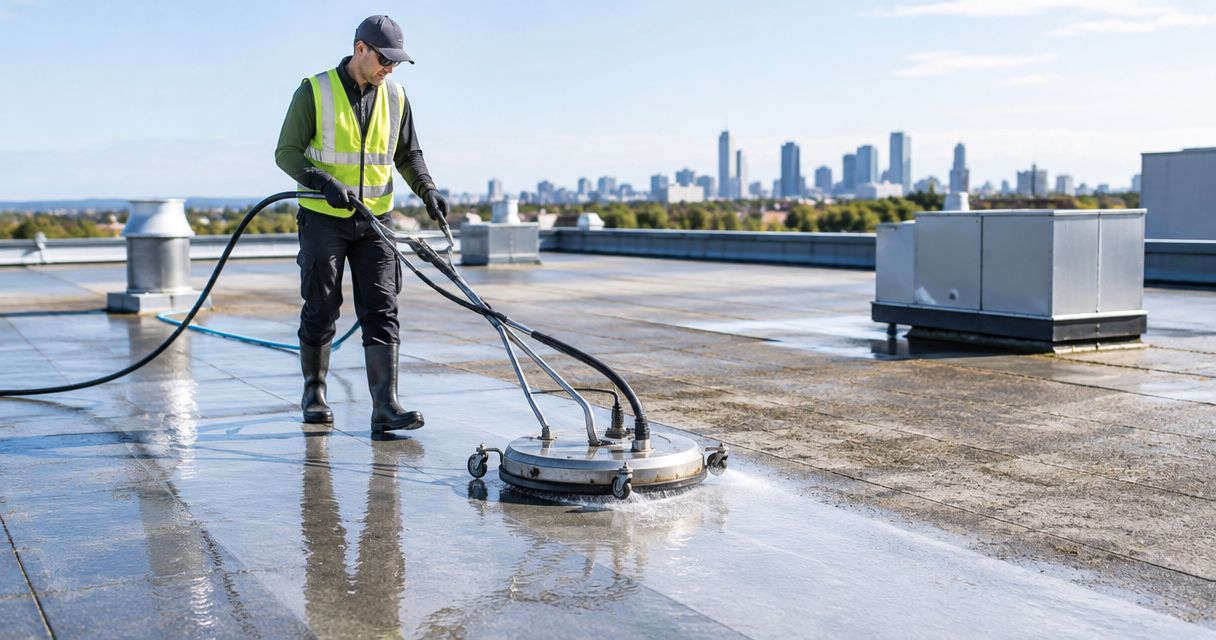
Best overall for routine maintenance: careful debris removal. Best for washable surface dirt: manufacturer-approved detergent cleaning. Best for biological growth: a compatible softwash treatment. This 2026 guide compares roof cleaning for commercial buildings with flat roofs; steam and pressure washing belong only where the roof specification permits them.
- Roof cleaning for commercial buildings starts with the roof covering, its condition and the manufacturer's maintenance instructions.
- Careful debris removal is the first choice for loose leaves and material around flat-roof outlets.
- Softwashing, steam cleaning and pressure washing need separate compatibility checks; none suits every flat roof.
- Geyserclean provides roof cleaning around Milton Keynes; request a surface-specific written specification before booking.
For commercial property owners in Milton Keynes and the surrounding Home Counties, Geyserclean provides roof cleaning alongside render cleaning, driveway cleaning, patio cleaning and gutter clearance. The comparisons below are general maintenance guidance, not a claim that every method is suitable for your building or included in a particular service.
Why this matters
A commercial flat roof is a waterproofing system, not simply a dirty surface. Its covering, seams, outlets, rooflights and previous repairs all affect how it should be cleaned. A clean-looking roof is not proof that it is watertight.
Your 2026 maintenance plan should distinguish three jobs: removing debris, treating surface growth and investigating defects. Cleaning addresses the first two where the system permits it. Leaks, failed seams and persistent ponding need a separate roofing assessment.
Choose a compatible method before choosing a contractor's machine. A treatment described as gentle still needs checking against the covering and any existing warranty conditions.
What makes the best commercial flat-roof cleaning method?
Use these criteria when comparing a 2026 cleaning proposal:
- Covering compatibility: Identify whether the roof uses a single-ply membrane, bituminous covering, liquid-applied system or another construction. Obtain its maintenance instructions.
- Condition first: Check for loose seams, exposed reinforcement, blisters, patches and existing leaks before cleaning starts.
- Correct cleaning task: Separate loose debris, ordinary dirt, biological growth and specialist contamination. They do not require the same treatment.
- Controlled water and runoff: Specify how outlets, drainage routes and any treatment wash-water will be managed.
- Safe access: Address roof fragility, edges, rooflights and protection of people below. A flat roof is not automatically safe to walk on.
- A defined finish: Agree what will be removed, what staining can remain and how the roof will be checked afterwards.
For a useful explanation of the wider method-selection question, read how steam roof cleaning or softwashing is chosen. A flat roof still needs its own covering-specific decision.
Commercial flat-roof cleaning methods at a glance
The order below is a decision sequence, not a claim that every roof should receive every treatment.
| Method | Best for | Standout feature | Key limitation |
|---|---|---|---|
| Careful debris removal | Routine loose-debris maintenance | Targets leaves and loose material without adding a treatment | Does not remove established staining or repair drainage defects |
| Manufacturer-approved detergent cleaning | Washable surface dirt | Matches cleaning chemistry to the covering | Requires approved products, tools and rinsing instructions |
| Compatible softwash treatment | Biological growth on an approved covering | Treats growth without relying on forceful washing | Chemical compatibility and runoff need checking |
| Specification-approved steam cleaning | Heat-compatible specialist cleaning | Adds heat where the system expressly permits it | Heat tolerance cannot be assumed |
| Specification-approved pressure washing | Systems with explicit pressure-cleaning instructions | Allows controlled mechanical cleaning within stated limits | A wrong setting or technique risks damaging the covering |
1. Careful debris removal: best for routine flat-roof maintenance
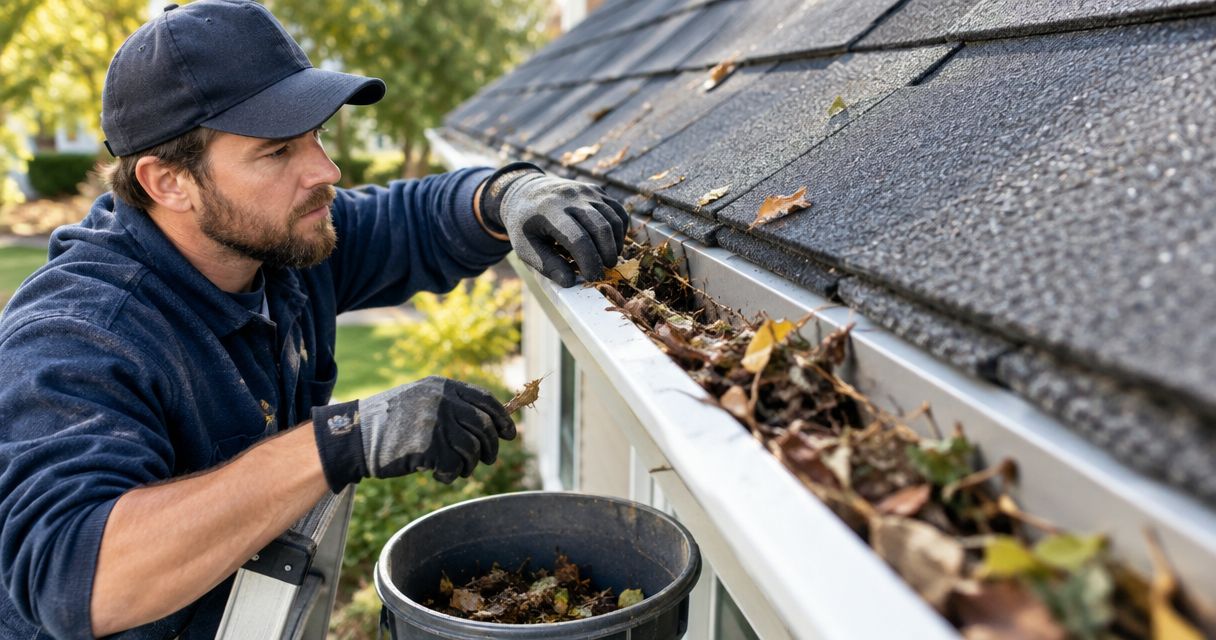
Careful debris removal collects leaves, twigs and loose deposits using tools and access arrangements suitable for the roof. It is the sensible starting point when material has accumulated near outlets or across the surface.
The aim is removal, not redistribution. Sweeping debris towards an outlet simply transfers the problem into the drainage route. Ballast, protective layers and installed components must remain where the roof design requires them.
Careful debris removal pros:
- Targets the loose material actually present.
- Avoids introducing cleaning chemicals for a debris-only job.
- Makes the cleared surface easier to inspect.
Careful debris removal cons:
- Does not treat firmly attached growth or residual staining.
- Still requires safe access and tools that will not cut or abrade the covering.
Best for: Buildings where loose debris is the main maintenance issue, especially around drainage points.
Ask whether outlet clearance is included and how inaccessible drainage components will be handled. Roof cleaning, gutter clearance and downpipe investigation are related tasks, but they are not interchangeable descriptions of the same work.
Verdict: Buy for routine debris removal, subject to safe access and a suitable roof condition.
2. Approved detergent cleaning: best for washable surface dirt
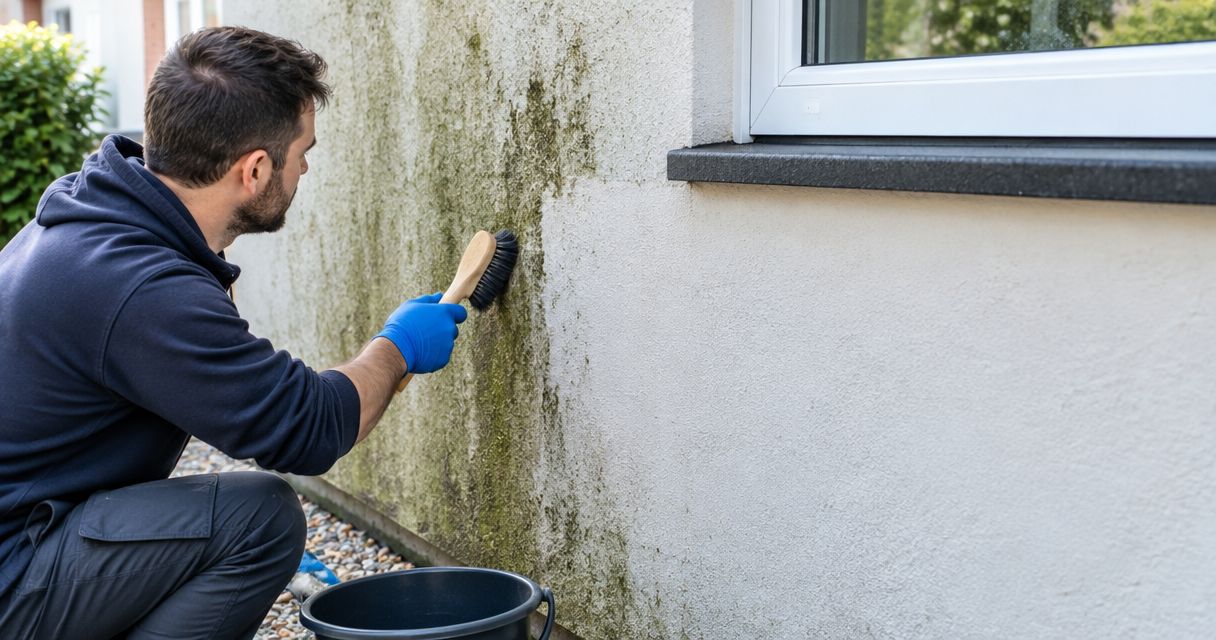
Manufacturer-approved detergent cleaning uses a compatible cleaning product and the application, agitation and rinsing method specified for that roof. It is a practical option when loose material has been removed but ordinary surface dirt remains.
Approval matters more than the word detergent. A household cleaner, solvent or abrasive tool is not automatically suitable for a waterproof membrane. Obtain the roof manufacturer's instructions rather than relying on a general description such as low-pressure cleaning.
Approved detergent cleaning pros:
- Provides a method tied to the identified covering.
- Separates ordinary dirt removal from specialist growth treatment.
- Lets the specification define tools, rinsing and acceptance criteria.
Approved detergent cleaning cons:
- Requires reliable identification of the roof system.
- Does not establish that remaining marks are removable without affecting the finish.
Best for: Identified roof coverings with maintenance instructions permitting detergent cleaning.
Ask for the product name and relevant compatibility information in the written proposal. Where a test area is appropriate, agree how it will be assessed before the wider surface is cleaned. Appearance alone is not a compatibility test.
Verdict: Buy when the covering's instructions support the proposed product and process.
3. Compatible softwash treatment: best for biological growth
Softwashing applies a cleaning treatment rather than relying primarily on forceful water jets. For commercial flat roofs, suitability depends on the covering, treatment formulation, application method and drainage arrangements.
The term softwash does not establish chemical compatibility. A product suitable for one exterior surface is not automatically suitable for a membrane, adjoining metalwork or an existing repair. The contractor should identify what is being treated and why.
Compatible softwash treatment pros:
- Targets biological growth rather than loose debris alone.
- Avoids making high-pressure washing the default removal method.
- Allows treatment to be specified for an identified surface problem.
Compatible softwash treatment cons:
- Requires checks for the covering and neighbouring materials.
- Needs a plan for treatment runoff and any required rinsing.
Best for: Biological growth on a roof whose maintenance requirements permit the proposed treatment.
Do not assume treatment produces an immediately uniform finish. Ask what the process removes during the visit, what remains afterwards and whether follow-up work forms part of the quote. Those details belong in the specification, not in a general promise of a clean roof.
Verdict: Hold until product compatibility and runoff arrangements are confirmed.
4. Approved steam cleaning: best for heat-compatible specialist work
Steam cleaning introduces heat as part of the cleaning process. That makes temperature compatibility a separate question from water pressure: describing equipment as low pressure does not answer whether heat suits the covering.
Use steam only where the relevant system instructions support the proposed process. Seams, adhesives, coatings and previous repairs need consideration alongside the main roof surface. A method used on roof tiles does not automatically transfer to a commercial flat roof.
Approved steam cleaning pros:
- Provides a heat-assisted option where expressly permitted.
- Offers an alternative to forceful washing for a compatible application.
- Can be assessed against a defined temperature and application specification.
Approved steam cleaning cons:
- Heat compatibility must be established before work starts.
- Different repairs or adjoining materials can complicate an otherwise suitable specification.
Best for: Specialist cleaning where the roof-system guidance explicitly permits the proposed heat-assisted method.
Ask for more than the name of the machine. The proposal should explain the permitted operating conditions, how sensitive details will be treated and why steam is appropriate for the identified contamination.
Verdict: Wait for written confirmation that the roof system permits the proposed steam process.
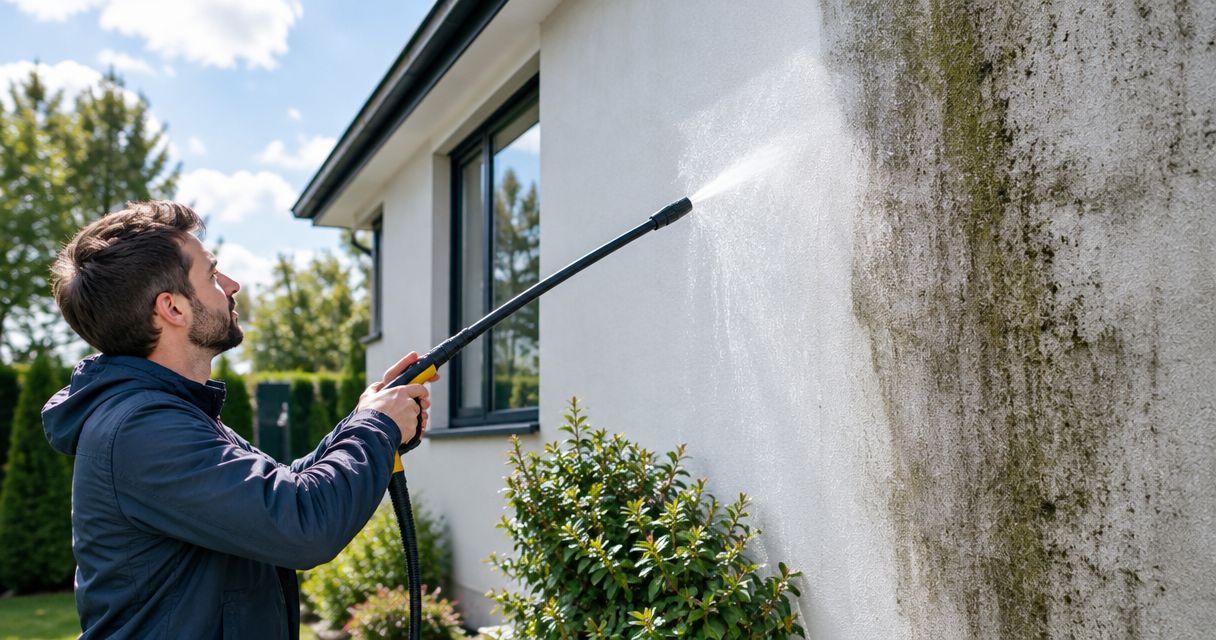
5. Approved pressure washing: best for explicitly permitted systems
Pressure washing removes material through the mechanical action of water. Some maintenance instructions permit controlled washing, but the machine's maximum output is not a suitable specification for a roof-cleaning job.
The permitted method needs to address equipment settings, nozzle choice, working distance and treatment of seams and details. A contractor should not derive those limits from experience on driveways or patios.
Approved pressure washing pros:
- Provides mechanical cleaning where the covering expressly permits it.
- Allows operating limits to be written into the job specification.
- Can form part of an approved wash-and-rinse process.
Approved pressure washing cons:
- Incorrect technique risks disturbing vulnerable seams or damaged areas.
- Adds water that needs a suitable, functioning drainage route.
Best for: Roof systems with explicit instructions supporting the proposed pressure-cleaning process.
Pressure washing is not the default answer to dark marks, standing water or a missed maintenance visit. If the covering cannot be identified, establish what it is before selecting the cleaning equipment.
Verdict: Skip unless the roof-system instructions expressly support the proposed method.
How the methods are ranked
This 2026 comparison ranks methods by compatibility, the cleaning task and the controls needed to protect the roof. Debris removal comes first because it addresses loose material directly; the remaining methods depend on what stays behind and what the covering permits.
The ranking is not a performance test or a promise of results. No method outranks the roof manufacturer's maintenance requirements. An appropriate written specification is more useful than a contractor claiming one process works everywhere.
What should a commercial cleaning quote include?
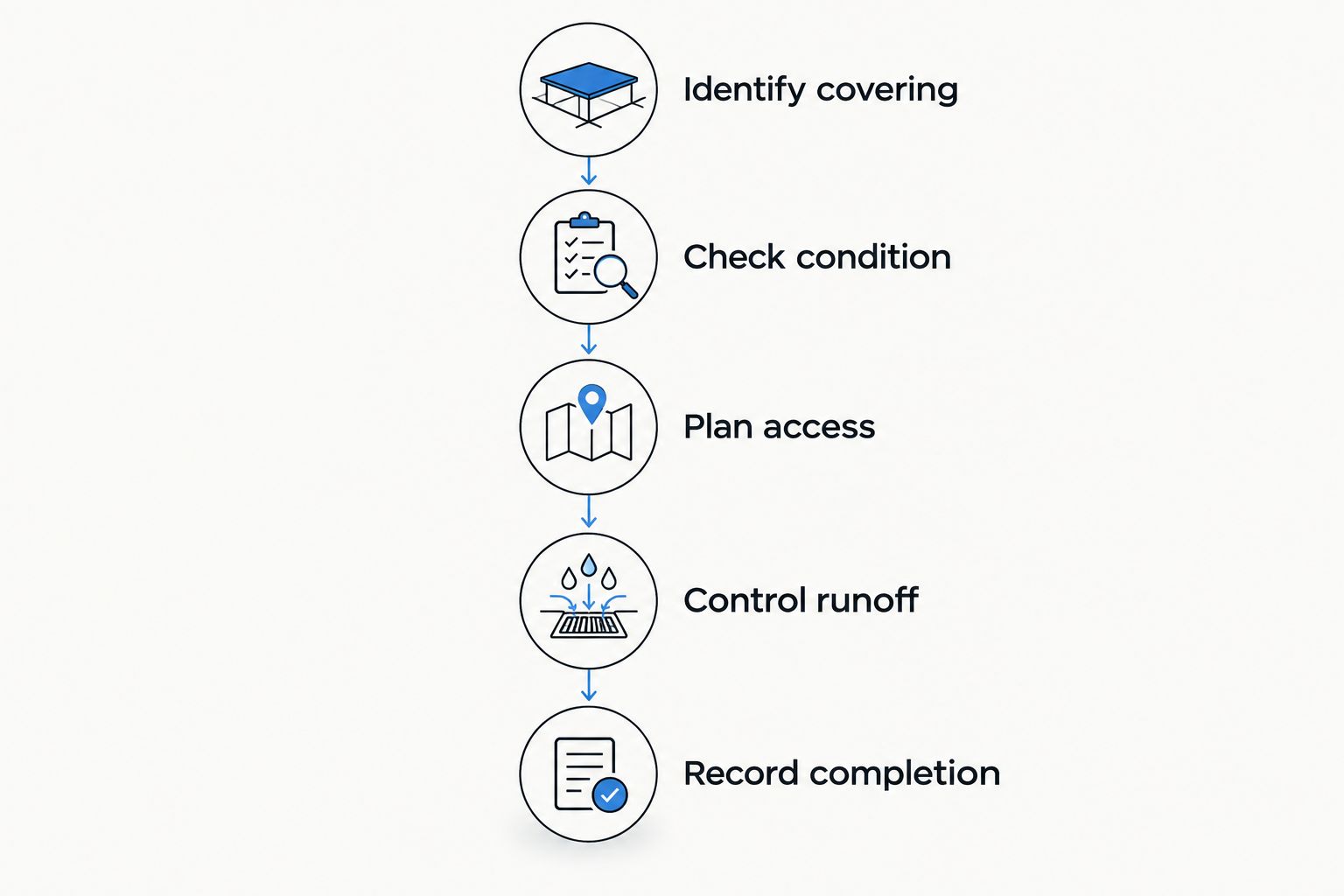
Ask for a scope that separates cleaning from repairs and records the basis for the method. These checks also help a managing agent compare proposals for an occupied building.
- Identify covering: Record the roof system, known repairs and available maintenance documents.
- Check condition: Note defects requiring roofing advice before cleaning proceeds.
- Plan access: Explain edge protection, rooflight precautions and arrangements around occupants.
- Control runoff: State how debris, outlets and cleaning liquids will be handled.
- Record completion: Agree photographs, remaining marks and any recommended follow-up.
Geyserclean is best for property owners seeking a surface-specific roof cleaning quote in Milton Keynes and the surrounding Home Counties. Send the property address and photos, including the roof covering and access where these can be photographed safely; ask for written confirmation of suitability and scope.
Request a written cleaning quote
Send the property address and photos; ask for the proposed method, access arrangements and scope.
Which commercial roof cleaning method should you choose?
Start with careful debris removal for a routine maintenance problem, then specify further cleaning only where needed and permitted. Choose approved detergent cleaning for washable dirt or a compatible treatment for biological growth. Keep steam and pressure washing conditional on the roof specification.
For your 2026 booking, request a clear division between roof cleaning, gutter clearance and repairs. If the roof leaks or the covering is damaged, arrange a roofing assessment rather than treating cleaning as the remedy.
FAQ
What's the best roof cleaning method for a commercial flat roof?
Careful debris removal is the first choice for routine loose-debris maintenance. Further cleaning should follow the identified roof covering's maintenance instructions and address the dirt or growth actually present.
Is softwashing better than pressure washing on a flat roof?
Neither method is universally better for a flat roof. Softwashing needs chemical compatibility checks, while pressure washing needs explicit support for the proposed equipment settings and technique.
Can steam cleaning be used on a commercial flat roof?
Use steam only where the roof-system instructions permit the proposed process. Low water pressure does not establish that a membrane, seam or repair tolerates heat.
Should blocked roof outlets be cleared before washing?
Drainage arrangements should be checked before washing adds water to the roof. Specify outlet clearance separately and do not push loose debris into the drainage system.
Does roof cleaning fix leaks or standing water?
Roof cleaning is not a repair for leaks or a diagnosis of persistent standing water. Arrange a roofing assessment where defects or drainage problems remain after loose debris is removed.
Does a no-moss guarantee cover commercial flat-roof waterproofing?
A no-moss guarantee is not a waterproofing guarantee. Geyserclean describes its roof guarantee as a 3–5 year no-moss guarantee and its render guarantee as 2 years; confirm applicability and written terms for your property.
What should I send when requesting a commercial roof cleaning quote?
Send the property address, safely taken photographs and any available roof-system maintenance information. Include known leaks, access restrictions and drainage concerns so the written proposal addresses them.
One last thing
The most useful question is not whether a contractor owns a steam cleaner. It is whether the proposed process matches your particular waterproofing system, including its repairs and details. Ask that question before agreeing the work.